How Tenant Durability Sinks Lake Havasu Commercial Real Estate Deals
Most out-of-area investors focus on the wrong risks in Lake Havasu commercial real estate. They zero in on zoning, utilities, permits, and city processes.
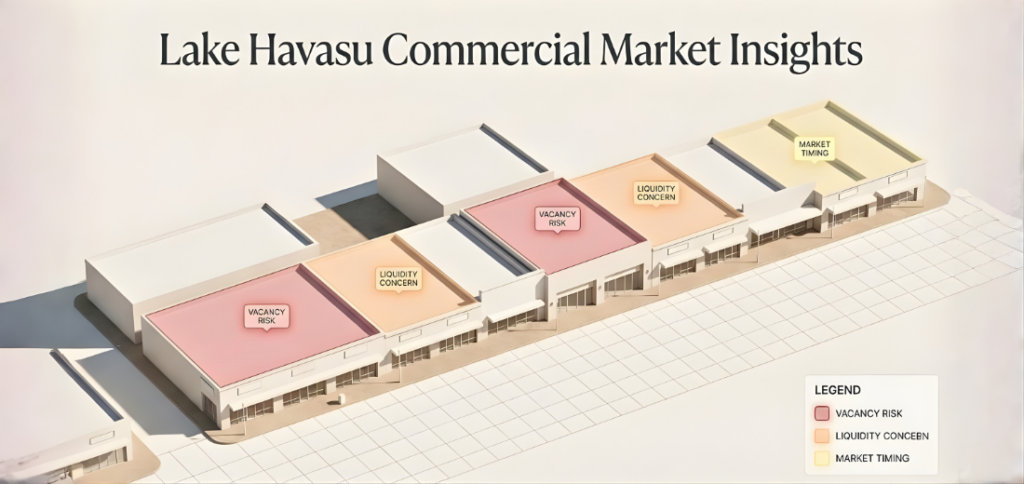
While those factors matter, they rarely sink a deal. Tenant durability is the key concern investors should consider. Property owners need rent payers to weather market swings.
Physical issues are fixable. You cannot force a replacement tenant to pay the same rent. Protecting the downside starts with evaluating the tenant first and then assessing value from there.
The Risks Buyers Overlook in Lake Havasu
Zoning, utilities, and permits sit at the top of almost every first call. We verify them because surprises cost time. In most Lake Havasu deals, the city answers the question.
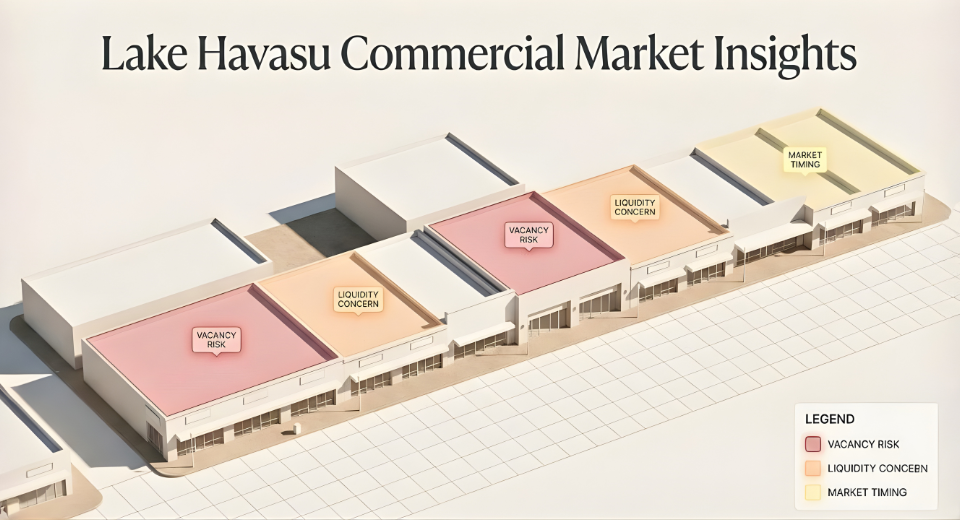
The more challenging question is quieter: “If a key tenant leaves, what comes next?” A complete due diligence file does not guarantee a reliable income stream.
Why Tenant Risk Hits Harder
Lake Havasu moves with demand swings. Tourism helps, but it also creates peaks and valleys that stress operators. Rising housing costs squeeze both employers and employees, and the small market limits the pool of replacement tenants.
Physical Checklists Can Be Misleading
Checklists feel comforting because they yield yes-or-no answers. Questions about three-phase power or the existence of a gas line are simple. You can price and schedule those items.
Tenant durability exists in the gray areas. It includes seasonality, staffing, and whether the business model will hold up next year. Uncertainty belongs in your underwriting, not in your gut.
Buildings That Block Tenants
Older, functionally obsolete buildings create friction, even if they look fine in photos. Two-story walk-ups, limited parking, and low-visibility locations quickly shrink the tenant pool. The rent roll might look strong, but the leasing story can be weak.
Out-of-area buyers often miss this because comps do not show leasing challenges. You need to take in-person tours, call tenants, and identify replacement tenants to uncover the truth. If you cannot name a second tenant, you should discount the rent, not admire it.
Looking Past the Current Lease
Last spring, an out-of-area buyer called about a clean-looking two-story building. It had a long-term tenant and a rent that “looked like a 7 cap.” They asked about three-phase power, gas, and whether the zoning allowed a different use. We verified all of it.
The bigger issue appeared during a site walk at 4:30 PM. The main entrance sat up a flight of stairs. Parking felt tight. The business relied on seasonal staff commuting from more affordable housing.
The tenant had done well, but required a particular layout and foot traffic pattern. When we asked who would take this space next at this rent, the room went silent.
If that tenant left, the owner would face months of downtime. The owner would have to build out the space to make it accessible. They would have to offer heavy concessions just to attract tours. It did not pencil out once we considered that reality.
The True Net Impact of Tenant Failure
A vacancy cycle can wipe out years of cap rate math. For example, you buy at a 6.5% cap on $100,000 NOI. If the tenant leaves, you lose nine months of rent, spend $35,000 on improvements, and pay leasing fees. Your five-year average actual net income drops.
That changes the value. Even if NOI returns, buyers may price in more risk, and you can lose principal after re-leasing.
Always plan for vacancies. Price the building like a business, not like a bond.
Underwriting Tenant Durability
We start by evaluating the tenant’s durability. Then we calculate the value using actual net income, factoring in vacancy, concessions, and build-out risk. Rather than underwriting for the current rent, our team underwrites for the next rent.
Here are the questions:
- Who are the realistic replacement tenants at this size, layout, and parking count?
- What rent range does this space actually get after incentives and downtime?
- What parts of the building limit operations, like access, loading, or visibility?
A tenant can look strong on paper but still occupy a fragile location.
Ask These Questions Before You Buy
How do I evaluate a tenant’s durability without guessing?
Request financials when possible, but stress-test the model. Look at seasonality, staffing, and customer concentration. Underwrite what happens in a slow quarter.
Do utilities like three-phase power still matter?
Yes, because utilities limit your tenant pool. If a replacement tenant needs an upgrade, you pay in time and concessions. Price that risk up front.
What buildings should I be careful with in Lake Havasu?
Be cautious with layouts that fail to meet modern accessibility standards, such as stairs-only entry or tight parking. Those factors shrink replacement demand first. Renovations help, but traffic patterns stay the same.
Should I trust comps when I buy here?
Use comps, but do not stop there. Comps show what traded, not how hard it was to lease or collect. You need to pair comps with a leasing narrative and a replacement-tenant list.
How much vacancy reserve should I carry in underwriting?
Build a reserve that matches the tenant and the building. If you cannot name a second tenant quickly, assume longer downtime and higher concessions. That reserve protects your actual net income.
What does “back into value” mean in practice?
Start with a realistic cash flow that accounts for vacancy, expenses, and capital needs. Then determine what price actually pencils. Avoid starting with the asking price and hoping rent makes it work. This approach protects the downside.
Take the Guesswork Out of Tenant Risk
In Lake Havasu, the most significant risk is not zoning or permits. It’s the tenant. Successful deals start with tenant durability, replacement options, and realistic net income.
For guidance on your next Lake Havasu property, contact Shuffler Commercial Realty. Start your conversation today and ensure your underwriting reflects what the market and tenants will actually support.