What a 64-Acre M2 Rezoning Reveals About Lake Havasu’s Northern Corridor
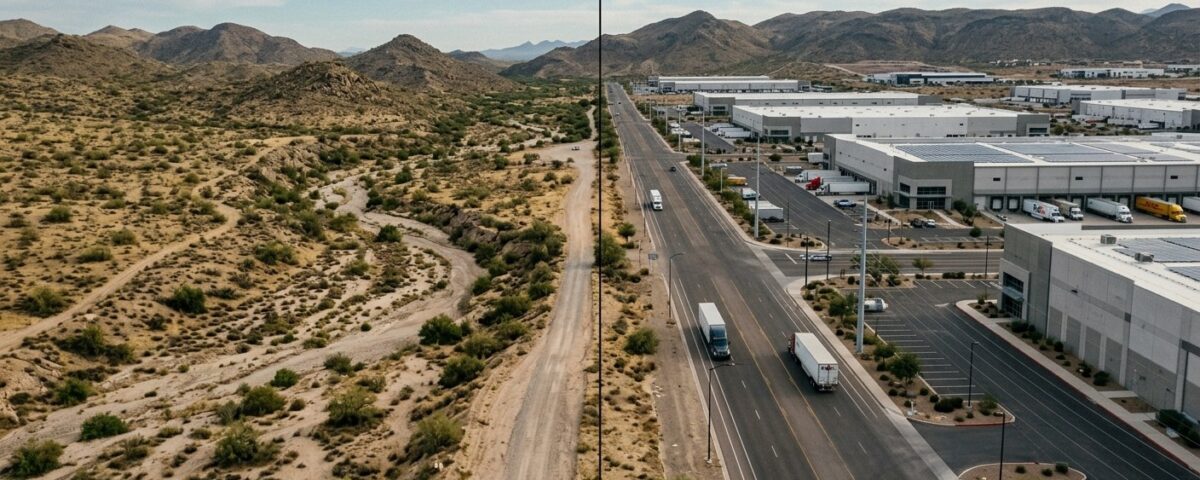
A rezoning approval does not make headlines the way a ribbon cutting does. There is no groundbreaking ceremony, no press release with renderings, no local news segment.
Investors who pay attention to zoning maps know what a parcel shifting to M2 General Manufacturing actually signals. The listing price will never tell you what that rezoning just did. The city drew a clear line on what this northern corridor will become.
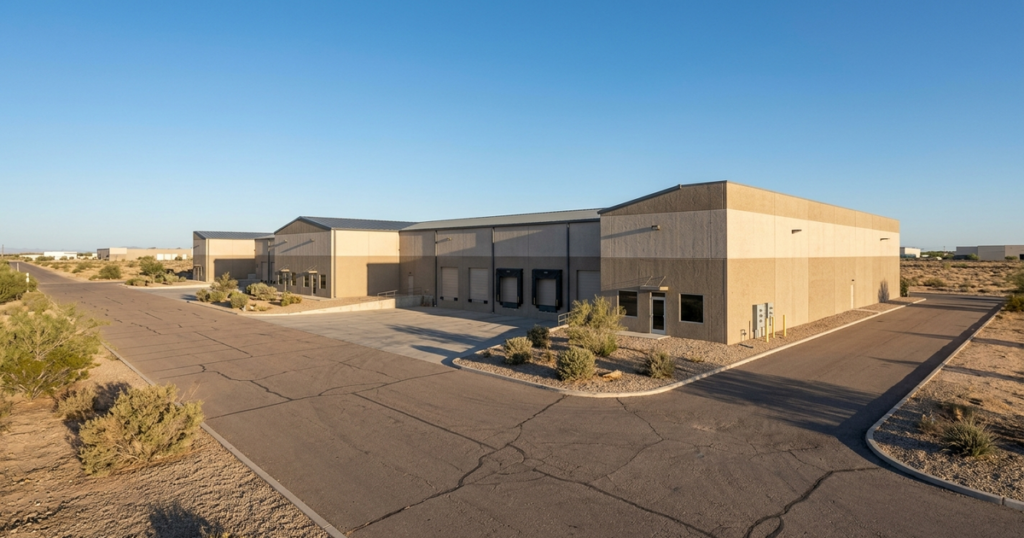
A 64-acre parcel north of the Shops at Lake Havasu received M2 General Manufacturing rezoning, with a reported national tenant involved. Lake Havasu is effectively landlocked, and deed land in the northern corridor is genuinely scarce. Investors need to match their capital structure and timeline to the pace of this opportunity before acting on the headline.
The Story Behind What Happened North of the Shops at Lake Havasu
A 64-acre parcel north of the Shops at Lake Havasu received M2 rezoning. A national tenant is reportedly involved. Anyone watching the northern corridor should be asking what it means for surrounding land values.
Lake Havasu City’s commercial zoning skews toward C2 retail and light industrial, with some limited industrial near the airport. True heavy manufacturing zoning has always been scarce here. Most of the industrial depth that regional investors associate with the tri-city corridor lives in Kingman and Bullhead City, not Havasu.
That scarcity context is what makes this M2 rezoning worth tracking. The northern corridor has been the city’s logical growth direction for years. The Shops at Lake Havasu developed slowly, partly because of the 2008 crash and partly because the area carries real infrastructure constraints.
Washes, floodplain issues, and land located in the county rather than within city limits have kept this area from moving quickly. Development here has always moved at the pace the land and the market allowed.
M2 changes the ceiling. General Manufacturing zoning is the highest classification in the local zoning hierarchy. Once a corridor establishes that designation at scale, it signals to other industrial users that the area can support their footprint. That signal attracts additional tenants, creates pressure on adjacent parcels, and pushes state land release to the front of the conversation.
Land Supply Is the Real Constraint
Most out-of-state investors miss the real opportunity in a rezoning like this. The opportunity was not in reacting to the approval. It was in positioning before it, and the next window is not as close as the headlines suggest.
Lake Havasu is landlocked in a way that is easy to underestimate. Deed land in the northern corridor is genuinely limited. Much of what sits adjacent to this newly rezoned parcel is state land, and state land does not move quickly.
Auction processes, entitlement review, and floodplain analysis create timelines measured in years, not quarters. The Arizona State Land Department manages these disposition processes, and the auction-to-entitlement path is rarely short.
Randy Shuffler has watched this dynamic play out across multiple development cycles in Lake Havasu and Kingman. He approaches zoning events the same way he approaches any catalyst claim: validate the thesis before underwriting the upside.
“There’s just not really any land left. Havasu’s landlocked, and then you start going up that northern corridor and some of that land is in the county, and there’s just not much deed land left, period. The state is going to have to let some of that property go, which is a long process.” – Randy Shuffler, Founder and Commercial Real Estate Agent, Lake Havasu City Commercial at Realty ONE Group Mountain Desert
The constraint here is not demand. It’s a supply issue, and supply is not a function of motivation or capital. It is geography, jurisdiction, and process. That combination is why this corridor reprices slowly, even when the signals are strong.
Could a National Tenant Shift the Corridor’s Trajectory?
The identity of the national tenant has not been confirmed publicly. The category matters more than the name. A major distribution or commerce operation at this scale validates the corridor for other industrial users. It creates demand for supporting services and infrastructure. It shifts the conversation about state land from “someday” to “when.”
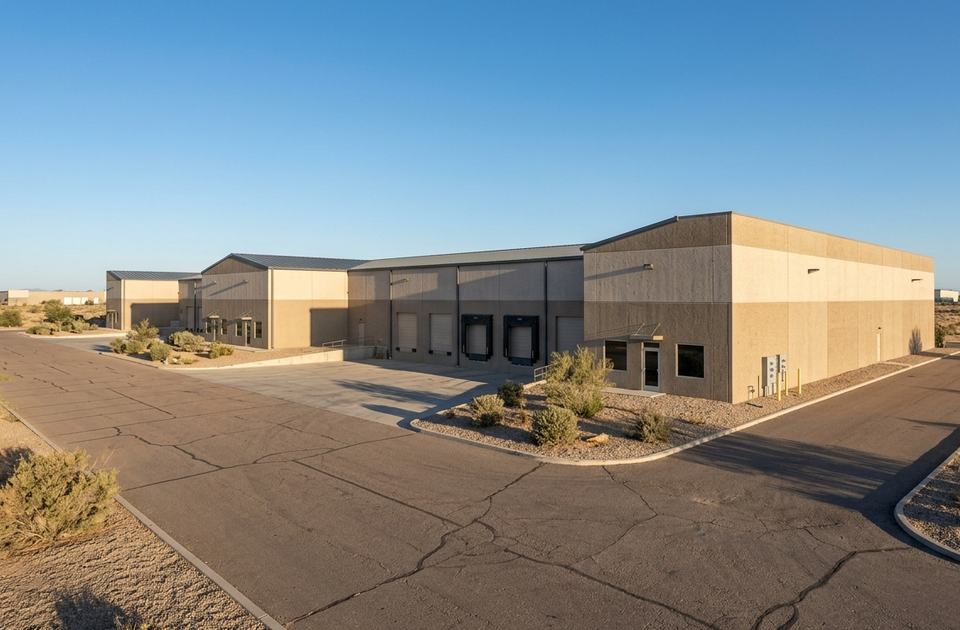
The analogy that fits here is the Kingman corridor, where industrial warehouse development has begun stacking. It has one property completed and another underway. A third is also getting started.
When users of that scale commit to a corridor, others follow. The northern Havasu corridor does not yet have that density. This rezoning is the kind of first move that makes the follow-on logical rather than speculative.
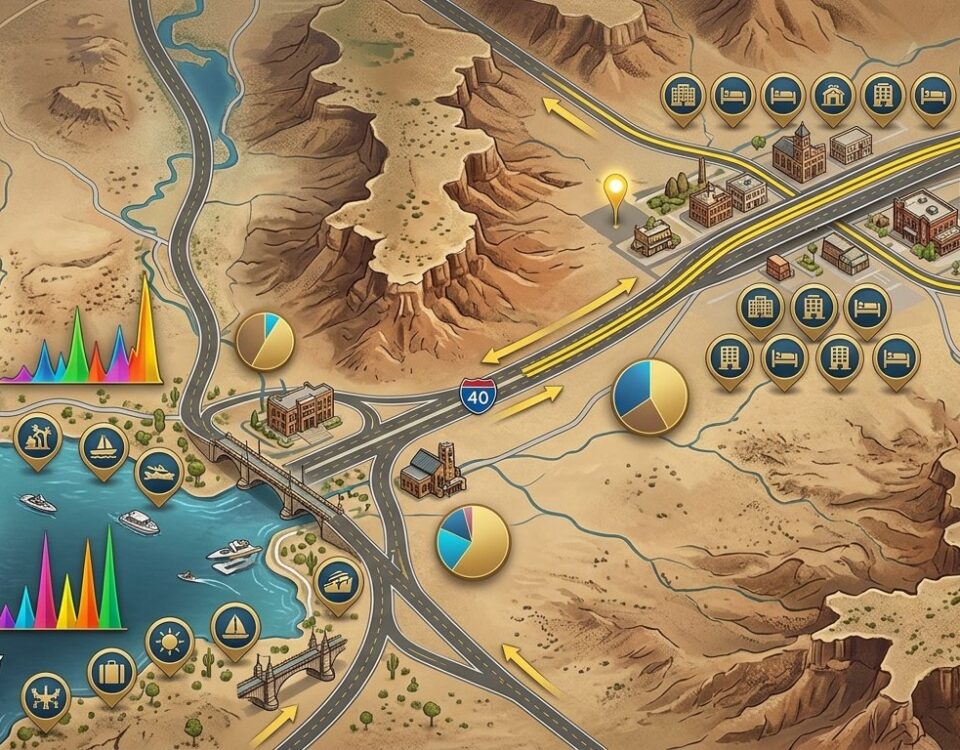
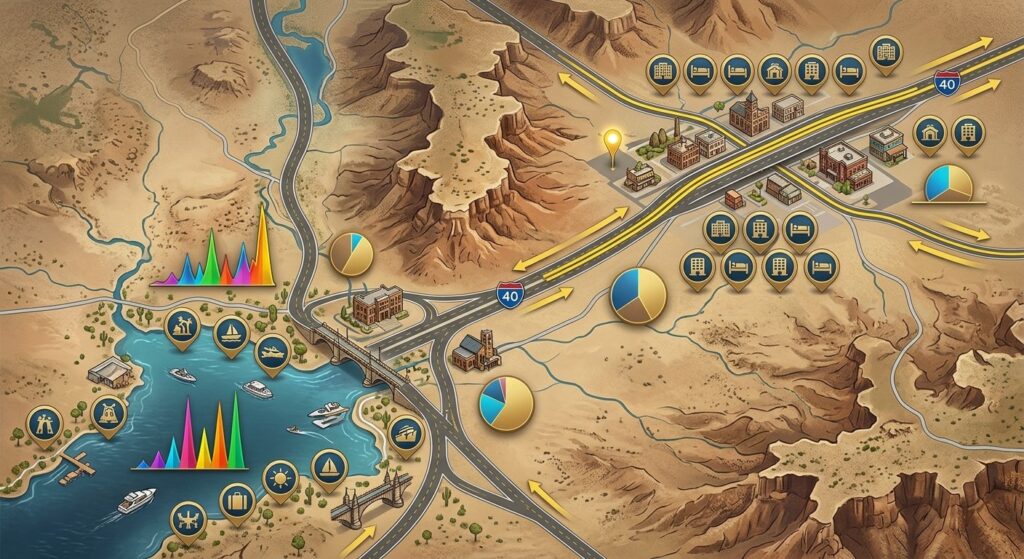
I’ve watched the Kingman fundamentals closely for exactly this reason. The drivers there include I-40 access, rail infrastructure, and a large legacy airport. The I-11 corridor is also nearing completion from Mexico through Phoenix to Las Vegas.
That is a story with a legitimate infrastructure backbone. The Havasu rezoning is a smaller version of that same thesis, playing out 30 miles to the west.
“Kingman sits on what would be I-11, which runs north and south, and then I-40, which connects California to the east coast. It’s like this natural hub, and the railroad goes through it, and they have this large airport from World War II days. As some come, a lot more are going to follow. It doesn’t happen overnight.” – Randy Shuffler, Founder and Commercial Real Estate Agent, Lake Havasu City Commercial at Realty ONE Group Mountain Desert
The Kingman corridor is already further along that curve, and understanding its infrastructure depth puts the Havasu thesis in clearer perspective.
How to Underwrite a Corridor Catalyst Event
The question I hear most about an announcement like this is: “Did I miss it?” The honest answer is that repricing on deed land has probably started, but the development story is still early. That distinction matters when deciding whether to act now or wait.
A 1031 buyer with a 45-day identification clock running will not find a ready-to-close income property in this corridor today. Inventory in the northern corridor is thin. The state land question adds years to any large-scale development thesis. This rezoning validates the direction. It does not accelerate the timeline.
Longer-horizon industrial buyers and land investors will find the thesis here is real. The constraint is patience and careful due diligence in determining which parcels are within reach of infrastructure. Some parcels sit behind a floodplain or entitlement complexity, absorbing years of carrying costs.
M2 Zoning Implications Investors Should Understand
M2 General Manufacturing zoning carries real implications for what can and cannot be built on a parcel. Cities set their own use classifications within state parameters. In Lake Havasu City, M2 permits heavy manufacturing, large-scale distribution, and industrial operations that C2 (light industrial) zoning would exclude.
That matters for adjacent parcels too. A C2 retail property sitting near a newly designated M2 zone faces a different future than it did 18 months ago. Use compatibility, traffic flow, truck access, and noise considerations all shift when heavy industrial takes root in a corridor. Investors underwriting nearby commercial assets need to factor that context into their holding-period assumptions and exit strategies.
The City of Lake Havasu City Planning and Zoning Department maintains the official zoning map and variance history. Before underwriting any parcel based on a rezoning announcement, confirm the current designation directly and pull the entitlement history.
Questions About Lake Havasu Industrial Real Estate
What does M2 General Manufacturing zoning mean for Lake Havasu City?
M2 General Manufacturing is the highest classification in Lake Havasu City’s zoning hierarchy. It permits heavy industrial use, large-scale manufacturing, and distribution operations. This designation has historically been scarce in this market. A rezoning of this type signals a meaningful shift in what the northern corridor can accommodate. It also expands the pool of tenants that can realistically commit to the area.
How does the M2 rezoning affect surrounding land values in the northern corridor?
Rezoning events at this scale typically trigger repricing on adjacent deed land. Nearby parcels gain optionality they did not have before. How much repricing has already occurred depends on when the market learned of the approval. Investors evaluating nearby parcels should underwrite current values against the corridor’s realistic development timeline, not the announcement date.
Why is land supply such a constraint in Lake Havasu City’s northern corridor?
Lake Havasu is effectively landlocked. The city’s northern growth direction runs into county land, state land, washes, and floodplains. State land managed by the Arizona State Land Department requires an auction process, entitlement review, and infrastructure planning. Those steps create timelines measured in years, not quarters, regardless of demand. That constraint shapes every investment decision in this market, not just the ones tied to this rezoning.
What does a national tenant commitment do to a commercial corridor?
A confirmed national tenant validates the corridor for other industrial users. It creates downstream demand for supporting services and infrastructure. It also exerts pressure on state and county land-release decisions by demonstrating market viability at scale. The Kingman corridor shows exactly how that stacking effect plays out once the first anchor commits.
How does floodplain status affect development potential in this corridor?
Floodplain designation adds entitlement complexity and carrying cost. Parcels inside or adjacent to designated flood areas require additional engineering and permitting review under FEMA standards. Physical mitigation measures are often required before development can proceed. In the northern Havasu corridor, the floodplain is one of several factors that complicate timeline estimation. This is especially true for state land that has not yet gone through the release process.
How does the Kingman industrial corridor compare to Lake Havasu’s northern corridor?
Kingman carries deeper infrastructure credentials for large-scale industrial users. It has I-40 access, active rail service, a large legacy airport, and a location along the future I-11 corridor. Lake Havasu’s northern corridor is earlier in its development cycle. Both markets reflect the same underlying thesis, where constrained land supply meets growing industrial demand.
What should an investor do after a rezoning announcement like this?
Validate the thesis before underwriting the upside. Confirm the parcel’s relationship to infrastructure, floodplain status, and proximity to deed land versus state land. Run the numbers on what the land actually pencils to today. Then stress-test the timeline against your capital structure. The announcement confirms the direction. It does not confirm the timeline or the return.
The Corridor Is Moving. Your Timeline Either Matches or It Does Not
The investors who capture value from events like this are not the ones who react fastest to the headline. They are the ones who already understood the land supply constraints and knew which parcels sat in viable positions. They had underwritten a range of outcomes before the announcement hit. That kind of preparation is the actual edge here.
Send me the address or parcel you are tracking. I will run a true-net snapshot on what it actually pencils to today and tell you where this corridor fits your investment timeline. Reach out now to start a conversation about Lake Havasu commercial real estate.
Randy Shuffler is the founder of Lake Havasu City Commercial and a commercial real estate agent at Realty ONE Group Mountain Desert. He holds the CCIM designation, placing him among the top 6% of commercial real estate practitioners globally. He has spent more than 20 years underwriting and closing transactions across the Lake Havasu City and Kingman markets. He specializes in investment sales, 1031 exchanges, and industrial and commercial acquisitions across Mohave County.
ABOUT THE AUTHOR
Randy Shuffler | Founder & Commercial Real Estate Agent, Lake Havasu City Commercial | CCIM | 20+ years in real estate & finance | $5M+ in verified sales | 52,000+ sq ft transacted | BS Finance, San Diego State University | Realty ONE Group Mountain Desert