Two-Story Office Buildings Without Elevators Cost Lake Havasu Investors
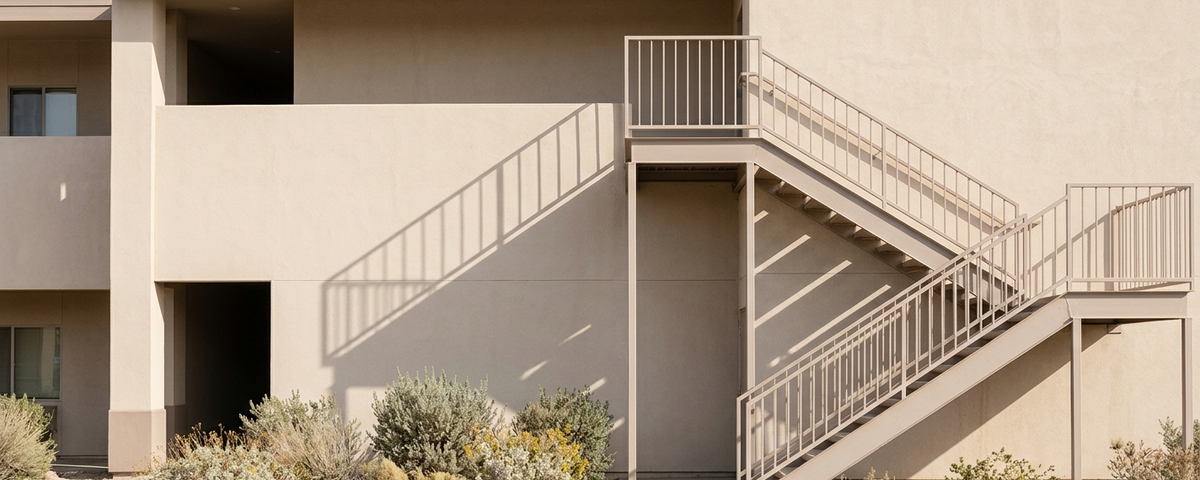
A two-story office building with no elevator can look like a solid investment in Lake Havasu and still be structurally wrong for the market. The gap between what a spreadsheet shows and what the local tenant base actually demands is where returns quietly disappear. Functional obsolescence is one of the most common underwriting blind spots in Lake Havasu commercial real estate, and the no-elevator office building is its most consistent form.
Functional obsolescence occurs when a property’s design no longer matches the practical needs of the tenant market it serves. In large metros, residual demand often absorbs these mismatches. In Lake Havasu, there is no residual demand to fall back on. The pool is smaller, the demographic skews older, and when a building excludes a meaningful portion of that pool, vacancy compounds quickly.
Why Functional Obsolescence Hits Harder in a Small Market
In deep metro markets, a design flaw can sometimes be outworn. More tenants, faster absorption, higher leasing velocity.
Lake Havasu operates differently.
Inventory is tight here, but the tenant pool is smaller too. The demographic skews older than most metropolitan benchmarks. Corporate relocations are rare. Most office users are local professionals, medical groups, or owner-operators. That means building design carries more weight than it would in a Phoenix or Scottsdale context.
If a property excludes part of the tenant base, you feel it immediately. Not six quarters from now.
Design risk is amplified in small markets because depth of demand is limited. A layout that works fine in Scottsdale can stall in Lake Havasu simply because there are not enough alternative tenants to absorb the mismatch. The U.S. Census Bureau consistently shows Lake Havasu City’s median age running above national averages, a data point that belongs in every commercial underwriting here.
“Office Is Just Office” Is the Assumption That Burns Investors
That framing gets people in trouble.
Investors look at square footage, rent per foot, and cap rate. They assume that if the price is right, tenants will show up. But markets are local, and Lake Havasu rewards practicality over generalization.
Here is what plays out on the ground.
A two-story office building. No elevator. Fully leased at acquisition. Stable income. On paper, low drama. Then both tenants leave at the same time.
The owner underwrites a six-month lease-up. Reasonable in a metro. In Lake Havasu, that building can sit vacant for more than 18 months before it stabilizes again. The building is not broken. It just does not fit the market the way it is built. When functionality narrows your tenant pool, vacancy stretches longer than any optimistic spreadsheet accounts for.
This pattern connects directly to broader Lake Havasu vacancy risk, where extended downtime is the most common way investors lose money here.
How Stairs Quietly Shrink Your Tenant Pool in Lake Havasu
In theory, a second floor is not a problem. In practice, here is what happens.
Professional tenants prefer easy, visible, ground-floor access. Medical users require ADA-compliant access under the Americans with Disabilities Act – stairs eliminate them outright. Older clientele avoid stairs, and in a market with an above-average senior population, that is not a fringe consideration. Service businesses prioritize client convenience over character of space.
Without elevator access, you automatically exclude medical uses and most senior-facing service businesses. Law offices, accounting firms, and similar tenants also factor in client inconvenience when evaluating space. In a large city, residual demand might compensate. In Lake Havasu, that exclusion materially reduces leasing velocity.
That is functional obsolescence at work. The design does not match the tenant base. Fewer qualified prospects means longer downtime and more negotiating leverage for the tenants who do show up.
What an 18-Month Vacancy Actually Costs
This is where you back into value instead of chasing cap rates.
Take that two-story, no-elevator building. Both tenants leave. The underwriting assumed six months of vacancy. Instead, it sits for 18.
Run the real numbers. Eighteen months of debt service. Eighteen months of property taxes. Eighteen months of insurance and maintenance. Leasing commissions on top. Potential tenant improvement costs on top of that.
That is not a small hiccup. That gap between six-month assumptions and 18-month reality is a return event. True net income evaporates while fixed costs continue. Holding does not fix a design flaw. Time does not create accessibility. The market is not going to develop an affinity for stairs.
Vacancy duration often matters more than entry cap rate. This is why underwriting rigor matters before you close, not after tenants leave. For a deeper look at how to apply that rigor, Lake Havasu CRE deals are won or lost in underwriting covers the mechanics.
Randy Shuffler has closed transactions across this market and watched this specific pattern repeat. His read on the no-elevator problem is direct.
“The building isn’t broken. It just doesn’t fit the market the way it’s built. Once you remove elevator access, you eliminate entire categories of tenants. And in a small market, that exclusion isn’t theoretical – you feel it when the phone stops ringing.”
- Randy Shuffler, Founder and Principal Broker, Lake Havasu City Commercial at Realty ONE Group Mountain Desert
If you are analyzing a property with layout or access limitations, pressure-test it before you close. Send the address to Randy at Lake Havasu City Commercial and he will run a true-net snapshot based on current local conditions.
How to Stress-Test a Two-Story Office Building Before You Buy
Ask three direct questions before writing an offer.
First, who is the actual tenant profile? Be specific about industry, size, and demographic. Do not say “general office.” Name the likely users and whether they require ground-floor access for their clients.
Second, which tenant categories are automatically excluded? Medical users? Senior-facing services? Any business that depends on ADA-compliant access for customers?
Third, how many comparable second-floor-only spaces have leased in this market recently, and how long did stabilization take?
If the honest answers are “not many” and “a while,” you have your signal. Inventory is tight in Lake Havasu, but not every building pencils the same way. When a property narrows an already limited tenant pool, risk compounds on both the lease-up side and the eventual sale. Protecting returns means identifying structural limitations before you close, not after tenants leave and the clock starts running. The almost pencils trap is a close cousin to this problem.
Does a Strong Location Override Poor Functionality?
Location still matters. In most situations, it matters most.
But location does not override poor functionality in a small market.
A strong corner, solid traffic counts, and decent visibility all help. If the layout does not match the tenant base, you will still fight vacancy. In Phoenix, a startup might not care about stairs. In Lake Havasu, most tenants are practical. They think about their clients’ experience. They do not want to apologize for access issues at every appointment.
Great dirt does not rescue flawed design when the tenant pool is limited. That reality needs to live in your underwriting as a primary variable, not a footnote.
Frequently Asked Questions
Is a two-story office building without an elevator always a bad investment in Lake Havasu?
No. The issue is access, not height. A two-story building with elevator service and flexible layouts can compete well in this market. The risk concentrates in buildings that exclude elevator access entirely, because that design decision eliminates whole categories of tenants. Understand how much of the local market you are cutting off before you close, not after.
Can lower rents offset the lack of an elevator?
Sometimes, but there is a floor. Discounting rent too far damages your valuation and tends to attract weaker tenants rather than solve the underlying access problem. Lower rent does not resolve ADA requirements for medical or senior-facing users, those tenants simply cannot use the space regardless of price. Pricing helps at the margin. It does not fix structural limitations.
How do I underwrite vacancy risk more realistically for limited-access office space?
Study recent lease-up timelines for comparable spaces in the same submarket. Apply conservative downtime assumptions when the design limits demand, because six months of buffer is not realistic if the tenant pool is already shallow. Build higher reserves for leasing commissions and tenant improvements. Model the 18-month scenario alongside the 6-month scenario and see whether the deal still works.
Does adding an elevator or converting the building solve the problem?
It depends on cost and feasibility relative to asset value. Elevator additions can run well into six figures and may not pencil against what the stabilized building is worth. Reconfiguring the floor plan to accommodate a single larger user sometimes works, but you have to back into value honestly: compare realistic renovation cost to stabilized income and determine whether the spread justifies the capital and risk. For a realistic look at what renovation projects actually cost here, renovation optimism bias is worth reading before you budget anything.
Why does the local demographic matter so much in this analysis?
Lake Havasu has an older average population than most large metros. That affects how clients, customers, and employees move through commercial space. Accessibility and ground-level convenience carry more weight when a significant portion of the end-user base has a preference for or need for step-free access. Building design that ignores that reality creates a structural mismatch with local demand.
Should second-floor space without elevator access be avoided entirely?
Not necessarily. Second-floor space can work when it is priced to reflect the access limitation and positioned toward the right tenant profile. The mistake is underwriting it as though it performs identically to ground-floor space. Expect longer lease-up periods, be selective about tenant type, and make sure your reserves reflect realistic holding costs rather than best-case absorption.
How does functional obsolescence in office space affect resale value?
A building with documented access limitations and a history of extended vacancies draws investor scrutiny at the next sale. Buyers apply a more conservative cap rate or demand a price reduction to offset the lease-up risk they are inheriting. The design limitation you absorbed during ownership becomes a negotiating point for the next buyer, compressing your exit value.
What tenant types actually work in second-floor Lake Havasu office space without an elevator?
Younger owner-operators, solo practitioners who do not rely on client foot traffic, creative or administrative users, and businesses where employee convenience matters more than client-facing access tend to be the best fits. The key is matching the tenant profile to the access reality from the start, rather than marketing broadly and hoping the right user appears.
The Numbers Need Local Context to Tell the Truth
Functional obsolescence is not dramatic. It is quiet. It shows up when tenants leave and the phone does not ring for months longer than your model said it would.
In Lake Havasu, small design decisions carry outsized consequences. A missing elevator changes your tenant mix, your vacancy duration, and your true net income – all at once, and all in the wrong direction.
Real numbers. Local reality. No hype.
If you are evaluating a building in this market and want to know whether it truly pencils, reach out to Randy at Lake Havasu City Commercial and get a true-net analysis grounded in current local conditions, before you close, not after.
About the Author
Randy Shuffler is the founder of Lake Havasu City Commercial at Realty ONE Group Mountain Desert. He holds the CCIM designation, earned a BS in Finance from San Diego State University, and has spent more than 20 years transacting commercial real estate in Lake Havasu City and the surrounding Mohave County markets.