Lake Havasu Retail Is a Landlord Market, But Only in the Right Corridors
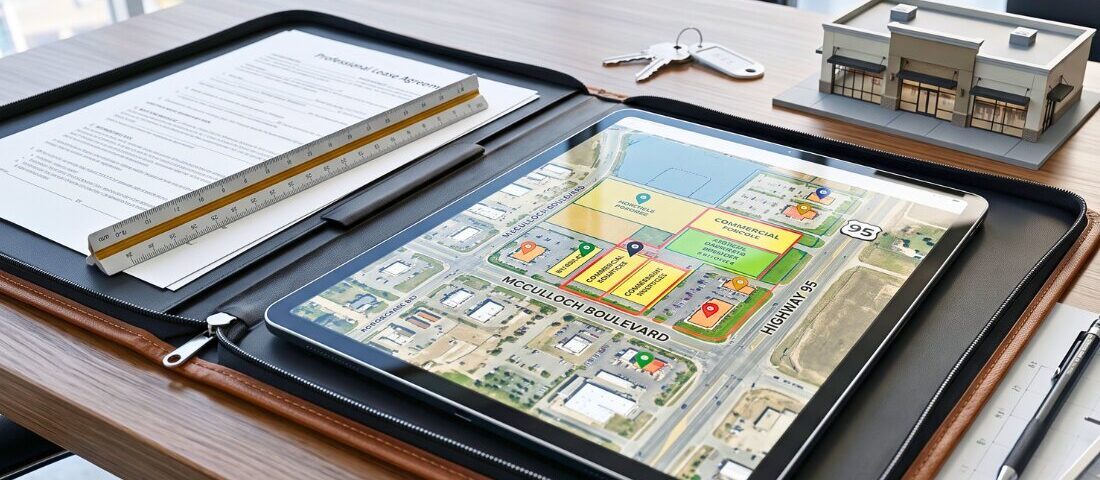
Third-party reports describe the Lake Havasu City retail market as a landlord's market in 2026. That assessment is directionally correct, but it overlooks where landlord leverage actually exists. Retail demand is strongest along McCulloch Boulevard and Highway 95 frontage, where visibility, traffic, and tenant competition continue to support leasing activity.
Outside those corridors, the market behaves differently. Overpricing secondary retail locations often leads to longer vacancies rather than stronger negotiating power. Industrial availability has tightened but varies by building size, while office follows a separate set of demand drivers. Investors who recognize these distinctions can underwrite each asset type with more realistic leasing expectations.
The Lake Havasu retail landlord advantage is real but concentrated along McCulloch Boulevard and Highway 95 frontage. Outside those corridors, overpricing often produces vacancy instead of leverage. Industrial remains tight but varies by building size, while office follows a different set of demand drivers.
Two Corridors Drive Lake Havasu Retail Strength
The strongest retail activity in Lake Havasu City centers on two corridors: McCulloch Boulevard downtown and Highway 95’s main commercial stretch. These locations operate differently from the rest of the market. They attract foot traffic, restaurant operators, medical users, and grocery-anchored concepts that support stronger occupancy and leasing demand.
New retail built with Highway 95 visibility has commanded up to $2.00 per square foot. That pricing reflects a combination of new construction, strong visibility, and desirable tenant demand. It should not be used as a citywide benchmark for every retail property.
Outside McCulloch Boulevard and Highway 95 frontage, the leasing dynamics change. Retail without the same visibility typically faces more competition, longer lease-up periods, and greater pressure on landlord concessions. The corridor premium is real, but it does not extend evenly across the market.
A Landlord Market Does Not Protect Against Overpricing
Randy Shuffler has seen the same landlord pricing mistake repeat across the Lake Havasu market. The pattern usually starts when owners mistake favorable conditions for unlimited pricing power.
"It's a little bit of a landlord market. But he thinks it's so landlord that he's asking this crazy amount, and we're not leasing it."
— Randy Shuffler, Founder and Commercial Real Estate Agent, Lake Havasu City Commercial at Realty ONE Group Mountain Desert
That outcome is a common risk when owners confuse market strength with pricing immunity. A landlord who holds at $1.70 only to accept $1.20 after extended vacancy may lose more than they gain by waiting. A strong market rewards owners who price correctly, but it does not shield those who overprice and wait.
Market strength does not remove the need for disciplined pricing. Even in high-demand corridors, tenants respond to value, not just location.
Industrial Demand Is Stronger, but Less Uniform Than Retail
The landlord advantage in retail does not transfer to industrial or office in the same way. Industrial demand in Lake Havasu City has strengthened, with local service businesses, contractors, trades, and owner-users competing for functional space. However, industrial performance still varies by building size, location, and tenant demand.
The pricing gap between retail and industrial has narrowed. Well-located industrial properties with functional layouts and strong demand have moved closer to retail pricing than many investors expect. However, performance still varies significantly across asset types.
Industrial supply is also becoming more segmented. Smaller flex units in the 900- to 1,500-square-foot range are attracting local operators. Larger spaces in the 4,000- to 9,000-square-foot range often require longer lease-up periods and appeal to a narrower tenant pool. These properties are not necessarily weaker investments. They require underwriting based on realistic absorption rather than the assumption that any space with a bay door will lease immediately.
Office requires a separate analysis. Its demand drivers differ from retail and industrial, and vacancy, tenant requirements, and leasing velocity follow different patterns. Investors should evaluate office based on office-specific fundamentals rather than applying the assumptions used for other commercial asset classes.
Retail Pricing Depends on More Than Market Reports
Third-party data captures vacancy rates, average asking rents, and absorption trends. What it misses is the corridor-level demand that determines whether a Lake Havasu retail space attracts interest or struggles to lease.
A 4,000-square-foot space on McCulloch Boulevard at the right rent is one type of asset. The same footprint three blocks away is a different investment proposition. A market report may classify both as comparable retail real estate, but tenants and investors see them differently.
Randy Shuffler's view of the retail and industrial pricing spread provides a more practical picture of where the market actually stands.
"Retail is maybe 10 to 20 cents more than industrial, give or take. Industrial used to be around 70 cents, and retail was a dollar. Then demand for industrial caught up. For nice retail, you're still looking at that 10-to-20-cent premium."
— Randy Shuffler, Founder and Commercial Real Estate Agent, Lake Havasu City Commercial at Realty ONE Group Mountain Desert
The 10-to-20-cent spread shows where the market sits today, but it does not determine what every space will achieve. Actual rent depends on the address, condition, visibility, and tenant demand. Corridor averages provide context, but property-level analysis determines value.
Commercial Property Value Starts at the Address
Lake Havasu City retail strength is real but concentrated. McCulloch Boulevard and Highway 95 frontage continue to capture the strongest landlord leverage. At the same time, industrial demand varies by size range and office follows different market dynamics.
Market-level trends do not replace property-level due diligence. Commercial transactions require disclosure of known material facts, reinforcing why investors must verify the details behind any market narrative. A claim that applies to the corridor level does not automatically apply to a specific parcel. Any asset marketed as a strong opportunity still requires independent verification.
Owner-users, investors, and 1031 buyers on a compressed timeline all start in the same place: the address. Market reports provide context, but a true-net snapshot reveals the numbers required for underwriting.
Contact Randy Shuffler at Lake Havasu City Commercial to evaluate a property's location, tenant demand, and income potential. Make a more informed acquisition decision with a clearer understanding of the asset's fundamentals.
Lake Havasu Commercial Real Estate Questions Investors Ask
Is Lake Havasu City retail really a landlord's market in 2026?
Yes, but only in specific corridors. McCulloch Boulevard and Highway 95 frontage locations carry the strongest landlord leverage because of visibility, traffic, and limited competing supply. Properties outside those areas require more competitive pricing and do not benefit from the same market conditions.
What are the current retail asking rents in Lake Havasu City?
Strong corridor locations along McCulloch Boulevard and Highway 95 have supported higher asking rents. Newer, high-visibility retail space in these areas can approach $2.00 per square foot. Actual lease rates vary based on location, condition, tenant demand, and lease structure.
How does the retail-to-industrial pricing spread work in Havasu?
Retail currently maintains a modest premium over industrial, often around 10 to 20 cents per square foot depending on the property. Strong owner-user and trade demand has narrowed the historical gap, but quality retail locations can still command higher rents.
What size industrial spaces are hardest to lease in Lake Havasu City?
Larger industrial spaces in the 4,000- to 9,000-square-foot range typically face longer lease-up timelines and a narrower tenant pool. Smaller flex units in the 900- to 1,500-square-foot range have generally seen stronger demand from local operators.
Should I treat Lake Havasu office space the same as retail or industrial?
No. Office follows different demand drivers than retail or industrial and should be evaluated separately. Investors should not assume the same leasing trends or market advantages apply across all commercial property types.
What is the biggest mistake landlords make in the Havasu retail market?
Overpricing based on the belief that a landlord's market eliminates pricing risk. Strong locations still require disciplined pricing. Extended vacancy can outweigh the benefit of holding out for higher rents.
How does a triple net lease affect retail underwriting in a landlord's market?
A triple net lease can shift property expenses to the tenant. Investors should verify the actual lease obligations before relying on the stated income. The true return depends on what the landlord still pays after reimbursements.
What should out-of-state investors know before buying Lake Havasu retail?
Market reports provide direction, but actual performance depends on the specific address, tenant mix, income structure, and local demand. Investors should verify the property-level details before relying on broad market trends.
Get a Number You Can Underwrite Before You Commit
A strong corridor does not guarantee a strong deal. The headline rate shows market demand, but the address, tenant demand, and true income potential determine what a property can support. Owners who price to the fundamentals avoid the vacancy risk that comes from pricing to the narrative.
If you are evaluating a retail or industrial asset in Lake Havasu City, start with the address. Contact Randy Shuffler at Lake Havasu City Commercial for a true-net snapshot based on current comparable activity. Understand what the space can realistically support before committing to deeper underwriting.
Randy Shuffler is the founder of Lake Havasu City Commercial and a commercial real estate agent at Realty ONE Group Mountain Desert. He holds the CCIM designation and has spent more than 20 years underwriting and closing commercial transactions across the Lake Havasu City and Kingman corridors. His background includes a BS in Finance from San Diego State University and specialized expertise in investment property analysis for out-of-state and 1031 exchange buyers.
ABOUT THE AUTHOR Randy Shuffler | Founder & Commercial Real Estate Agent, Lake Havasu City Commercial | CCIM | 20+ years in real estate & finance | $5M+ in verified sales | 52,000+ sq ft transacted | BS Finance, San Diego State University | Realty ONE Group Mountain Desert