Lake Havasu Tenant Mix Determines Which Deals Survive the Off-Season
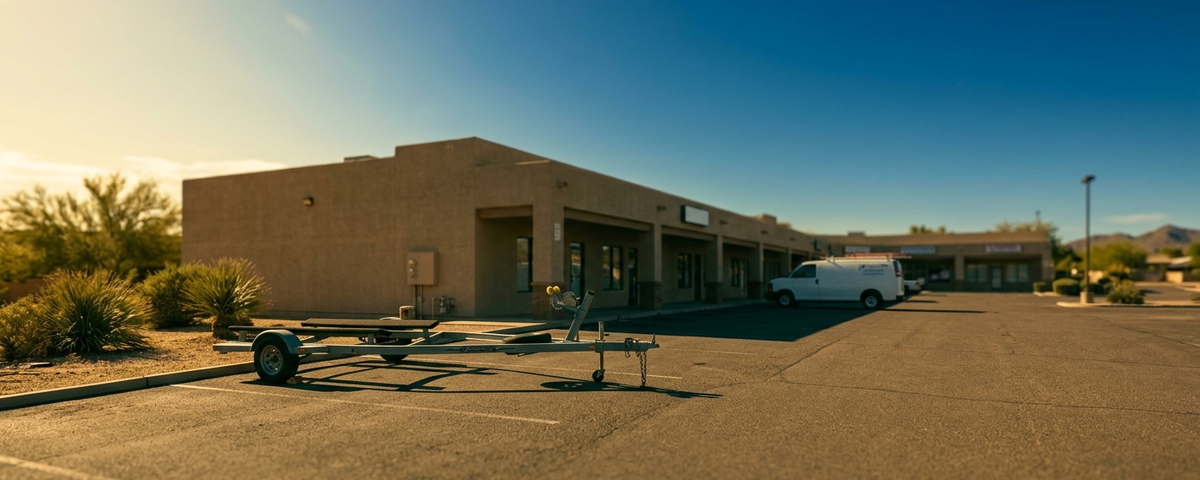
Lake Havasu commercial tenant mix separates durable income from seasonal guesswork. The tenants worth underwriting here serve full-time locals and capture tourists as upside – and the distinction shows up clearly when you look at a rent roll in January, not July. Out-of-state investors evaluating Lake Havasu commercial property often underwrite the busy weekend and miss the slow Tuesday. That gap is where deals go wrong.
Why Tenant Mix Functions as Risk Management
Treat tenant mix as a risk management tool, not a bonus feature. Lake Havasu runs on two demand engines: full-time locals and seasonal visitors. Tenants that serve only one engine typically feel pain at some point during the year. The durable ones build a business that still functions when one engine slows, and that stability feeds directly into rent reliability, renewal certainty, and lender confidence.
A strong mix also protects you as the landlord. When one tenant category softens, another holds steady. That matters in a market where commercial inventory is tight and you rarely find a property that checks every box. The durable tenant wins by maintaining a local base that covers operating costs through the quiet months, then uses tourist demand to outperform. That one pattern steadies rent, lowers renewal risk, and makes the income story easier for a lender to price.
Does Tourism Actually Carry the Deal?
Tourism matters here. It creates real revenue spikes and a visible sense of momentum. The problem starts when a tenant needs tourism to survive rather than to outperform.
Tourism-reliant tenants often run a specific pattern: seasonal cash flow compression in the off-season, weather sensitivity that reshapes week-to-week traffic, and event-driven revenue that looks strong on paper until the calendar shifts. That volatility does not stay inside the tenant’s profit and loss statement. It shows up as late payments, requests for concessions, and higher turnover. It also surfaces as lender skepticism when the rent roll depends on busy-season assumptions.
Under IRS Section 1031 exchange rules, investors often face a 45-day identification window that can force decisions fast. Accepting a tourism-dependent rent roll under that pressure converts a tax-advantaged move into a multi-year management problem. If the rent only pencils when everything goes right, the deal does not pencil.
What a Dual-Market Tenant Actually Looks Like
A dual-market tenant operates with two layers of demand. Locals provide repeat business and predictable baseline revenue. Tourists add burst revenue that improves margins and supports growth. You want tenants that treat tourism as a tailwind, not as oxygen.
In Lake Havasu, dual-market behavior appears most consistently in boat and powersports repair, marine services, certain outdoor apparel and gear concepts, and food and service businesses with strong repeat local use. These operators do not disappear in the off-season. They collect local transactions through the quiet weeks, then spike when tourism hits.
Single-population tenants are not automatically bad. They carry tradeoffs you need to price correctly. Tourism-only tenants deliver high upside alongside high volatility. A soft season can turn into rent stress fast, and that shows up at renewal and again when you refinance. Local-only tenants can feel stable, but they cap upside and face a different pressure: household budgets and wage constraints. When housing costs rise, the local workforce feels it first, and that stress eventually reaches discretionary spending and rent tolerance. Accept single-population risk only when you price it through purchase price, lease strength, or both.
Read more about how tenant durability affects returns in small markets before you underwrite the rent roll.
How Seasonality Shows Up in the Rent Roll
Seasonality shows up in the places buyers ignore when they only read a headline rent figure.
A few practical signals worth running: rent coverage that requires peak months to “catch up” signals a tenant running thin most of the year. A renewal posture where the tenant negotiates hard usually means they fear the off-season more than they value stability. Concession patterns – frequent short-term relief requests – typically reflect a structural demand problem, not a one-time hiccup.
The math stays straightforward. If a tenant must allocate an unusually high share of off-season revenue to cover base rent plus triple net charges, mark it as elevated risk. You do not need perfect data to spot the problem. You need honest inputs and a realistic picture of what slow months actually look like.
Randy Shuffler has reviewed multi-tenant properties in the Lake Havasu market where the front-end presentation looked clean but collections told a different story.
“We asked, ‘Who pays the rent in January?’ Two tenants depended on visitor-driven sales and both had a pattern of slow-season stress. The moment we lined up collections history, lease terms, and true net income, the value picture changed.”
- Randy Shuffler, Founder and Principal Broker, Lake Havasu City Commercial at Realty ONE Group Mountain Desert
Underwrite to the slow months first. Treat peak months as upside.
Not sure whether the rent roll you are reviewing holds up in the off-season? Send the address and rent roll to Randy Shuffler and get a straight read on where the cash flow looks durable and where it looks seasonal.
Why Lenders Underwrite Tenant Durability
Banks do not underwrite optimism. They underwrite durability.
A lender evaluates demand drivers that do not all move together. When a tenant serves locals and tourists, the income story looks less fragile. That can translate into smoother underwriting, fewer conditions, and fewer surprises between term sheet and closing. Lenders also look for what practitioners sometimes call the forgiveness factor: when revenue dips, does the tenant still have repeat customers? Do they have a reason to stay open on a random Tuesday in February?
Dual-market tenants typically answer yes to both questions, and that matters when a bank prices risk. The Certified Commercial Investment Member (CCIM) designation, held by fewer than 6% of commercial real estate practitioners, specifically trains advisors to analyze income durability and investment-grade demand drivers. When you choose tenant mix well, you do not just protect cash flow. You improve financeability.
Which Lease Terms Actually Protect the Downside
Tenant quality matters, but lease structure often decides whether a rough quarter turns into a real problem. A compelling concept does not offset weak lease language.
Watch remaining term and realistic renewal options. Confirm who handles repairs and maintenance, and verify the lease defines it clearly. Check that rent escalations match the tenant’s realistic ability to absorb increases over time. Review guarantees and security deposits that fit the actual risk profile, especially for seasonal concepts. Verify expense pass-through language so true net income stays true – not a figure that depends on your reading of an ambiguous clause.
The Arizona Revised Statutes governing commercial lease obligations establish the baseline framework, but most lease risk lives in how individual clauses are drafted, not in statutory defaults. Even strong tenants struggle under sloppy leases. Tighten the paper and you protect the downside.
What We Are Seeing on the Ground in Lake Havasu
The best-performing properties align with year-round needs first, then absorb the tourist bump.
That does not mean you avoid visitor-driven businesses. It means you do not let visitor-driven revenue carry your underwriting. Inventory stays tight here, and solid tenant mixes do not sit long. Off-market and coming-soon conversations appear when sellers believe their mix will attract a clean buyer. That dynamic matters more when you are working with a 1031 clock.
Back into value from what survives: start with true net income, not pro forma optimism. Ask who pays the rent in both July and January. Ask what happens if tourism softens for a season. Ask what happens if locals pull back from cost pressure. Ask whether the leases give you time to react or corner you. If the answer to any of those questions is “we need everything to go right,” re-price or pass. If the deal still works under a conservative view, lean in with confidence.
The best deals in Lake Havasu look boring in the slow months and strong in the peak months. That is not a coincidence – it is the underwriting working the way it should. For a deeper look at how Lake Havasu commercial deals are won or lost in underwriting, that breakdown applies directly to tenant mix analysis.
Frequently Asked Questions
How do you tell if a Lake Havasu commercial tenant serves two markets?
Look for repeat local use that does not depend on a festival calendar. Confirm the business operates profitably during slow months. Ask how demand shifts by season, not just how the storefront looks during peak traffic. A dual-market tenant should generate meaningful local transactions even when visitor counts drop to near zero.
What documents matter most for Lake Havasu tenant mix underwriting?
Start with the rent roll, leases, and trailing twelve-month operating statements. Collections history and any concession patterns are especially valuable because they reveal how tenants actually performed during the slow season, not just how the rent roll reads on paper. Those details separate true net income from best-month storytelling.
Why do lenders care about seasonality when the rent looks strong?
Rent strength on paper does not guarantee rent collections. Lenders price the risk of tenant failure and vacancy. A dual-market demand story generally reduces that risk because the income does not depend on a single population or a specific stretch of the calendar. Banks want to see that the property covers debt service through a soft season, not just a busy one.
How should you underwrite tourism in Lake Havasu?
Treat tourism as upside, not as the base case. Build your model using slow-season revenue assumptions, then apply a conservative bump for peak periods. That approach prevents overpaying when the tourist calendar shifts or a competing event draws traffic elsewhere.
Does a 1031 exchange change how you evaluate tenant mix?
Yes. Timing pressure tempts buyers to accept fragile income because the 45-day identification window narrows options quickly. A weak tenant mix can convert a tax-advantaged exchange into a multi-year management problem. Durability requirements do not relax under exchange pressure – they matter more.
What is the biggest mistake buyers make with local-only tenants?
They assume stability without pricing in local cost pressure. Wage expectations, staffing availability, and consumer budgets can shift faster than a lease term allows you to react. A tenant can look completely stable right up until they hit a real-world affordability ceiling and start requesting relief.
How do you stress-test a tenant mix before making an offer?
Model one tenant leaving and one tenant requesting short-term relief simultaneously. If the property still covers debt service and leaves meaningful margin under that scenario, the deal carries enough cushion to underwrite with confidence. If it breaks under that mild stress, re-price or pass.
How do you know when a deal actually pencils?
Run a conservative model using current leases, realistic vacancy assumptions, and true operating expenses. Stress-test at least one tenant departure. If the property still covers debt service and produces acceptable returns under that scenario, the deal pencils. If it only works when every tenant renews and every month performs at peak, the math depends on optimism rather than underwriting.
The Deals That Hold Up in Lake Havasu Look Boring in January
Tenant mix is the first question, not a footnote. A clean rent roll with durable dual-market demand is worth more than a busy-looking storefront that needs peak season to cover the basics.
Schedule a conversation with Randy Shuffler about the property you are watching. You will get a straight read on tenant mix, true net income, and what the deal looks like in the slow months – before you decide whether to move forward.
About the Author
Randy Shuffler is the founder of Lake Havasu City Commercial at Realty ONE Group Mountain Desert. He holds the CCIM designation and brings 20+ years of commercial investment experience in the Lake Havasu City and Kingman corridors, with a focus on income-property underwriting and 1031 exchange transactions.