Owner-User Exits in Lake Havasu: Maximizing Value Without Losing Margin
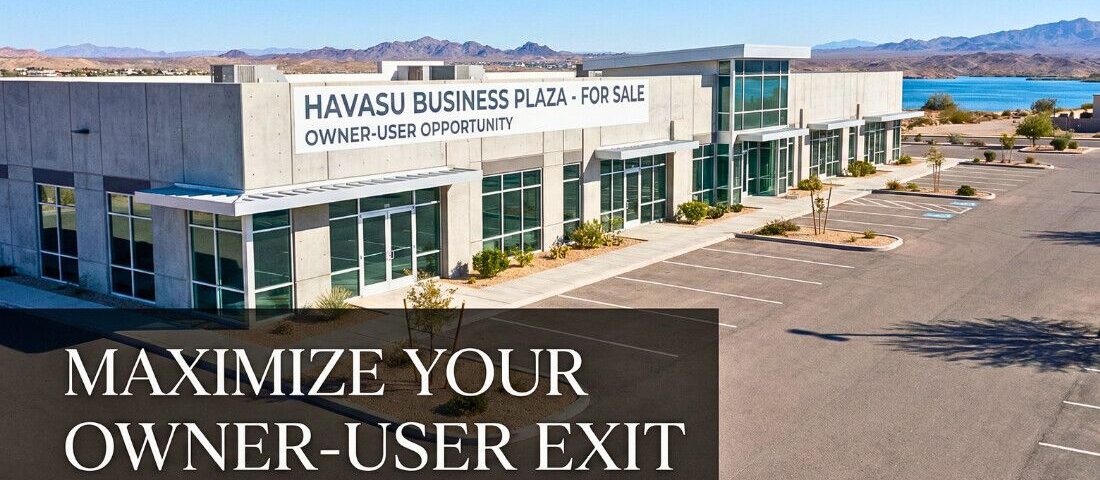
Underwriting for an owner-user exit can make sense. In the right deal, it can add meaningful dollars to your sale price. But in a market like Lake Havasu, that premium comes with conditions.
An owner-user exit isn’t just a pricing strategy. It’s a bet on who shows up and when. The buyer pool is smaller, the window is narrower, and your margin depends on timing you don’t control.
If that timing slips, projected upside turns into exposure. Here’s how we evaluate that trade-off when real capital is at stake.
When an Exit Becomes a Gamble
The pitch sounds straightforward: investors price the property at one number, while owner-users may pay more. Under that logic, the plan becomes selling to an owner-user. Sometimes that works.
Owner users often pay a premium because they’re buying control, stability, and long-term positioning. They’re not just underwriting income. But that premium comes with strings attached. The buyer pool is small, and the outcome depends on timing and fit.
Their decisions align with business needs, such as lease expirations, expansions, or operational shifts. You rarely have a deep bench of interchangeable buyers. At any moment, there may be only one serious candidate.
If that buyer doesn’t appear when you need them, pricing reverts to the investor market. When a deal only works at owner-user pricing, you’re not executing a strategy. You’re taking a timing bet.
Why Owner-Users Pay a Premium
Investors underwrite a property based on predictable yield, looking at numbers like:
- Cap rate
- True net income
- IRR
- Cash-on-cash return
Owner users evaluate value differently, considering:
- Control of their space
- Long-term occupancy costs
- Replacement cost
- Time value of construction
- Strategic location
If building from scratch costs more or takes two years, paying a premium today can make sense. If owning stabilizes occupancy costs in a rising market, that premium often pencils out.
The premium is real, but conditional. It depends on the business, the timing, and the available alternatives. Owner-user pricing is not irrational. It simply runs on a different model, and that model becomes fragile if timing shifts.
When the Right Buyer Shows Up
I saw this play out with a large office building in Scottsdale.
As a pure investment, it likely traded in the mid-$2 million range. Office demand had softened, and a few units had gone vacant.
The owners didn’t rush to refill the space at a discount. They chose deliberation over lost income and compressed value. They left some units vacant and positioned the asset for an owner-user.
That was not a small move. Vacancy carries a cost. In a soft office market, it carries real risk. You’re betting that the right buyer shows up before the drag erodes value.
In this case, the right buyer did appear. Lease timing aligned. The use matched the building. The property sold for just over $3 million, about $400,000 more than it would have fetched as a straight investment.
It worked. But it worked because the buyer pool, timing, and positioning aligned. That’s not something you can force. Success stories are real, but they are situational. You cannot copy the outcome without understanding the setup.
Sizing the Owner-User Pool
In a major metro, businesses cycle through leases constantly. Expansions, relocations, and consolidations create movement. There are simply more opportunities for the right buyer to appear.
In Lake Havasu, the business base is smaller. Inventory is tight, and the owner-user pool is even tighter. You’re often waiting for:
- A lease to expire
- A business to outgrow space
- A relocation decision
- A strategic expansion
- A very specific use case
That reality is inherently timing-dependent. If your hold costs are high or debt is tight, waiting can quickly erode margin.
Vacancy isn’t free. Taxes, insurance, utilities, and opportunity costs continue whether a buyer shows up or not.
Backing Into Value and Protecting the Downside
A disciplined investor will stress-test a property before relying on an owner-user exit.
- The Owner-User Pool: How many realistic owner-users exist for this specific asset? Not theoretical, but actual businesses in this market that could occupy the space within 12 to 24 months.
- Holding Costs: What is the real cost of waiting? Use actual expenses, not optimistic projections.
- Investor Pricing: If the deal reverts to investor math, does it still pencil? Does it protect the downside?
If the investment only works at owner-user pricing, you’re not building margin. You’re creating exposure. When the investor math works first, the owner-user premium becomes upside.
That’s the disciplined approach. We back into value using true net income and realistic cap rates, then evaluate the optionality of an owner-user exit.
When Owner-User Underwriting Makes Sense
It makes sense when fundamentals support it, not when hope does.
An owner-user strategy becomes rational when:
- The building is highly functional for a common local use
- Replacement cost meaningfully exceeds the purchase price
- Land or zoning constraints limit new supply
- The owner can comfortably hold through a longer marketing period
- Investor pricing already protects the downside
In those cases, you’re not gambling. You’re layering optionality on top of a solid floor.
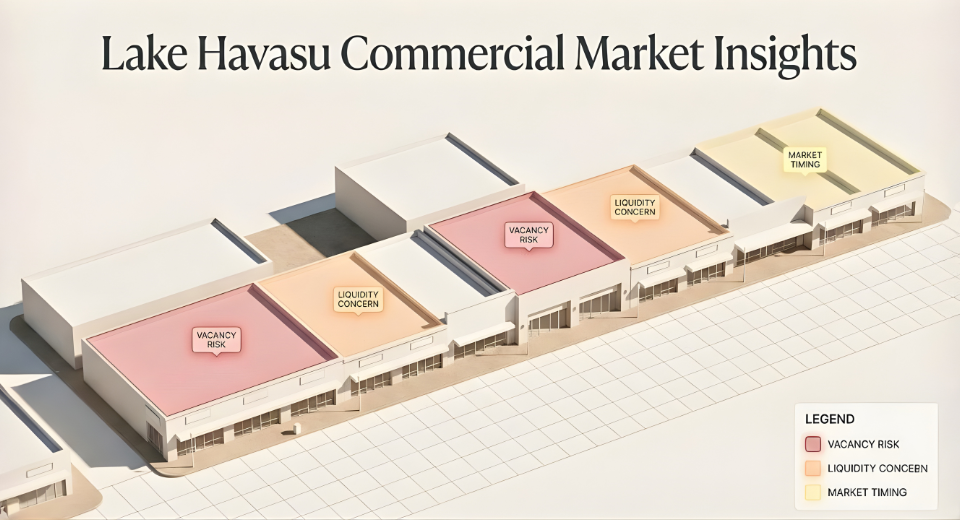
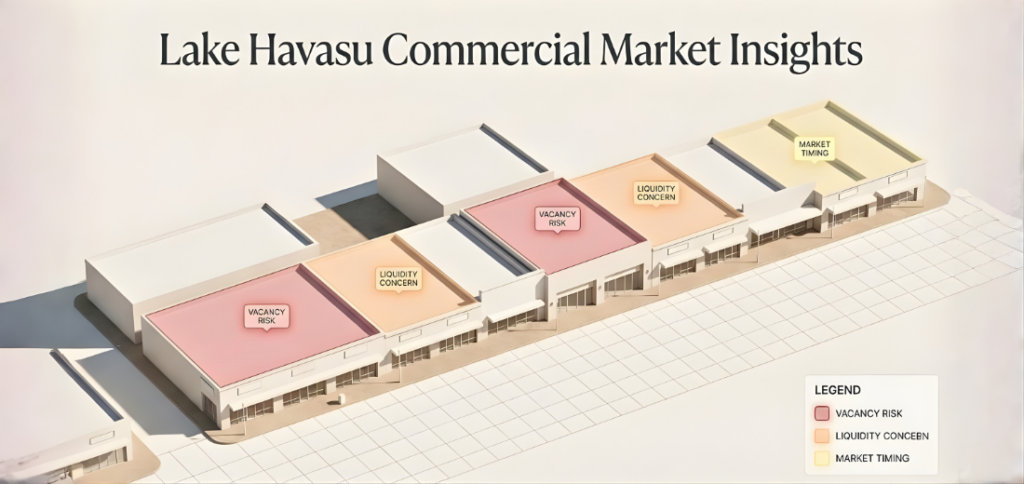
If the use is highly specialized and the buyer pool is thin, liquidity risk rises quickly. The more specialized the building, the more disciplined you must be when assuming a premium exit.
Common Questions on Owner-User Premiums
Do owner-users always pay more than investors?
No. Owner-users often pay a premium, but only when the building fits their operational needs and alternatives are expensive. If they can lease comparable space at a comparable cost or build at a similar cost, the premium disappears.
How do I estimate owner-user demand in Lake Havasu?
Start with real businesses that match the property’s use. Review lease expirations, growth trends, and space constraints. Identify companies that have recently expanded or relocated. That creates a realistic picture of demand depth rather than relying on theory.
What if I leave space vacant to attract an owner-user?
It can work, but only with a clear cost analysis. Calculate the carry and define your risk window. In a soft segment, prolonged vacancy can erode value if the right buyer does not surface.
Should I price above investor value from day one?
Sometimes, but only with a plan. Pricing for an owner-user premium often means a longer timeline and limited buyer activity. Identify the investor floor first, so you understand where value resets if demand thins.
Is this strategy riskier in smaller markets?
Yes. Smaller markets have fewer businesses cycling through space at any given time. That makes timing more critical and increases liquidity risk as the buyer pool narrows.
How do I protect the downside on an owner-user exit?
Underwrite the deal as if you must sell to an investor. Confirm that true net income supports the price at realistic cap rates. When the investor math works first, the owner-user premium becomes upside rather than a requirement.
Discipline Wins on Owner-User Exits
An owner-user exit can deliver upside, but it can also cost time and margin if the buyer never shows. Higher price. Smaller pool. Greater timing risk.
At Shuffler Commercial Realty, we start with the investor floor, underwrite true net income, and apply realistic cap rates. Only then do we evaluate the owner-user premium as optional upside rather than a necessity.
Stress-test both paths. Know the floor. Understand the timing risk. Start your conversation with us today.