What CRE Investors Underestimate About Renovation Costs in Lake Havasu
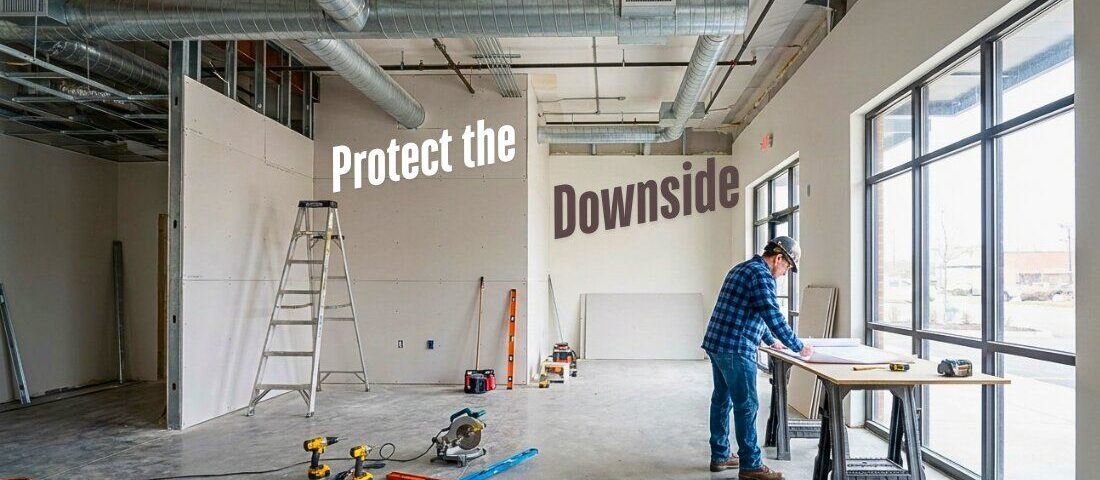
In Lake Havasu commercial real estate, a familiar pattern keeps repeating. The deal looks solid on paper. Then the renovation budget lands.
Value-add seems simple: paint, clean, add a wall, upgrade the space, raise the rent. In reality, construction surprises in a smaller market can turn a projected 12% return into 4% almost overnight.
Tight inventory pushes buyers toward older properties. Those properties carry deferred maintenance, outdated systems, and hidden code issues, exactly where renovation budgets are most often underestimated.
Fail to protect the downside up front, and you end up owning the surprise. If your returns depend on everything going perfectly, the math is already stretched too thin.
Why Renovation Budgets Always Surprise
Underestimating renovation costs is simple. Actual construction expenses run higher than expected, and developers overestimate potential rent increases.
We hear it all the time:
- “It’s just a wall.”
- “It’s a small TI.”
- “We can get that done for five grand.”
Putting up a wall sounds easy. But once you factor in permits, labor, and materials, that five grand quickly grows. Add electrical and HVAC adjustments, fire-suppression tie-ins, inspections, and ADA compliance, and it can easily reach fifteen.
Construction rarely comes in under budget. Material costs fluctuate, inspectors require changes, and timelines stretch.
In a tight-margin deal, these underestimated costs directly reduce net income. Small miscalculations compound fast in a market where rent ceilings are real, and the tenant pool is limited.
Real Value Add vs. Wishful Thinking
True value add is measurable. You invest capital, increase true net income, and calculate value based on that increase.
For example, adding washers and dryers to units in the right property can justify a $200–$300 monthly rent increase. If the cost aligns with the added net income, that’s real value creation.
Cosmetic upgrades that assume rents will rise without evidence are different. In Lake Havasu, tenants have budget limits, and the market has a ceiling. Rent bumps based on hope instead of verified comps don’t pencil.
If you cannot tie renovation dollars directly to higher true net income, you’re speculating.
TI Assumptions That Sink Deals
Tenant improvements are where cost underestimation hits hardest. A Pilates studio signed a lease and planned a buildout. The husband worked in construction, so confidence was high, and the vision was clear.
Then the bids came back higher than expected. Electrical upgrades were necessary. HVAC adjustments added more costs. Permits took longer. Cash reserves drained faster than planned.
The business ran out of money before opening. They had a plan and a lease, but they lacked the capital.
From the owner’s perspective, that meant vacancy, re-leasing costs, lost time, and potential legal friction. In a smaller market, replacement tenants are scarce, and time is expensive. That’s how underestimated renovation costs turn into real financial risk.
A tenant with thin capital and aggressive buildout assumptions risks their business, and raises your risk as an owner.
Backing Into Value the Right Way
Savvy investors run a renovation reality test before closing on a property.
- Get Real Bids: You need hard numbers, not guesses. That means written bids from licensed contractors who have walked the space.
- Permits and Compliance: Plan for ADA upgrades, fire code compliance, electrical panel upgrades, plumbing changes, and inspections. These are not optional.
- Contingency Planning: If the buildout is $50,000, is there another $10,000 to $15,000 available? If not, the deal is fragile.
- Check the Math: Does the rent increase justify the cost on paper? If the improvement only works when everything hits budget perfectly, it does not pencil out.
We always ask: if costs run 20 percent over, is the downside still protected?
Strong deals survive bad surprises. Weak deals collapse under normal ones.
Why Small Markets Hit Harder
Aggressive rent growth can sometimes mask construction overruns in larger metros. You can push rates and let appreciation cover mistakes.
In Lake Havasu, rent ceilings are real, and the market limits the tenant pool. You cannot force Phoenix-level pricing just because finishes look nicer.
On the ground, the pattern is familiar. Inventory is tight, and older properties trade because there is little else available. Buyers convince themselves they can “clean it up” and quickly boost income.
Then real bids come in. Costs stretch. Cap rates move in the wrong direction. IRR projections soften.
In a small market, there’s no wave of demand to bail you out. The smaller the market, the more disciplined the underwriting must be.
Protecting the Downside on Renovation Deals
Renovation itself is rarely the problem. Loose underwriting is.
Downside protection comes from:
- Backing into value from true net income, not resale hope
- Stress-testing renovation costs at 10 to 20 percent over estimates
- Verifying rent comps before assuming increases
- Evaluating tenant financial strength on TI-heavy leases
If we cannot explain exactly how each dollar invested increases stabilized net income, we pause. In commercial real estate, surprises are standard. Planning for them is the operator mindset.
Your Renovation Questions Answered
Is underestimating renovation costs really that common?
Yes. It happens constantly in small and mid-size commercial deals. Buyers anchor to a number they want to believe, then rationalize it. Contractors rarely guarantee fixed outcomes without change orders.
How much contingency should I carry on a renovation?
Typically, 10-20% of the total renovation budget is prudent. Older buildings may require more. Outdated or undocumented systems increase risk. Without sufficient contingency, the project becomes overleveraged.
Are cosmetic upgrades ever enough to raise rent?
Sometimes, but only if the property is materially below market standard. Even then, rent increases must align with verified comps. In Lake Havasu, you can’t assume dramatic jumps. The math must support the story.
Should owners fund large tenant improvements?
It depends on the tenant and lease structure. Strong tenants with long-term leases and solid financials can justify owner-funded TI. Weak tenants with thin capital create layered risk.
Does renovation risk affect the cap rate?
Indirectly, yes. If renovation costs exceed projections and net income doesn’t increase proportionally, your effective return drops. That compresses yield and changes the actual cap rate.
How do we evaluate a value-add deal correctly?
Start with in-place income. Then model post-renovation true net income using documented rent comps. Subtract realistic renovation costs plus contingency. If the return still works under stress, the deal may pencil.
Make Your Renovation Pay Off
If you’re considering a value-add or TI-heavy deal in Lake Havasu, Shuffler Commercial Realty can help assess the numbers. We guide investors step by step, ensuring every assumption is grounded in reality.
Start your conversation with us today and make your next deal a smart one.