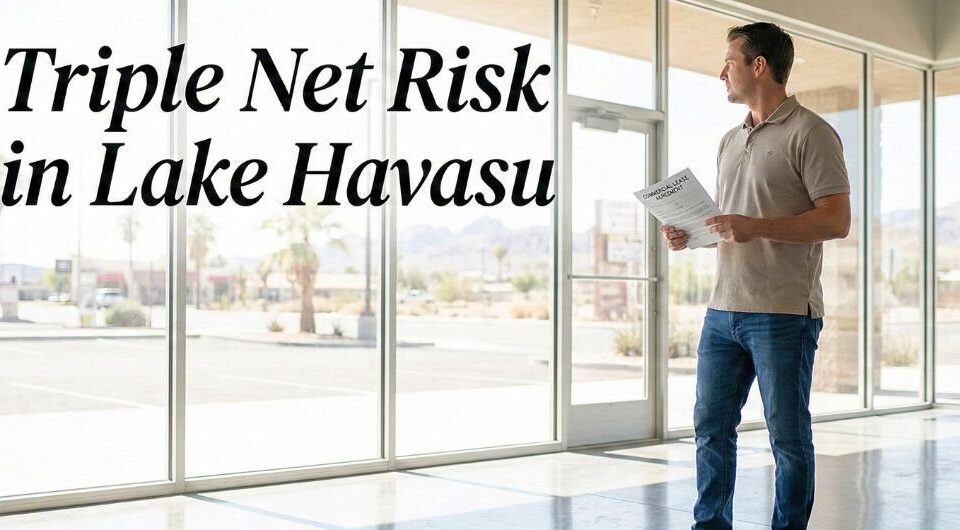
The Reality of Water Risk in Lake Havasu Commercial Real Estate

Every market has background risks. Interest rates, politics, and headlines influence sentiment, but they rarely stop institutional underwriting.
In Lake Havasu, there’s one factor that changes deals before a project starts: water.
Zoning, sewer, and power matter for feasibility, but water determines whether a deal moves forward. This reality surprises many investors until they see how underwriting actually works here.
Why Water Freezes Serious Capital
Most buyers want water risk to stay in the future tense. They want it to be someone else’s problem.
We hear these questions all the time:
- Isn’t that a residential issue?
- Won’t the state solve it?
- Will it affect existing properties?
That thinking misses how commercial underwriting actually works. Markets do not wait for shortages. They price uncertainty early.
Long before taps run dry, risk shows up in cap rates, return thresholds, and lender assumptions. By the time water becomes a headline, it has already reshaped the math.
How Water Shapes Deals in Havasu
Lake Havasu’s supply comes directly from the Colorado River system. That matters because allocation drives outcomes far more than rainfall headlines.
From an operator’s perspective, the reality looks like this:
- A meaningful portion of the available allocation is already committed.
- Growth assumptions rely on continued access, not expansion.
- Interstate allocation disputes create timing risk, not panic risk.
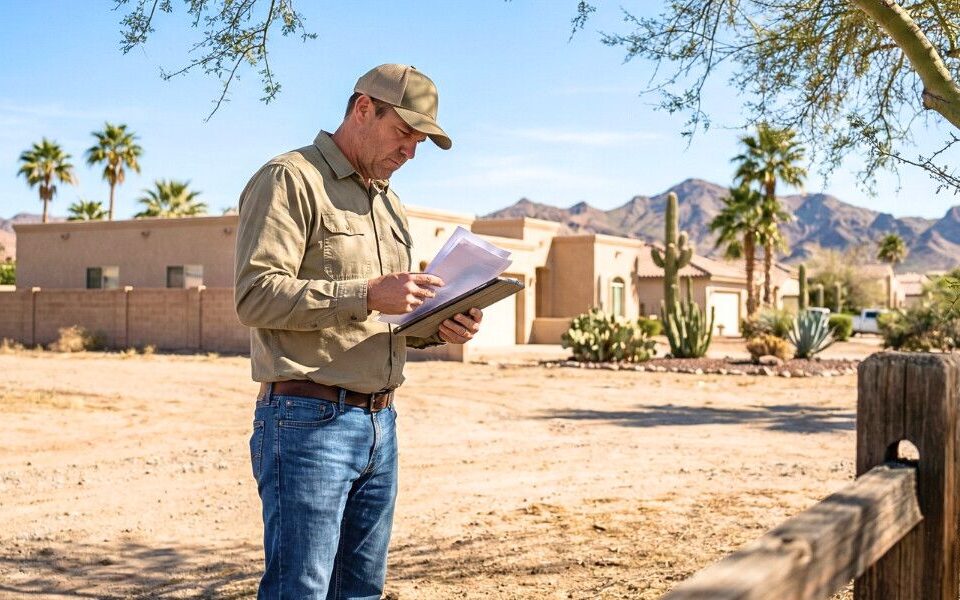
Water risk shows up most in specific deal types: ground-up development, water-intensive uses, and long-horizon projects where timelines matter. Buyers who ignore these factors often assume everything else will carry the deal. Savvy investors raise the issue early because it can make or break a deal before the first shovel hits the ground.
Allocation percentages, policies, and timelines shift over time. Water is a risk variable, not a prediction. Ignoring it in your model is the fundamental mistake.
Sewer, Power, and Gas Are Easy to Solve
Out-of-market buyers often lump all utilities together, but that assumption overlooks local realities.
The sewer system is strong. Lake Havasu City made the expensive move away from septic systems years ago. Electric and gas generally reach property lines, with exceptions at the property level, not system-wide. If utilities kill a deal, it is usually because someone failed to check early, not because the system failed.
Water is different. It’s regional, political, and slow-moving. Those traits make it easy to overlook and easy to misprice. Diligence and dollars can address sewer and power. Optimism cannot address water risk.
How Water Quietly Changes Deal Math
Water rarely kills a deal on its own. It changes how investors calculate value.
Long entitlement timelines combined with water uncertainty push required returns higher. Redevelopment often wins because exposure windows are shorter. Existing income frequently outperforms speculative upside once investors price risk honestly.
That’s why redevelopment trades at 7-8 percent actual net. New construction struggles to justify 3-4 percent caps when assumptions are stress-tested. Water does not kill deals. It raises the bar.
Deals that rely on uninterrupted growth and perfect timing do not pencil out once water enters the equation.
A Realistic Operator Scenario
Imagine two buyers evaluating similar sites:
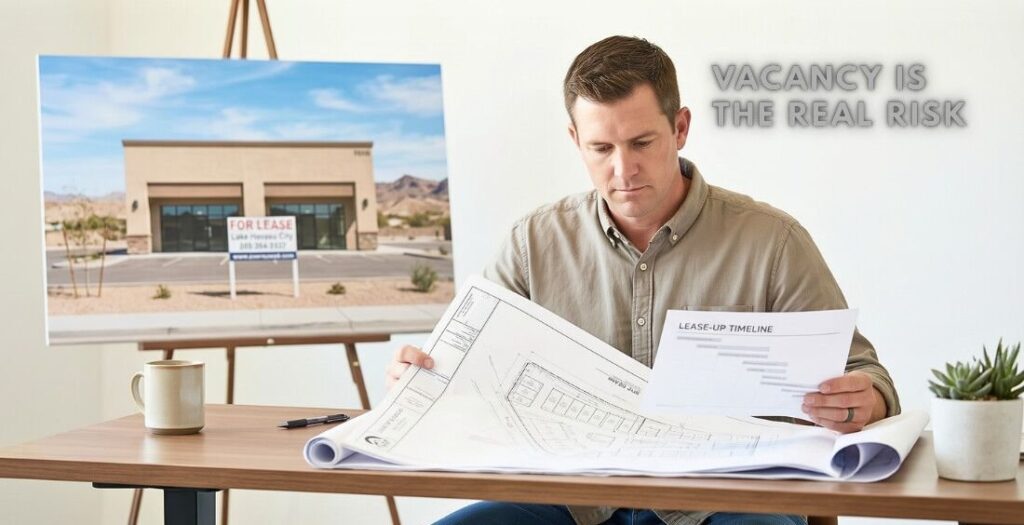
- Buyer A underwrites five years to stabilization. They assume smooth entitlements, expanding demand, and uninterrupted utility access. Water never appears in the sensitivity table.
- Buyer B shortens the timeline and leans on existing improvements. They also demand higher yields to account for regulatory and allocation uncertainty.
Under Buyer A’s assumptions, everything must go perfectly. Buyer B protects the downside.
Only one approach survives an unexpected delay, reflecting how operators think when it is their own money.
The Real Risk Is Assumption
The biggest underwriting mistakes we see in Lake Havasu come from what buyers assume:
- Growth happens automatically
- Utilities are infinite
- Time is neutral
In this market, time is risk. The longer the capital waits for a return, the more factors beyond its control affect it.
When Water Matters Most
Water risk shows up most in specific deal types:
- Ground-up development with multi-year entitlement timelines
- Projects that rely on heavy water use
- Long-horizon plays that depend on aggressive rent growth assumptions
Water matters far less in stabilized assets with reliable net income. It also plays a minor role in short-hold strategies or redevelopment, where timelines remain under control.
Not every deal carries the same exposure. Water risk is deal-specific, not market-wide.
What This Market Rewards
Lake Havasu rewards buyers who respect constraints. Inventory is tight. Growth is not frictionless.
Deals that perform well tend to share key traits:
- Shorter paths to cash flow
- Conservative assumptions
- Returns that compensate for factors beyond control
Off-market and coming-soon opportunities matter more here than anywhere else. By the time a “perfect” story hits the open market, the margin for error is gone.
A Reality Check on Headlines
There is no need to panic buy or freeze up. Taps do not shut off overnight. In Lake Havasu, uncertainty shows up quietly in underwriting long before it affects daily life.
Investors who succeed here do not ignore water. They:
- Price it
- Adjust timelines
- Demand returns that reflect reality
That’s how you stay in the game.
Your Water Risk Questions Answered
Is water risk already priced into Lake Havasu deals?
Partially. Some sellers still price as if growth is automatic. Knowledgeable buyers discount long timelines and speculative assumptions. The gap between those views is where deals either happen or stall.
Does water risk affect existing properties?
Indirectly. Existing income properties benefit from shorter exposure windows. They are not immune, but they carry less risk than projects depending on future entitlements or expansion.
Is this mainly a residential concern?
No. Commercial underwriting reacts to uncertainty faster than residential demand. Capital markets move ahead of lifestyle decisions.
Will the state or federal government solve this?
Policy responses tend to manage timing rather than eliminate risk. Underwriting should assume uncertainty will continue, not disappear.
Should water stop me from investing in Lake Havasu?
No. It should shape what you buy, how you structure the deal, and what return you require. Discipline is what matters.
Which deals are most exposed?
Ground-up development, water-intensive uses, and long-horizon projects with thin margins. Stabilized assets with actual net income carry less exposure.
Underwrite Lake Havasu Deals Like a Pro
In Lake Havasu, ignoring water does not create value. Modeling it correctly by pricing it, adjusting timelines, and reflecting it in your returns does. That’s why operators who respect water risk consistently win the math.
At Shuffler Commercial Realty, we make it simple to see the real numbers. For a quick, no-pressure reality check, send us the address. We’ll run a true-net snapshot and show how water exposure affects your deal.
Connect with my team today and see how confidently your Lake Havasu commercial investment can perform.