Three Competitive Advantages Driving the Kingman Industrial Corridor
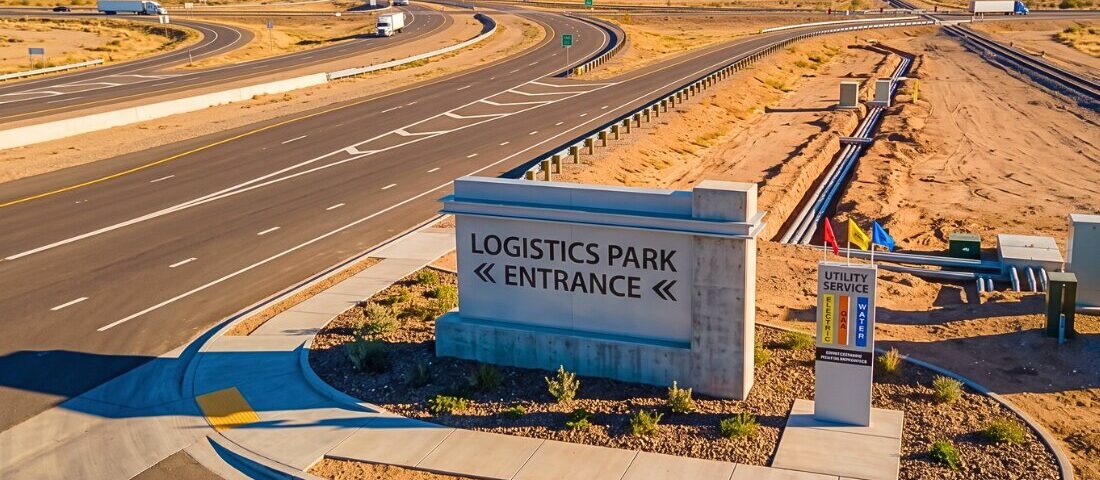
Kingman, Arizona, sits at the intersection of two of the most significant freight corridors in the country. That is a geographic fact. It helps explain why major industrial projects continue choosing Kingman while comparable secondary markets watch from the sidelines.
For land buyers and industrial investors evaluating site selection, the Kingman industrial corridor deserves a closer look. Its combination of highway access, rail connectivity, and development-ready infrastructure creates an opportunity few secondary markets can match.
Kingman's industrial corridor benefits from a rare convergence of I-11, I-40, transcontinental rail access, and an oversized World War II-era airport runway. A newly funded $45 million interchange will connect the airport industrial park directly to I-40. Land with confirmed utilities currently runs $15,000 to $30,000 per acre, but utility access, not proximity, determines which parcels actually pencil.
Three Freight Assets Set the Corridor Apart
I-11 anchors Kingman's position along the CANAMEX corridor, which runs from Mexico to Canada. A truck moving north from Mexico can travel through the area, continue toward Utah, and reach Canada within roughly three days. Few routes in the American West offer the same direct freight connection.
That is an operational advantage today, not a speculative future benefit. It is one reason national logistics users continue evaluating Kingman when running site selection models. I-11 intersects with I-40 here, while I-40 stretches from California to North Carolina. Two major freight corridors converge in a single market.
Most secondary markets excel in one area, whether interstate access, rail connectivity, or aviation capacity. Kingman combines all three. Learn why investors keep overlooking the Kingman industrial real estate node.
Rail access runs through the area south of the city and connects with the airport industrial park. Few secondary markets offer the same infrastructure mix: two major interstates, transcontinental rail, and an oversized runway built for wartime logistics. The CANAMEX designation further strengthens its role as a long-term freight and distribution hub.
The $45 Million Infrastructure Upgrade
The Kingman Airport and Industrial Park sits northeast of the city. Its World War II-era runway is longer than the runways at many commercial airports, creating opportunities for future logistics and cargo operations. The park has attracted steady industrial demand for years, but access has limited its full potential. Reaching I-40 required trucks to travel along Route 66 and local surface streets, adding time and inefficiency to every trip.
The new interchange removes one of the corridor's biggest logistical constraints. Funded through a $45 million partnership between the Arizona Department of Transportation and the City of Kingman, the project is nearing completion. Once it opens, trucks will reach I-40 by direct ramp instead of traveling several miles on local roads.
Randy Shuffler has been underwriting and transacting in this corridor for years. His outlook on what follows the interchange opening is straightforward.
"Kingman sits right on I-11, which runs from Mexico all the way to Canada. A trucker can make it from Mexico to Utah in three days on that corridor. Kingman hits I-40 right there, and I-40 goes all the way to North Carolina. You've got this industrial center with both highways crossing, railroad through the corridor and through the airport park, a huge runway from World War II, and now they're almost done with a new interchange that connects the airport industrial park directly to I-40. Once that's done, I would think you'll probably see one of the biggest truck stops in the West Coast on that corner."
— Randy Shuffler, Founder and Commercial Real Estate Agent, Lake Havasu City Commercial at Realty ONE Group Mountain Desert
A direct freeway connection into a major industrial park changes the types of businesses that can operate there. Improved access supports truck stops, fuel infrastructure, logistics facilities, and distribution support services. History shows that infrastructure improvements like this can accelerate development once access constraints are removed.
For land buyers, the key question is whether a specific parcel sits in the path of future demand. See how investment is already moving across the Kingman corridor.
Why Utility Access Trumps Proximity
This is where the conversation shifts from market trends to underwriting. Land in the Kingman industrial corridor with confirmed utilities currently runs between roughly $15,000 and $30,000 per acre. Much of that price difference comes down to utility availability. Acreage with confirmed water, sewer, and power commands a significant premium over raw land sitting a quarter mile from the nearest infrastructure line.
Most buyers miss the distinction between proximity to infrastructure and actual utility access. A parcel just 400 feet from a utility line could still wait years for service. It depends on how quickly development extends in that direction. Buyers who mistake proximity for availability often overpay for land that does not pencil at current construction costs.
The airport industrial park is largely built out, pushing the next wave of large-format industrial demand into south Kingman. A recent 40,000-square-foot industrial transaction there is a leading indicator, not a trailing one. The underwriting question is which parcels benefit from nearby interchanges and utilities, and which remain too costly to develop.
Want a one-page corridor brief before you commit to a specific site? Reach out to Randy Shuffler before underwriting a parcel without confirmed utility access or interchange proximity.
First-Phase Parcels vs. Multi-Year Holds
Land with confirmed utilities in this corridor generally trades between $15,000 and $30,000 per acre. Without them, the investment math changes substantially. The gap between served and unserved land is where returns are often won or lost.
Parcels that pencil today tend to share three traits. They have confirmed utilities to the property line, direct or near-direct interchange access, and proximity to buildings already filling with tenants. Parcels missing one of those advantages typically belong to a later phase of development. That usually means a longer hold, higher carrying costs, and a more speculative return profile.
Randy describes that gap well:
"With utilities and stuff, land in the corridor right now, if it actually has all utilities, is going somewhere between $15,000 and $30,000 an acre, give or take. There's going to be a lot of land that's only a quarter acre from infrastructure and it just doesn't get there overnight. It could be another five years, depending on how fast it grows. It'll be real interesting to see what it looks like in the next five to ten years."
— Randy Shuffler, Founder and Commercial Real Estate Agent, Lake Havasu City Commercial at Realty ONE Group Mountain Desert
The difference between "near infrastructure" and "served by infrastructure" can add years to a development timeline. Buyers who expect quick utility extensions often underestimate carrying costs because those projects move on municipal schedules, not investor timelines. U.S. Census Bureau building permit data for Mohave County provides a useful benchmark for measuring how quickly the area is absorbing new development.
For investors, the opportunity is not simply finding inexpensive land. It is identifying parcels where infrastructure timing aligns with the investment timeline.
Common Questions About the Kingman Industrial Corridor
Why does Kingman attract large-scale industrial tenants?
Kingman sits at the intersection of I-11 and I-40, two of the country's most important freight corridors. I-11 follows the CANAMEX route from Mexico toward Canada, while I-40 connects California to North Carolina. Combined with transcontinental rail and an oversized airport runway, this infrastructure makes Kingman attractive to national logistics and distribution users.
What does land in the Kingman industrial corridor cost in 2026?
Land with confirmed utilities, meaning water, sewer, and power delivered to the property line, generally ranges from $15,000 to $30,000 per acre. Raw land without utility service typically trades for less. Extending utilities can take years, depending on development activity and municipal infrastructure planning.
What is the difference between proximity to utilities and confirmed utility access on a Kingman parcel?
A parcel located near utility lines is not the same as one with utility service to the property line. Utility extensions move on municipal infrastructure schedules, not investor timelines. Confirm water, sewer, and power availability before modeling construction costs or development timelines.
Is the Kingman Airport Industrial Park still available for new development?
The airport industrial park is largely built out. Much of today's large-format industrial demand is shifting into the south Kingman corridor. Buyers continue evaluating land positioned for future growth.
How does the new $45 million I-40 interchange affect land values near the airport industrial park?
Improved freeway access strengthens the area's appeal for industrial users and freight-related businesses. Parcels with confirmed utilities closest to the interchange are generally best positioned to benefit from early demand. Sites farther away may require longer investment horizons.
What role does the CANAMEX designation play in Kingman's industrial demand?
The CANAMEX corridor is a federally recognized freight route that supports long-term logistics planning across North America. That designation reinforces Kingman's strategic position for companies evaluating future distribution and transportation networks.
What are the three characteristics that define first-phase parcels in the Kingman corridor?
First-phase parcels offer utility service to the property line, direct interchange access, and proximity to active tenant demand. Parcels missing one or more of these characteristics generally require longer hold periods and carry greater development risk.
How can buyers verify whether a Kingman parcel has utility service?
Do not rely solely on aerial maps or marketing materials. Confirm whether water, sewer, and power are available at the property line with the appropriate utility providers and local agencies. A parcel located near existing infrastructure may still require costly utility extensions that can significantly affect development timelines and project economics.
Know Which Kingman Parcels Pencil
The investment thesis is no longer the hard part; choosing the right parcel is. The challenge is identifying which sites are ready for first-phase development versus those still waiting for utilities and growth. Buy the wrong parcel, and a five-year utility delay can turn a promising investment into a carrying-cost problem.
Successful underwriting requires more than a strong corridor thesis. Randy Shuffler tracks the Kingman industrial corridor down to the individual parcel level. Contact Lake Havasu City Commercial for a one-page brief before underwriting a site lacking utilities or interchange access.
Randy Shuffler is the founder of Lake Havasu City Commercial and a commercial real estate agent at Realty ONE Group Mountain Desert. Holding the CCIM designation and a BS in Finance from San Diego State University, he brings over 20 years of commercial real estate experience. He specializes in underwriting and transacting properties across Lake Havasu City, Kingman, and the broader Mohave County corridor.
ABOUT THE AUTHOR
Randy Shuffler | Founder & Commercial Real Estate Agent, Lake Havasu City Commercial | CCIM | 20+ years in real estate & finance | $5M+ in verified sales | 52,000+ sq ft transacted | BS Finance, San Diego State University | Realty ONE Group Mountain Desert