The Kingman I-40 Corridor Is Already Moving
The Kingman I-40 Corridor Is Already Moving
Investors who wait for proof before committing capital in Kingman are already late. Warehouse construction is underway along the heavy industrial corridor. Heavy industrial MX zoning at scale is fully in place. The infrastructure connecting this corridor to Long Beach, Phoenix, Las Vegas, and beyond is stronger than ever.
The question is not whether Kingman is becoming a serious logistics node. It is whether you are positioned before that becomes consensus.
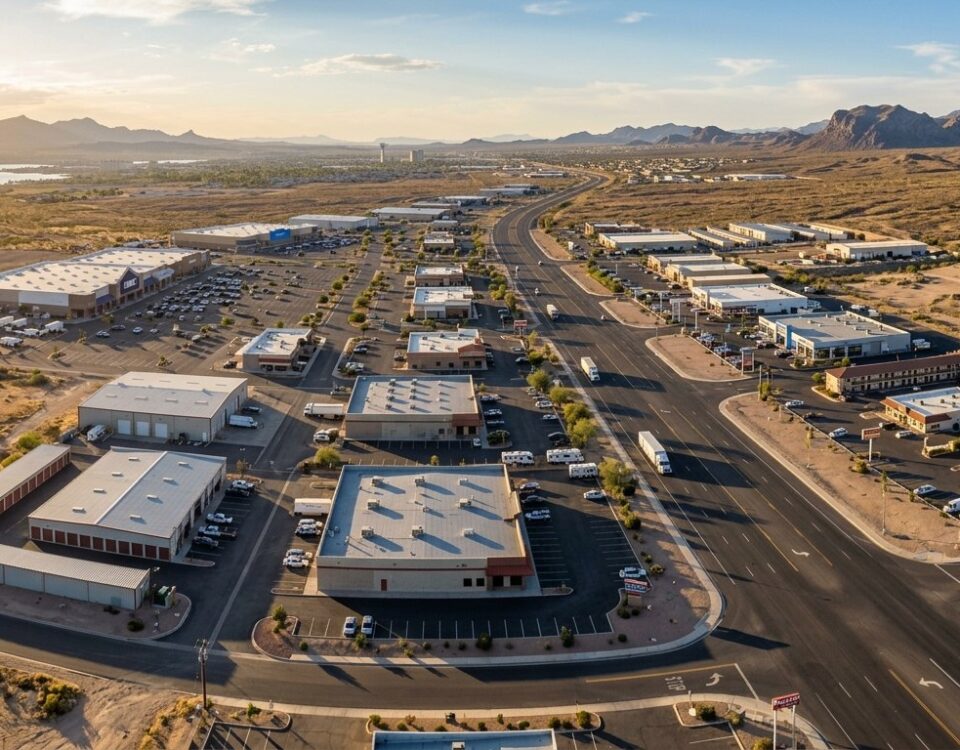
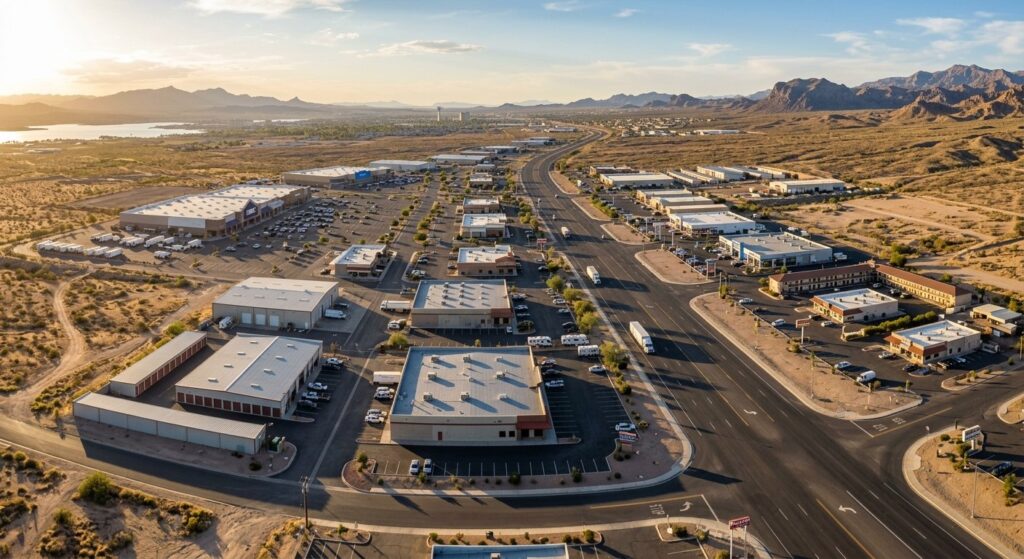
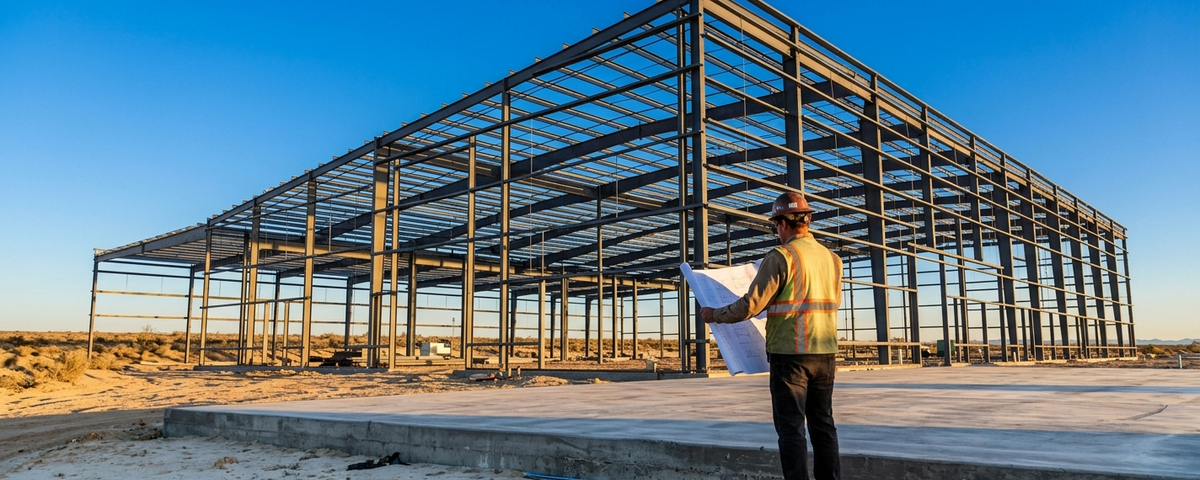
Multiple large-format warehouse facilities are under active construction along Kingman’s heavy industrial corridor. Nearly one million square feet across three projects is already in motion. The zoning, infrastructure, and absorption patterns are established, not projected. Investors who wait for full market confirmation will compete for what remains at higher valuations.
The On-the-Ground Reality in Kingman
The inland port conversation around Kingman has circulated for years. As the conversation has taken more time, it has increased skepticism.
What is happening on the ground right now is different from what is being said. Multiple warehouse facilities are under active construction along the industrial corridor south of Kingman. One company has already put up 300,000 square feet. Another 300,000 square feet is under construction, and a third project is just getting started.
These are buildings going vertical on entitled heavy industrial land. They are not renderings or planning committee discussions. They are not feasibility studies waiting on a vote. That distinction matters when you are evaluating whether a market is ready.
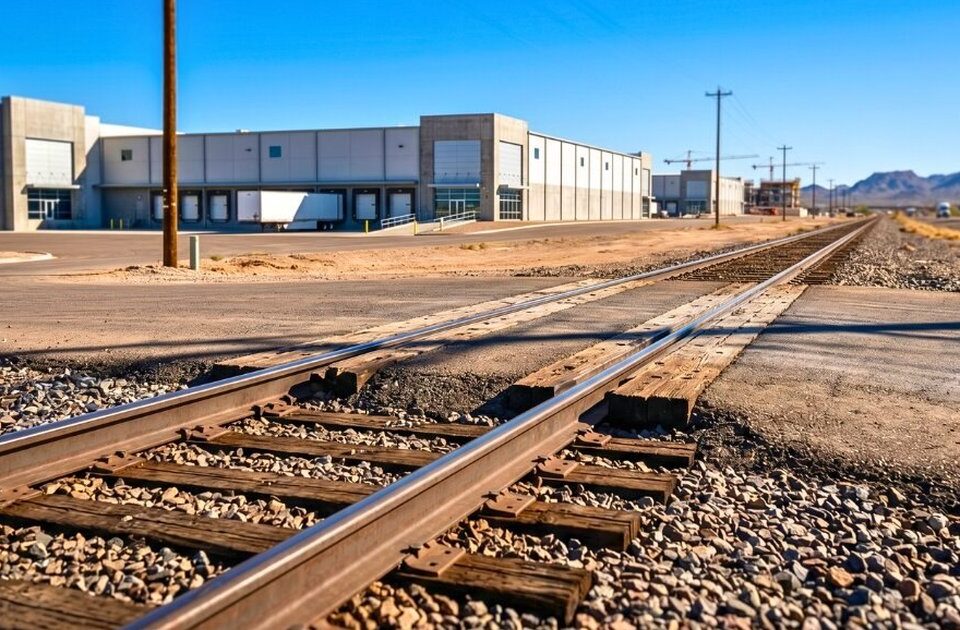
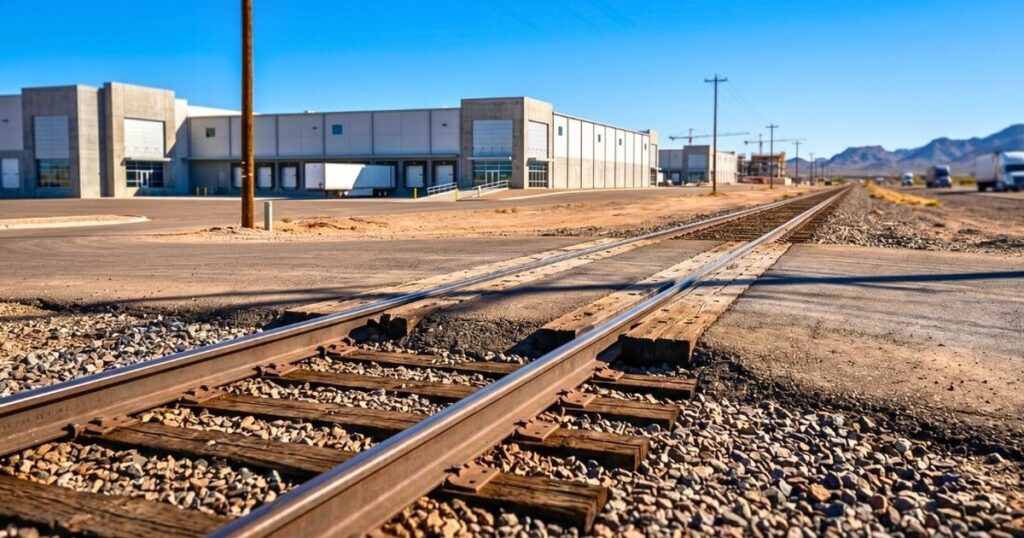
Kingman sits at the intersection of I-40, connecting California to the eastern United States. The I-11 corridor runs from Mexico through Phoenix to Las Vegas and into Canada. Rail lines run through the area as well.
The airport, built during World War II and still operational, provides the corridor with freight capacity that most inland markets at this scale lack. Solar plants, gas operations, block manufacturing, and large-format warehouse operators have all landed here for the same reasons.
The inland port thesis connecting the Port of Long Beach overflow to Kingman has been discussed alongside Victorville and Yuma as competing candidates. A formal designation may or may not follow. Either way, the industrial absorption underway is real and accelerating.
Is Waiting For Confirmation the Safer Play?
The standard investor instinct is to wait before committing capital. That instinct serves you in volatile or speculative markets. It does not serve you here.
By the time a Kingman industrial play reads as obviously safe, the land will have repriced. Available inventory will have thinned considerably by then as well.
Investors who moved earlier will hold the basis that makes returns possible. Those who waited for consensus will compete for remaining parcels at higher valuations. That is not a position worth waiting your way into.
Heavy industrial MX zoning is not abundant in this region. What is zoned and permitted in this corridor took years to establish. It cannot be replicated quickly, and that scarcity is a core piece of the underwriting thesis.
You can read our post about similar supply-side dynamics playing out in the light industrial market in the city of Lake Havasu. It’s a good read for anyone interested in investing in the area.
An Inside Look at the Kingman Industrial Corridor
The zone is heavy industrial MX, the highest industrial classification available. The corridor already hosts solar plants, gas operations, and block manufacturing alongside the emerging warehouse sector.
Airport proximity is also key to industrial investment in the area. It gives the market logistics optionality that most industrial corridors of this size lack.
Randy Shuffler has tracked this corridor closely for more than two decades. He describes it with the specificity of someone who has walked it repeatedly. That is a different thing from reading a market report out of Phoenix.
“Kingman sits on what would be I-11, which runs north and south, and then I-40, which connects California to the east coast. The railroad goes through it. And they have this large airport from World War II days. Industrial-wise, it’s just this perfect location.” – Randy Shuffler, Founder and Commercial Real Estate Agent, Lake Havasu City Commercial at Realty ONE Group Mountain Desert
How to Underwrite a Kingman Industrial Position
If you are underwriting a position in the Kingman corridor, here is where to focus your attention.
- Zoning Classification: The designation is heavy industrial MX, the highest available industrial classification. You are not working with light industrial or transitional zoning that carries future rezone risk. What gets built there is permanently built for industrial use.
- Absorption Sequencing: Large-format warehouse operators who commit to a market sequentially signal confidence to one another. The third facility under construction did not get approved without the developers closely watching the first two. Patterns in industrial markets tend to accelerate once they are established.
- Land Availability: Arizona State Land Department disposition processes are slow and deliberate by design. Permitted and entitled industrial land in this corridor is finite. Entry points that exist today may not exist on the same basis in 12 to 18 months.
- 1031 Timing: For investors running a 1031 exchange under a 45-day identification window, this corridor warrants serious attention before the clock starts. Build your short list before the pressure hits, not during it. Pre-positioning before you sell is what makes a 1031 exchange actually work, and understanding that timing early changes how you approach the whole process.
FAQs About Kingman Industrial Corridor Investments
Is Kingman an established industrial market or still speculative?
Kingman is past the speculative stage. Nearly one million square feet of large-format warehouse space is under construction along the heavy industrial corridor south of the city. The zoning, infrastructure, and tenant activity already in place make this an emerging yet active market. Speculation implies the fundamental demand case is unproven. In Kingman, the cranes are already up, and the ground is already broken.
How does the Kingman I-40 corridor connect to national freight networks?
Kingman sits at the intersection of I-40, connecting California to the eastern United States. The I-11 corridor runs from Mexico through Phoenix to Las Vegas and into Canada. Rail access runs through the market as well. The airport adds freight optionality that most inland markets at this scale cannot match.
What is heavy industrial MX zoning, and why does it matter here?
Heavy industrial MX is the highest available industrial zoning classification. It permits large-format manufacturing, warehousing, distribution, and related uses without the restrictions associated with lighter zoning. It took years to establish itself in this corridor and cannot be replicated quickly. That creates a hard ceiling on future supply competing with existing entitled land.
What risks should investors watch in this corridor?
Infrastructure timelines are the primary variable worth watching closely. Road improvements, utility capacity, and interchange access upgrades do not always keep pace with construction demand. Before committing capital, confirm what infrastructure is funded and permitted versus what is still in the planning stage. Kingman industrial real estate carries infrastructure nuances that investors consistently underestimate, and that breakdown is worth reviewing before you underwrite.
Does airport adjacency actually affect industrial property values?
Airport adjacency expands the range of operators a market can attract over time. Facilities requiring access to air freight or combined ground-and-air distribution treat airport proximity as a site-selection filter. Kingman’s airport gives the corridor uses that pure highway or rail markets cannot accommodate. That broader operator base supports long-term demand and limits vacancy risk.
Kingman Is Not a Story Anymore
The Kingman corridor already shows visible industrial momentum on the ground. Construction activity and zoning capacity already define its industrial trajectory. Capital now competes on timing, not speculation.
Shuffler Commercial Realty tracks deals and development activity across the region. We help investors evaluate active opportunities across Kingman and surrounding industrial markets. Contact my team to review current inventory and positioning options.
Randy Shuffler is the founder of Lake Havasu City Commercial and a commercial real estate agent at Realty ONE Group Mountain Desert. He holds the CCIM designation, placing him among the top tier of commercial investment practitioners nationally, and carries a BS in Finance from San Diego State University with more than 20 years of active market coverage across the Kingman and Lake Havasu City corridors.
ABOUT THE AUTHOR
Randy Shuffler | Founder & Commercial Real Estate Agent, Lake Havasu City Commercial | CCIM | 20+ years in real estate & finance | $5M+ in verified sales | 52,000+ sq ft transacted | BS Finance, San Diego State University | Realty ONE Group Mountain Desert