Medical Office Investment in Lake Havasu City Holds Value Longer
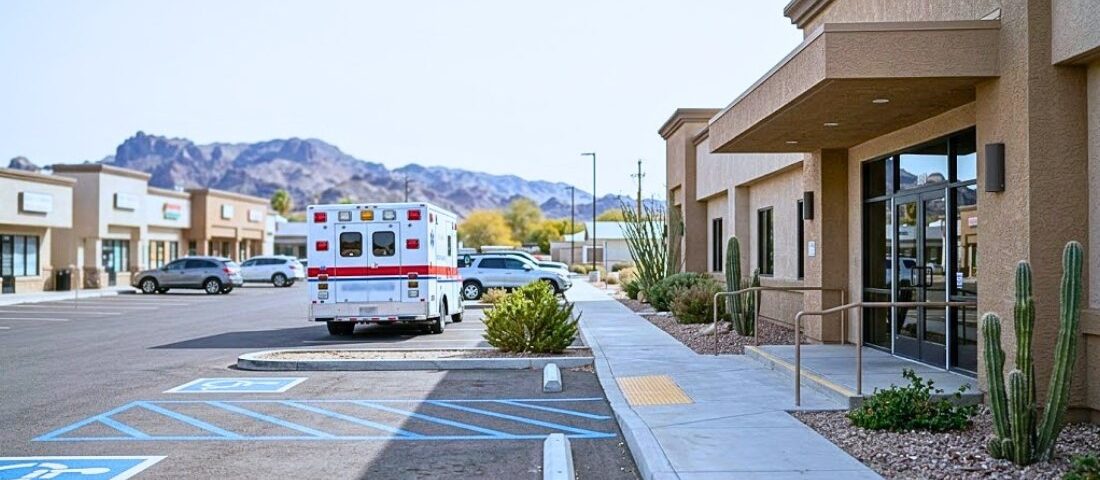
Medical office properties rarely lead the investment conversation in Lake Havasu City. Most buyers entering this market start with retail or industrial, familiar asset classes with easier comparables and more intuitive tenant profiles.
That tendency creates an opening. Once you understand how medical office trades in a landlocked market, it becomes one of the more defensible income positions available. Limited inventory and growing healthcare demand both support that view.
However, it isn't as simple as seeing the opportunity and buying properties in that sector. The lease mechanics, tenant retention patterns, and financing dynamics of this asset class reward careful investors. The best results go to those who complete the full underwriting work before falling in love with the rent roll.
Lake Havasu City medical office tenants stay longer than retail or industrial tenants because relocation costs them money and patients. Lease structures in this asset class include practitioner exit clauses that standard retail and industrial agreements do not carry. Those clauses change how lenders read the deal. Underwriting medical office investment without a full lease review alongside the cap rate math is how buyers miss the deal underneath the deal.
Medical Office Tenants Offer Greater Long-Term Stability
Medical tenants do not move when their lease expires or when their concept stops working. Buildout costs alone make relocation expensive and operationally disruptive. Plumbing, cabinetry, exam room configuration, specialized ventilation: none of that transfers to a new address. Licensed practitioners also depend on patient continuity and referral networks tied to a specific location. Moving costs them business in ways that a retailer pivoting concepts never faces.
In Lake Havasu City, the medical district concentration reinforces this pattern. When a practice locates inside an established medical corridor, it gains several reasons to stay. Proximity to other providers, steady patient flow, and a professional identity tied to that address all strengthen the bond.
That doesn't mean vacancy in a medical office is impossible. It also generally takes longer to fill these spaces than retail. However, once the property is filled, tenure tends to run long. These tenants are also more likely to sign multiple leases.
The sticky tenant profile is the core investment thesis for medical office in a smaller market with constrained supply. Tenant investment in the physical space becomes a structural retention mechanism that no lease clause can replicate.
Medical Office Leases in Lake Havasu City
Let's take the case of an off-market building that carried five-year leases with renewal options. It ran on a modified gross lease structure, placing most operating expenses on the landlord while giving tenants cost predictability. That is the kind of lease structure that attracts and holds professional practices. When the property hit the market, several existing clients were still in place and in leases.
Medical leases in this market often include exit clauses tied to licensed practitioners. In this building, tenants could exit within 180 days if a doctor lost a license, retired, or stopped practicing. That clause is common in medical office leases, but it rarely appears in retail or industrial agreements. Lenders read it as a built-in vacancy risk, so it shapes how they size and price the loan at the underwriting table.
When a 1031 investor targeted this building, the financing conversation shifted immediately. Owner-carry entered the discussion because of those exit provisions. Some banks push back on loan structures when lease exit clauses give tenants a shorter runway than the amortization schedule assumes. Buyers who underwrite medical office investment in Lake Havasu City the same way they underwrite a triple-net retail pad will miss this entirely.
I covered medical lease terms and 1031 exchanges in a recent post. It takes a closer look at the unique terms in medical office leases and the challenges they may pose in 1031 deals.
Running the Numbers on a Medical Office Building
The building my client was targeting was listed at $2.9 million. A realistic offer would land around $2.6 to $2.7 million. With $1.6 million down as a 1031 deployment, the buyer would need to finance the remainder. That makes lender comfort with the lease structure a significant underwriting question.
The capital expenditure picture deserves its own line. The building is 20 years old, and ceiling stains throughout several units suggest the roof is approaching replacement. Original HVAC units likely remain in service, and the parking lot asphalt shows its age.
None of these items would tell the investor to walk away from the deal on their own. Still, a true-net snapshot should account for all of them to ensure you can back into value at any cap rate.
What matters more than the listing price is the deferred capital stack sitting underneath it. A strong pro forma leaves enough cushion to absorb that stack without hurting your yield. The true-net underwriting discipline that applies to NNN retail applies here too, except the expense exposure sits with the landlord rather than the tenant.
For related insights, read my post about what CRE investors underestimate about renovation costs. It covers exactly how that capex optimism bias plays out in practice.
Why Lenders Hesitate on Medical Office Deals
Lenders financing income property ask for lease abstracts. That's when practitioner exit clauses surface on a medical office property. The lender will consider what a 180-day exit window means for a 25-year amortization schedule.
"A lot of the original tenants are still in there, and one of the owners is actually a tenant. The leases have clauses where they could exit within 180 days if they wanted to. If a buyer has to get a loan and the leases are showing that tenants can leave in 180 days, that changes everything. Banks have to figure out how to handle that." – Randy Shuffler, Founder and Commercial Real Estate Agent, Lake Havasu City Commercial at Realty ONE Group Mountain Desert
For 1031 buyers on a compressed identification window, this matters even more. Pre-underwriting the lease structure before your clock starts is the difference between a clean replacement property and a scramble that ends in a bad deal. The identification period is a commitment deadline, not a discovery period.
FAQs About Medical Office Investments in Lake Havasu
How does medical office compare to retail for long-term income stability in Lake Havasu City?
Medical office investment generally delivers more stable long-term income than retail. Tenants build expensive, purpose-specific spaces, and they depend on patient continuity tied to their address. Retail tenants can pivot concepts or exit on lease expiration with far less friction. The tradeoff is that medical office vacancies take longer to fill, so underwriting the re-tenanting scenario matters.
What is a modified gross lease and how does it affect landlord expenses?
A modified gross lease splits operating expenses between landlord and tenant, rather than placing all costs on one side. The landlord typically covers most base building expenses, while tenants pay utilities and their own janitorial costs. This structure appeals to professional practices that want cost predictability. It does mean landlords carry more expense exposure than they would under a full triple-net arrangement. Buyers can protect themselves by line-itemizing every landlord obligation before calculating true net income.
How do practitioner exit clauses affect medical office financing?
Lenders reviewing lease abstracts will flag exit clauses that allow tenants to vacate within 180 days. When a loan amortizes over 20 to 25 years but tenant exit windows fall shorter than the lender's underwriting comfort zone, conventional financing can stall. Owner-carry or alternative financing structures may become necessary. This dynamic is particularly consequential in smaller markets where a single tenant exit has an outsized impact on income.
What deferred capital items should a buyer budget for in a 20-year medical office building?
Roof replacement, HVAC systems, parking lot resurfacing, and plumbing are the primary deferred capital items to model in a building of that age. Ceiling stains are a visible indicator of roof issues that should prompt a professional inspection before making an offer. Original HVAC equipment on an older building is likely approaching the end of its useful life. Buyers who skip this line in their pro forma discover the cost after closing.
Can a 1031 buyer target medical office in Lake Havasu City without burning through the identification window?
Yes, but only through pre-underwriting. Medical office deals require full lease abstract review, deferred capital assessment, and lender consultation before a buyer commits to an identification. Buyers who wait until their 45-day window opens to begin that work often find the financing conversation takes longer than the clock allows. I took a closer look at the value of pre-underwriting for 1031 exchanges in a recent post.
Does the medical district location actually affect tenant retention?
Yes. Practices inside the established Lake Havasu medical district benefit from proximity to other providers and established patient referral patterns. They also gain a professional identity tied to that specific corridor. An isolated medical building outside the district does not share that structural retention dynamic. For that reason, underwriting models can reasonably assume a longer average vacancy for those properties.
How does Arizona law treat commercial lease disclosure obligations compared to residential?
Arizona commercial transactions do not carry the same statutory disclosure obligations that apply to residential sales under the Arizona Department of Real Estate framework. Commercial buyers are presumed to have the sophistication and resources to conduct their own due diligence. That presumption places the full burden of lease review, physical inspection, and financial analysis on the buyer and their advisors.
Getting Medical Office Right in Lake Havasu City
Medical office investments offer advantages you won't find in retail or industrial, particularly when specialized buildouts and established patient relationships encourage tenants to stay. But those advantages do not eliminate vacancy risk, financing complications, or deferred capital expenses. The investment only works when the numbers account for the complete picture.
Before buying a medical office building in Lake Havasu City, look beyond the cap rate and examine the leases, operating expenses, and upcoming capital needs. Send Lake Havasu City Commercial the address to start evaluating the deal on a true-net basis.