Lake Havasu City Land Scarcity Is Permanent, and Investors Need to Underwrite It

Lake Havasu City commercial real estate is constrained in a way that does not appear in a LoopNet search. The city cannot grow outward.
Lake Havasu City commercial real estate faces permanent geographic constraints from the lake and surrounding federal and state land that cannot be developed, making supply structurally limited rather than cyclically tight. This scarcity means cap rates of 4.6 to 6.5 percent reflect genuine replacement cost barriers and stable long-term value protection that differ fundamentally from the same rates in markets with available expansion land. Quality income-producing properties with stable tenants move quickly in this market because comparable supply cannot be created, making advance preparation and immediate decision-making critical for investors using 1031 exchanges.
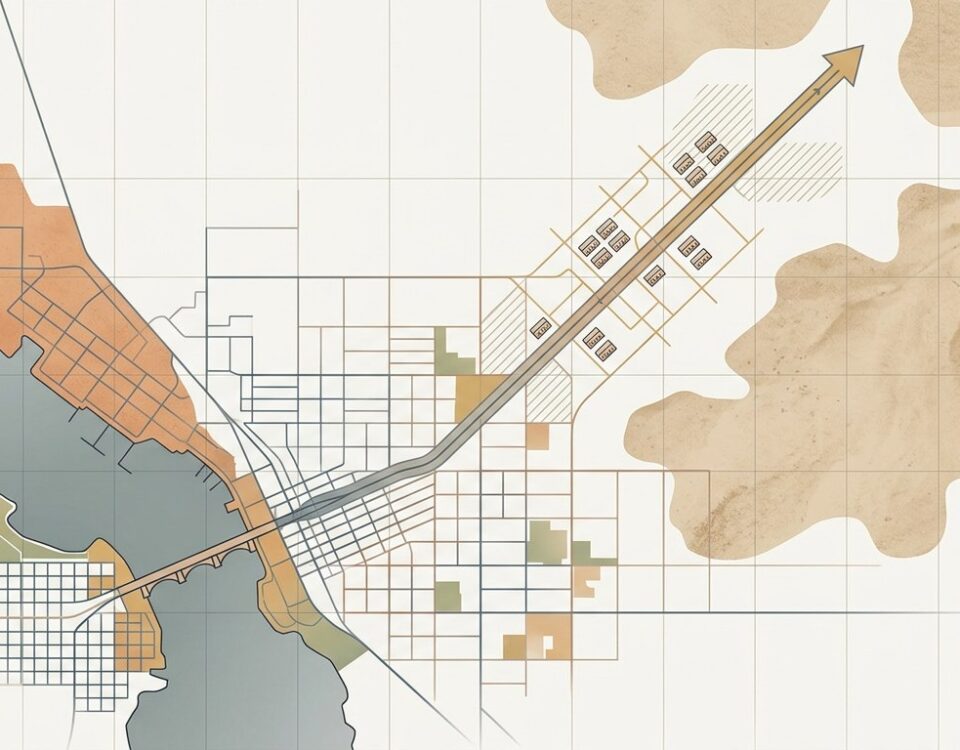
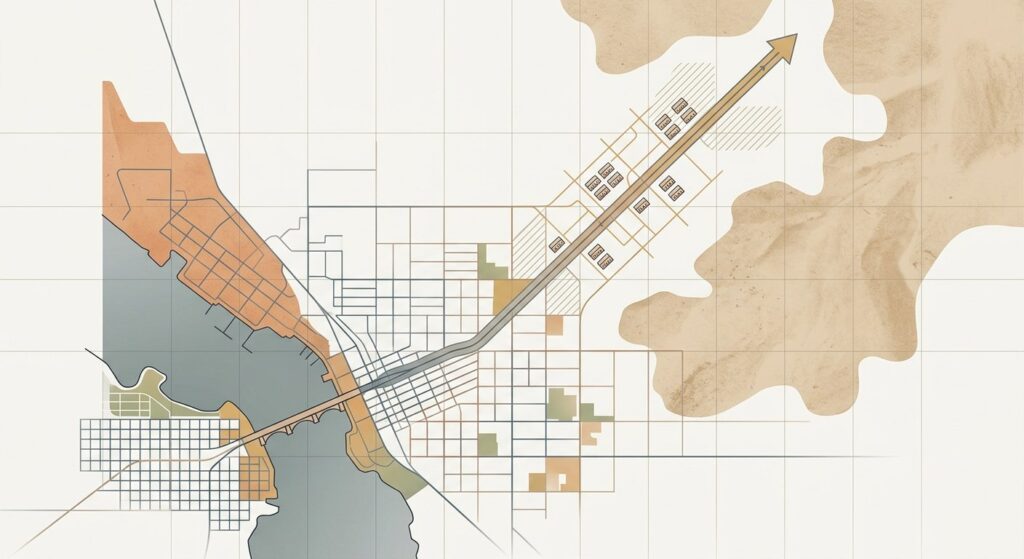
You have the lake to the west, and the Bureau of Land Management territory and state land lock it in on every other side. BLM does not sell. State land in Kingman goes to auction, one parcel at a time, when it’s available.
When commercial land runs out here, it stays out. That geographic reality changes how you underwrite, what you should pay, and how fast you need to move when something quality shows up.
Lake Havasu Land Scarcity Is Structural
Here is the mistake investors make repeatedly in the Lake Havasu area. They miss a deal, assume the market will soften, and wait for another shot at a comparable property. That is not how this works.
Residential lots in Havasu have dropped to roughly 1,800 remaining, total. Commercial land is tracking the same way. Developers from Southern California are already here, scouting parcels and locking up what they can. Storage projects are going vertical because horizontal expansion is no longer an option.
When a quality income property with stable tenants hits this market, it moves fast. Not because of speculative optimism. Because nothing comparable is coming after it.
Most Sun Belt markets face temporary supply shortages tied to entitlement delays or labor costs. Havasu faces a geographic ceiling enforced by federal land ownership. The Arizona State Land Department auction process is unpredictable, competitive, and increasingly dominated by outside buyers with real capital. If you are projecting rent growth, vacancy risk, or replacement cost in your deal analysis, that distinction changes the math.
A Signal From the $24 Million Island Auction
The clearest illustration of what this scarcity actually looks like happened on the island. It’s the area accessible via the London Bridge, surrounded almost entirely by state land with only a handful of deeded parcels in the center.
When a roughly 80-acre state land parcel on the island went to auction in Kingman, the room filled with developers. I was there.
“Havasu is kind of an island. It can’t grow too much more. BLM doesn’t usually sell. And state land, if you ever apply for it, they’ll put it up for auction on the county steps in Kingman. So you’re out there with your little paddle, and this guy came up, a billionaire out of Phoenix, and it took about six minutes. He bought it for around $24 million.” – Randy Shuffler, Founder and Commercial Real Estate Agent, Lake Havasu City Commercial at Realty ONE Group Mountain Desert
The buyer is developing a resort, retail, restaurants, and multifamily on that footprint. Think about what that means for the surrounding commercial. Retail, hospitality, and service businesses near that corridor are going to feel the demand pull.
If you own something in proximity, you are already sitting on a story that has not yet been fully priced in. If you are looking to buy something nearby, the longer you wait, the more you are competing against that tailwind.
That is what a market signal looks like in a land-constrained market. The resort is not just one project. It is a demand anchor in a corridor that cannot produce a competing supply to absorb it.
Cap Rates Here Are Not the Same as Cap Rates Everywhere Else
This is the conversation I have with almost every out-of-state investor who looks at this market and feels uncomfortable with the numbers.
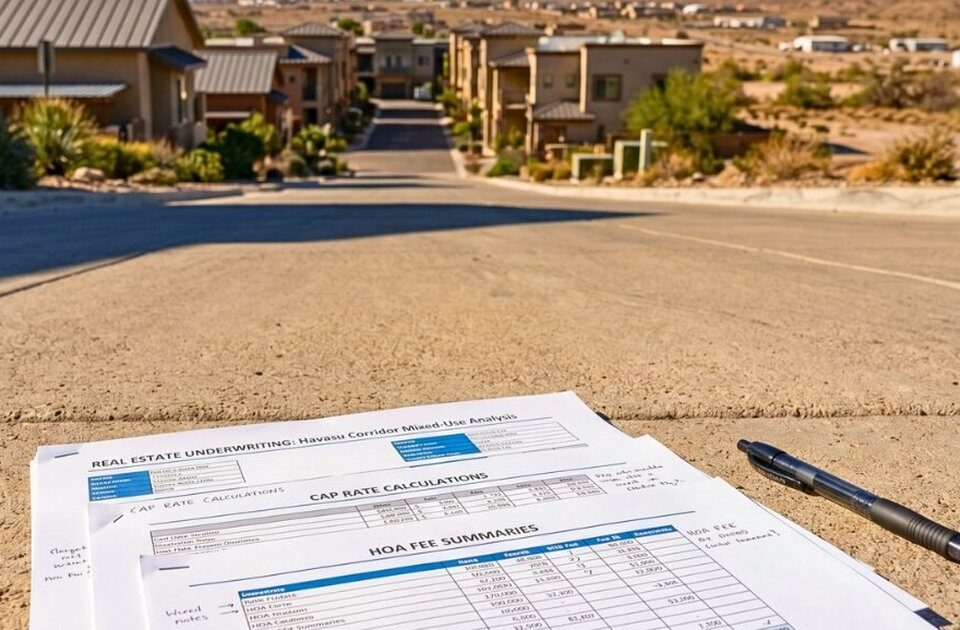
A 4.6 to 6.5 cap in Havasu is not the same as a 4.6 to 6.5 cap in a market with open land three blocks away. Scarcity is a real component of value. Here, it is locked in by geography. That is not an argument for overpaying or ignoring income quality. It is a reason to reframe what the number means.
I recently closed a sale at a 4.6 cap on a main-corner building. The buyer was a major medical group. The seller had tenants moving out and capital improvements on the way. None of that stopped a sophisticated institutional buyer from moving. They understood the replacement cost argument.
For a 1031 investor comparing Havasu returns to a California building they just sold, the right question is not whether the cap rate matches a national average. Ask whether the income is real, whether the tenant is stable, and whether comparable supply can enter this market within your hold period. In Havasu, that last question has a permanent answer.
The Appraisal Foundation’s USPAP standards require appraisers to consider supply and demand conditions in market-value determinations. In Lake Havasu, the supply side of that equation does not fluctuate. It is structurally constrained.
The Reality on the Ground Right Now
When there is no land left, developers adapt. You can see exactly how in Havasu right now.
A long-vacant mall has been repositioned into medical space, including a micro-hospital concept now expanding across that footprint. Apartment approvals are moving through on what was previously general commercial land. That is the city’s first large apartment project in roughly two decades.
Storage condos are absorbing demand from a lake, RV, and off-road culture that is not going away. A city-backed co-working space filled immediately upon opening and is already looking at a second-story expansion.
The pattern is consistent throughout. Small is leasing. Converted is trading. New land is not coming.
Do the Pre-Work Before the 45-Day Clock Starts
A 1031 exchange in Lake Havasu requires preparation that most out-of-state buyers skip, and it costs them.
The IRS 1031 exchange rules give you 45 days to identify replacement properties and 180 days to complete the exchange. In a market where quality income properties move within days of hitting the market, waiting until the identification window opens means you are already behind.
Build your short list before you close the relinquished property. Know your cap rate criteria, your target asset type, and which corridors you would and would not buy in. That preparation turns the 45-day window into a decision period, not a scramble.
The land scarcity dynamic plays out differently depending on where you are looking. The South Gate District and the Medical District each have different conversion opportunities and different tenant pools. Those distinctions matter before you commit capital.
Answers to Common Questions
Does Havasu land scarcity protect commercial values in a downturn?
It gives you a real buffer, not immunity. Properties in strong locations with stable tenants hold value. Properties priced high with weak income or difficult tenant profiles sit, regardless of market conditions. Scarcity protects the supply side. It does not fix bad underwriting on the income side.
Why are cap rates in Havasu compressed compared to other Arizona markets?
Cap rates compressed because replacement inventory is genuinely scarce. A 4.6 to 6.5 cap here carries a different risk than the same rate in a market where competing supply can be built within a planning cycle. Ask whether the income is real and whether the tenant is stable. The cap rate relative to a national average is the wrong question.
Does BLM land around Lake Havasu ever become available for commercial development?
Rarely. BLM land occasionally trades through formal land exchanges, but those take years with no certainty. State land goes to public auction, but the process is competitive, unpredictable, and attracts outside capital at market-clearing prices. Treat both categories as effectively off the table when you are projecting future supply.
Why is leasing softer than sales if the market is supply-constrained?
Sales and leasing respond to different things. Sales hold up because quality income properties with stable tenants are scarce and attract cash buyers, many of them 1031 investors from California. Leasing has softened in certain corridors because the tenant base has not grown as fast as available space. Warehouse and flex space runs tighter. Retail and office leasing now demands stronger location fundamentals than it did three years ago.
What does the island resort development mean for nearby commercial owners?
It means more hospitality traffic, more full-time and seasonal residents, and a stronger tourism anchor. That generates service demand. Retail, medical, food and beverage, and convenience-oriented commercial in reasonable proximity all stand to benefit. Owners positioned in those corridors before the resort opens are sitting on a demand story that has not yet been fully priced into surrounding values.
Is Havasu a realistic market for a 1031 exchange replacement property?
Yes, but it requires pre-work. Inventory is tight, and quality income properties move within days of coming to market. Build your short list and set your cap rate criteria before the identification window opens. Investors who wait until the clock is running are working against themselves in a market this tight.
What asset types are performing best in a supply-constrained market?
Multi-tenant light industrial and warehouse with tenants in place. Medical and service-adjacent retail in high-traffic corridors also holds. Large vacant retail and general office square footage face the most leasing friction. Conversion plays, repositioning underutilized structures rather than building new, are where developers are finding margin when there is no land left to build on.
How does land scarcity affect rent growth over a hold period?
When competing supply cannot enter a market, you hold more negotiating leverage at renewal. A tenant who wants to stay in Havasu’s tightest corridors cannot credibly threaten to move to a cheaper new building down the street. Those buildings don’t exist. That dynamic supports rent stability and, in well-located properties, gradual rent growth tied to demand rather than oversupply pressure.
Run the Numbers Before the Market Moves
Havasu land scarcity is not a talking point. It is a structural market condition built into the geography, reinforced every time a state land parcel sells at a price that resets the comp stack.
Are you underwriting a replacement property here, or trying to understand what a specific address actually pencils to? Reach out with the details. Our team will run a true-net snapshot and tell you exactly what we see on the ground.
Randy Shuffler is the founder of Lake Havasu City Commercial at Realty ONE Group Mountain Desert. He holds the CCIM designation – earned by fewer than 6% of commercial real estate practitioners – and brings more than 20 years of focused investment analysis and transactional production across Lake Havasu City, Kingman, and the broader Mohave County corridor.
ABOUT THE AUTHOR
Randy Shuffler | Founder & Commercial Real Estate Agent, Lake Havasu City Commercial | CCIM | 20+ years in real estate & finance | $5M+ in verified sales | 52,000+ sq ft transacted | BS Finance, San Diego State University | Realty ONE Group Mountain Desert