Private Money in Commercial Real Estate Works Until the Exit Doesn’t

Private capital and bridge lending are legitimate tools in commercial real estate. The investors who get burned are not the ones who use them. They are the ones who use them without a real exit.
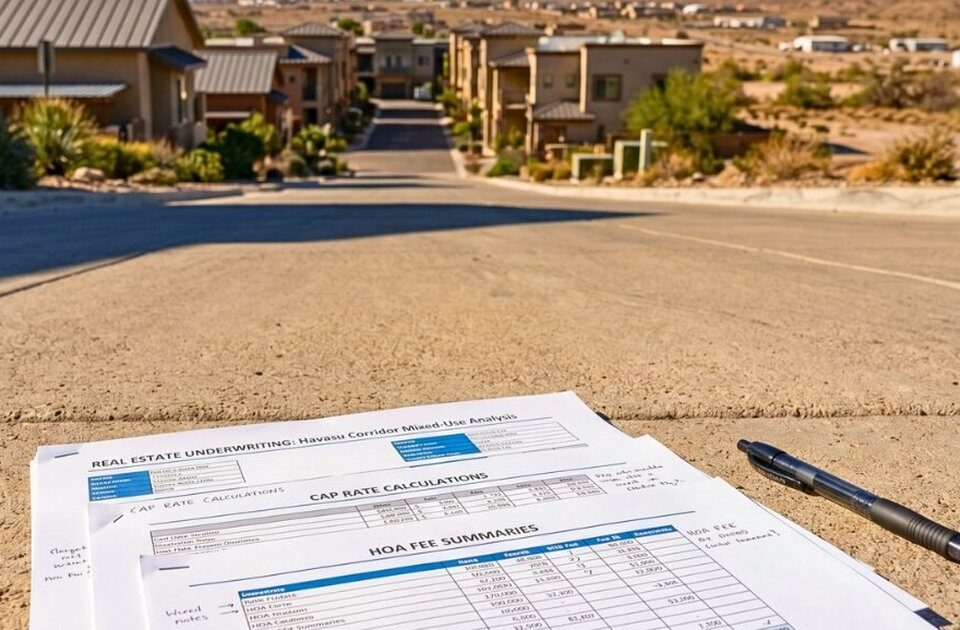
Bridge loan risk in commercial real estate stems not from high interest rates but from exits that take longer than planned, causing carrying costs to erode deal margins. Private money works effectively for borrowers with strong equity but weak paper income, or for speed-driven purchases in tight markets, provided the exit strategy is concrete rather than dependent on optimistic assumptions. Vacant building acquisitions with lease-up timelines are particularly risky under bridge financing because extended vacancy at 10 to 12 percent interest rates can eliminate profitability before the property generates income.
In Lake Havasu City, where inventory is thin and good buildings move fast, bridge loan risk is rarely about the interest rate. It is about what happens when the exit takes twice as long as the plan assumed.
A bridge loan at 10 to 12 percent can make a deal work, protect a 1031 timeline, or give a buyer a speed advantage in a tight market. That same loan on a vacant building with optimistic lease-up assumptions can bleed a deal dry before the margin ever materializes.
The difference comes down to one question: do you have a real exit, or just a hope?
The Role of Private Money in Commercial Real Estate
Private lenders operate outside the bank underwriting box. That creates two legitimate use cases here.
The first is the borrower profile. Investors who have spent years managing their tax exposure often show near-zero income on paper despite having real money and real assets. Banks say no. A private lender who can see 20 to 30 percent down and clear capacity to service the debt says yes. I encounter this constantly: serious buyers, real equity, but a tax return that kills the conventional approval.
The second is speed. When a stabilized property hits the Havasu market, it does not sit. A buyer who closes in 30 days with private money has a real edge over someone waiting 90 days for SBA underwriting to clear. That speed premium is real and sometimes worth paying.
The math is straightforward. Borrow at 10 to 12 percent for 18 months to capture a property you can stabilize and refinance into conventional debt. If the deal still pencils after carrying costs, the bridge is doing its job.
The reason speed-driven private money deals happen here more often than in larger markets comes down to how constrained this inventory really is. There is not enough supply for buyers to be patient.
The Red Flag Is Never the Rate. It Is the Exit.
Here is a deal that illustrates exactly where bridge-loan risk lies.
It was a 9,000-square-foot car wash with attached warehouse space listed in Lake Havasu City at $2.7 million. The buyer identified that the seller would accept $2.2 million. The plan: acquire with private money at 8 percent, relist at $2.7 million, and flip quickly. The monthly carrying cost on that loan ranged from $13,000 to $14,000.
If the flip closes in 60 days, the math works. If the buyer lands an SBA-financed buyer who takes 90 days to close, or whose loan falls out entirely, the investor has 3 to 5 months of carrying costs. The deal would bleed $40,000 to $70,000. Now it needs a lower exit price just to stop the bleeding. The headline upside was $500,000. The actual downside was a slow bleed with no floor.
The buyer got scared and walked. That was not a failure of nerve. It was a rational response to an exit that was never as solid as the headline number suggested.
SBA 504 and 7(a) commercial loan approvals routinely run 60 to 90 days or longer for complex transactions. That timeline mismatch catches bridge borrowers who plan for best-case buyer financing.
The Vacant Building Problem Is a Different Risk Category
There’s one scenario that demands real caution. It’s using a bridge loan on a vacant building, with the plan to lease it up first, then sell it as an income-producing asset. That sequence carries a compounding risk that investors consistently underestimate.
Leasing around Lake Havasu has slowed. Professional office and standard retail are harder to place right now. The tenant pool for those categories is thin.
There is a well-located space near London Bridge that, by any reasonable reading, should lease quickly. It has been sitting. That is not a market failure. The market is telling you to underwrite your lease-up timeline conservatively, not optimistically.
When a private loan runs at 10 to 12 percent and vacancy stretches from 60 days to six months, the carrying cost restructures the entire deal. An investor who penciled a flip profit suddenly finds themselves selling at a discount just to stop the bleeding.
The Exit Is Where Risk Shows Up
Randy Shuffler holds the CCIM designation, earned by roughly 6% of commercial real estate practitioners nationally. He has spent over two decades underwriting deals in Lake Havasu City and the broader Mohave County corridor. His read on private money risk comes from watching deals close, stall, and unravel in real time.
“I get more nervous if I’m part of it, hooking someone up with private lending, and they’re depending on my expertise for how we’re getting out of it. If we’re getting a building vacant, we need to lease it and flip it as an income property to somebody else. He’s on a private loan, and we don’t fill it up, and we can’t sell it, and he can’t make his payments. It gets bad quick.” – Randy Shuffler, Founder and Commercial Real Estate Agent, Lake Havasu City Commercial at Realty ONE Group Mountain Desert
What a Clean Bridge Play Actually Looks Like
Private money works cleanly when the exit does not depend on everything going right.
A solid bridge play looks like:
- A building with tenants in place that you refinance into conventional debt once seasoned.
- A purchase at a known discount, with demonstrated buyer demand and a realistic 60 to 90-day flip window.
- A 1031 buyer who needs speed to identify and close within the identification window, and who carries the equity cushion to absorb a short hold.
Buying a vacant building with optimistic lease-up assumptions and hoping the exit materializes before carrying costs erase the margin. That is more of a bet than a bridge.
If your strategy requires everything to go right, private money will not save it. It will accelerate how fast it goes wrong.
When assumptions go unchecked, deals fall apart in a very predictable way. That pattern is what blue-sky underwriting in this market consistently produces.
FAQs About Bridge Loan Strategies in Lake Havasu
What is bridge loan risk in commercial real estate?
Bridge loan risk is the possibility that the exit strategy fails or takes longer than planned, leaving you carrying high-cost short-term debt beyond the original timeline. The risk is not the interest rate itself. It is what happens when a 60-day plan becomes a 150-day reality.
When does private money make sense for a commercial deal?
It makes sense in two situations. The first is when you cannot qualify conventionally despite having real assets and genuine repayment capacity. The second is when speed gives you a competitive edge over offers contingent on slower financing. If the deal still pencils after accounting for higher carrying costs and the exit is concrete, private money is a legitimate tool.
What is the biggest risk of using bridge financing on a vacant building?
An exit that depends on conditions outside your control. It could be the lease-up timeline, a buyer securing SBA financing, or the market following your plan. If any of those variables stretch or fail, carrying costs at 10 to 12 percent can erase the margin faster than most investors’ models.
How do carrying costs affect a bridge loan deal in practice?
On a $2.2 million loan at 8 percent, monthly carrying costs range from $13,000 to $14,000. At 12 percent, that figure climbs higher. Stretch a 60-day flip to five months, and you have paid $65,000 to $70,000 in carrying costs that come directly out of your margin. Deals that look profitable at 60 days often look marginal or worse at 150 days.
Is private money lending common in Lake Havasu City commercial real estate?
Yes. This market has a meaningful segment of investors who hold strong equity positions but appear underweight on paper due to tax strategy. Private and hard money lenders fill the gap that conventional underwriting creates for those buyers. Speed-motivated purchases in a thin-inventory market also drive the use of private money among buyers who would otherwise qualify for conventional financing.
How does a leasing slowdown affect a bridge loan strategy?
When tenant demand softens for a given asset class, lease-up timelines stretch. A plan built on a 60-day vacancy becomes a six-month carry. That changes the math on every deal that depends on income stabilization before the exit.
What is the difference between a bridge loan and hard money?
They overlap in practice. Hard money typically refers to asset-based loans from private investors or funds at higher rates and shorter terms, often used for distressed or time-sensitive acquisitions. Bridge loans serve a strategic purpose by bridging the gap from acquisition to stabilization or refinancing. They can come from private, hard money, or institutional sources. Most investors use the terms interchangeably to refer to short-term, non-conventional financing.
What should a commercial investor verify before using private money?
There are three things to verify. The carrying cost at the actual loan rate for a worst-case timeline. The specific exit strategy and what happens if it takes twice as long as expected. And whether the asset type has demonstrated tenant or buyer demand in the current local market.
The Deal Has to Work Before the Bridge Does
Private money earns its place in a well-run capital stack. The investors who use it well treat it as a tool with a purpose and a deadline, not a fallback when conventional financing falls through.
Know your carrying cost, your exit, and what the market is actually doing with the asset type you are buying. If all three of those check out, the bridge can give you an edge.
The difference between a smart bridge and a bad bet is almost always the exit. That is where Shuffler Commercial Realty focuses its underwriting, looking past the upside to test what happens when timelines stretch. If you are considering private money on a Lake Havasu deal, reach out for a clear assessment before you move forward.
Randy Shuffler is the founder of Lake Havasu City Commercial at Realty ONE Group Mountain Desert. He holds the CCIM designation – earned by fewer than 6 percent of commercial real estate practitioners nationally – and a BS in Finance from San Diego State University.
ABOUT THE AUTHOR
Randy Shuffler | Founder and Commercial Real Estate Agent, Lake Havasu City Commercial | CCIM | 20+ years in real estate and finance | $5M+ in verified sales | 52,000+ sq ft transacted | BS Finance, San Diego State University | Realty ONE Group Mountain Desert