California Commercial Capital Is Moving to Arizona and Lake Havasu Is Where It Lands

California investors have been buying vacation homes in Lake Havasu City for decades. The boat, the lake, the lifestyle; none of that is new. What is new is the conversation happening before the purchase.
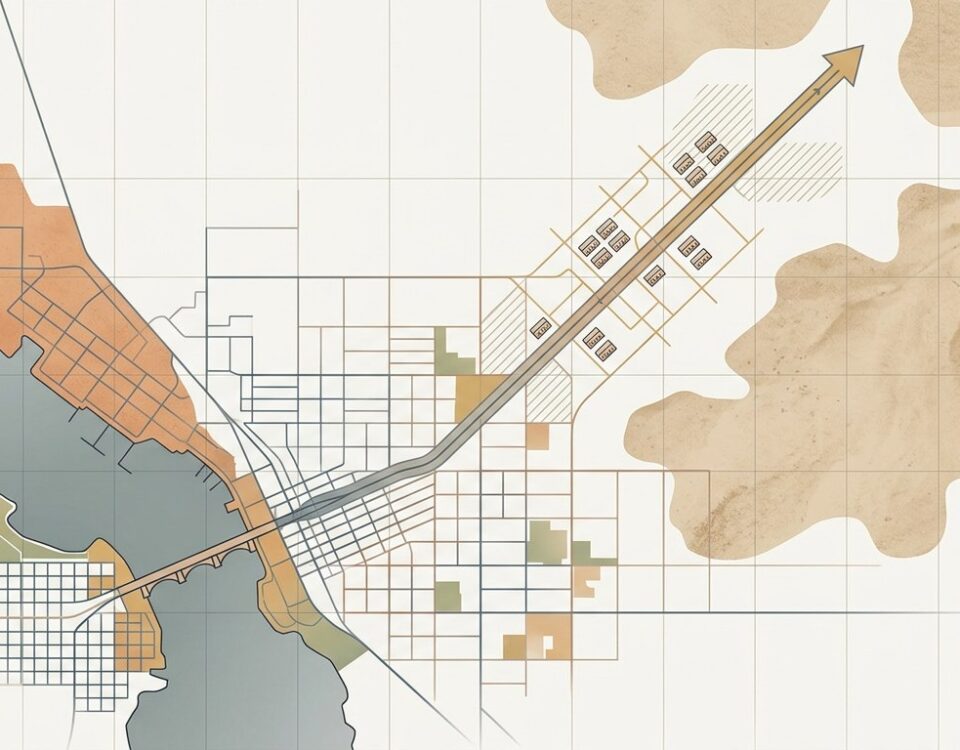
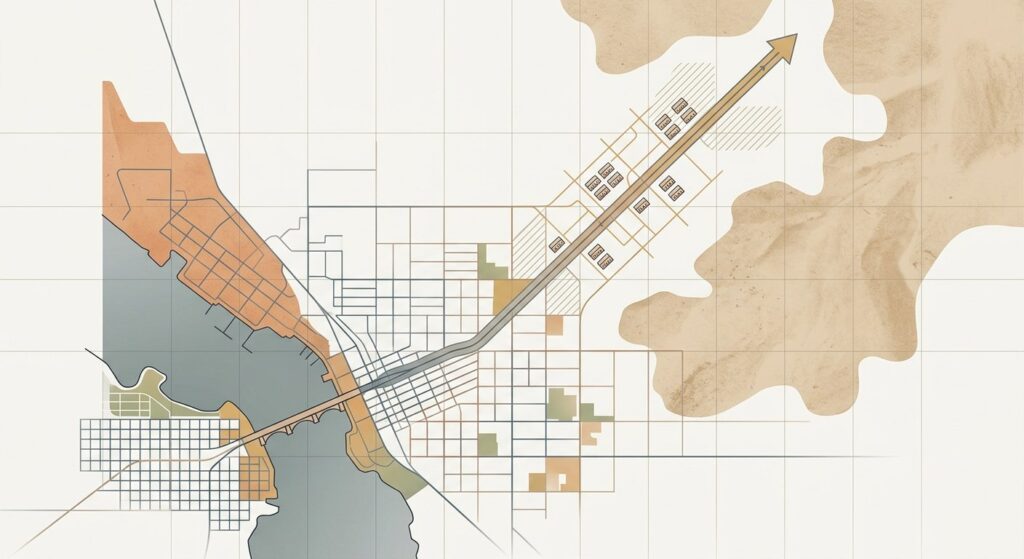
Increasingly, the clients I work with are not buying a vacation property. They’re moving business capital out of California using a 1031 exchange.
California tax policy uncertainty is pushing private investors to relocate commercial capital into Arizona markets through 1031 exchanges. Lake Havasu City is emerging as a legitimate replacement destination for California sellers, not just a lifestyle play. Successful investors start their replacement property search before they close the sale, not after the 45-day clock starts.
Why California Investors Are Moving Out of State
The concern is not abstract. Investors are tracking proposed wealth taxes and new tax structures that could apply retroactively. That means a seller who closes today could still face legislation passed tomorrow. That kind of policy uncertainty does not sit well with people who spent decades building equity in California commercial assets.
This is causing a real behavioral shift. Investors who already own vacation homes in Havasu now look at the market through a different lens. They are not asking whether they like the area. They’re asking if they can shift productive capital into income-producing property while also reducing California tax exposure.
The 1031 exchange is the mechanism that makes it possible. Sell the California building, identify a replacement property within 45 days, close within 180 days, and defer the capital gains tax.
When it works, it is one of the most effective capital preservation tools available to a private investor. When it does not go smoothly, it is one of the most stressful experiences in commercial real estate.
The 1031 Exchange Under Pressure
A recent transaction illustrates exactly how much stress a 1031 timeline creates. A client sold a California building for $1.85 million and entered the exchange with 35 days left on the identification window.
The original target, a Pep Boys property in Scottsdale, was already under contract with another buyer. The negotiation to have it assigned stalled when the seller pushed back on price, and the window kept shrinking.
At the same time, I identified a medical building in Anthem, just north of Phoenix. A 6,000-square-foot commercial condo with an ophthalmologist and a dentist in place, good tenants, and stabilized income. But the listing agent was using a vague purchase-and-sale agreement instead of a standard Arizona commercial contract.
The disclosure process turned into a fight. Hidden HOA fees surfaced. A $6,500 Anthem capital improvement charge appeared late. The lease described the property as triple net. Still, the landlord was covering AC units with only a deductible structure in place.
The true net income was not what the marketing suggested. I had to dig for it under pressure and manage an uncooperative agent while keeping the deal together. We also held the Pep Boys option as parallel leverage.
The client closed on Anthem. The taxes were deferred. But the path there looked nothing like what most investors picture when they hear “passive income property.”
Randy Shuffler holds the CCIM designation. He brings more than two decades of active transaction experience in the Lake Havasu City and greater Mohave County market. His perspective on 1031 preparation is direct.
“If you’re doing a 1031, you want to know your market and properties before you even sell your building in California. When you’re selling it, you really need to be putting out your feelers at that point. So that once you get into that 45-day identification process, you’re not starting from scratch.” – Randy Shuffler, Founder and Commercial Real Estate Agent, Lake Havasu City Commercial.
That is the honest version of how 1031 exchanges work in practice. The investors who navigate them well start their replacement property search before they close the sale.
Lake Havasu City as a 1031 Replacement Market
Lake Havasu City is not Phoenix. Inventory is smaller, product types differ, and finding $3M+ deals that pencil correctly requires either patience or off-market access.
I’m working with a San Diego client who is selling a building and deploying capital into Havasu specifically. The client already owns a vacation home here. He wants his investment capital in the same market.
Right now, I’m tracking an off-market medical building for that client. It’s a long-tenured occupied property that has never appeared on LoopNet.
That off-market dynamic is precisely what makes local relationships matter. Havasu has limited land, a limited stock of quality commercial buildings, and a seller pool of long-time owners who are not in a hurry. The deals that make sense for a 1031 buyer tend to move on relationship and preparation, not speed alone.
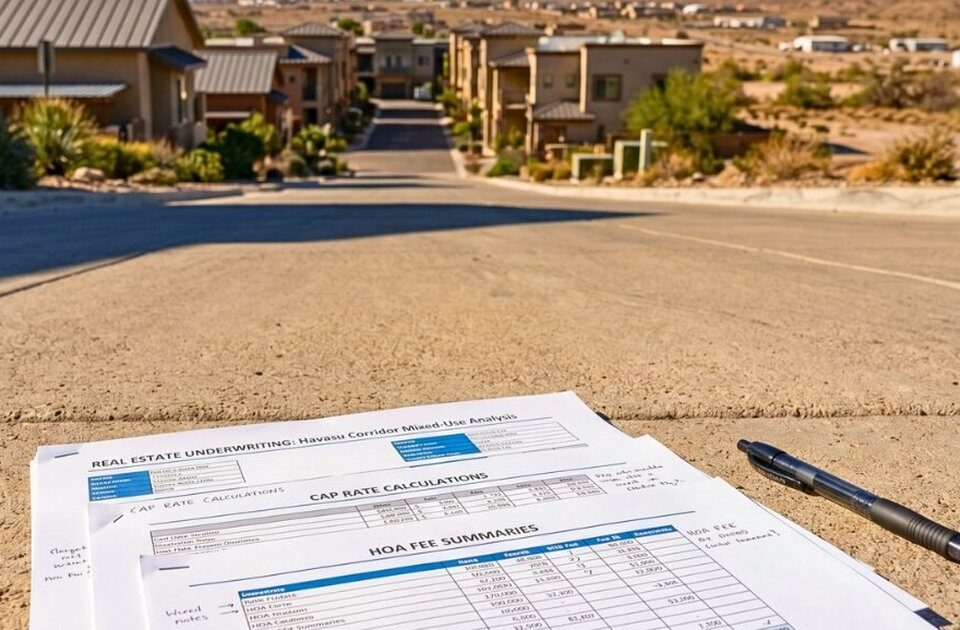
Cap rates on stabilized multi-tenant light industrial and medical buildings in this market range from 6.5% to 7%. It’s a real range, not a number pulled from a marketing flyer. The spread over California assets, plus tax deferral and no California income tax on Arizona revenue, is what makes the math work for many buyers.
Arizona’s tax treatment of out-of-state investors follows Arizona Department of Revenue rules, which differ meaningfully from California’s sourcing approach.
The California Capital Flight Pattern
The California-to-Havasu pipeline is not a trend invented by brokers trying to drum up listings. I see it in my client roster every year, and the motivations have evolved.
“A majority of my clients for Lake Havasu are from California. It’s people’s second vacation homes; they’re here with boating, hanging out, all the things. But it’s interesting that they’re trying to move their money out of California business-wise, too. Not just a summer home. A lot of people are moving out. There’s some taxes that they’re definitely trying to put on, and people are getting really nervous.” – Randy Shuffler, Founder and Commercial Real Estate Agent, Lake Havasu City Commercial.
These are not purely analytical capital allocators running spreadsheets in a vacuum. They already know the market because they spend time in it. That familiarity lowers the psychological barrier to investing here. It also means the pool of qualified buyers for quality Lake Havasu commercial properties is larger than the market size suggests.
The Qualified Intermediary Requirement Matters
One formal requirement that trips up first-time 1031 buyers is the Qualified Intermediary (QI). Under IRS Section 1031, the investor cannot touch the sale proceeds between transactions.
A QI, an independent third party, holds the funds between the relinquished sale and the replacement closing. If proceeds pass through the investor’s account even briefly, the exchange fails. Full tax liability becomes immediately due.
Selecting a QI before the relinquished property closes is not optional. It is a structural requirement of the exchange. Most experienced commercial brokers maintain relationships with established QI firms and can make introductions early in the process.
What California Sellers Should Do Next
If you’re planning to sell a California building this year and use a 1031 exchange to move into Arizona, act quickly. The most important step you can take right now, before the sale closes, is to start underwriting replacement properties.
Focus on:
- Understanding what a realistic 6.5 to 7 cap looks like in your target market
- Distinguishing true net income from gross scheduled income dressed up as “triple net.”
- Identifying which markets offer real inventory and which, like Havasu, require early positioning to compete
Investors who enter the 45-day window without prior research either overpay for what’s available or end up paying the taxes they aimed to defer. Winning investors treat the replacement search as a parallel process, running it alongside the sale instead of after closing.
Quick Answers on 1031 Exchanges
What is a Qualified Intermediary, and why is it required for a 1031 exchange?
A Qualified Intermediary is an independent third party who holds the sale proceeds between the closing of the old property and the closing of the new property. IRS rules prohibit the investor from receiving or controlling those funds at any point during the exchange. If the proceeds touch the investor’s personal or business account, the exchange fails. Full capital gains tax is due immediately.
What happens if no qualifying replacement property is available before the 45-day identification deadline?
The exchange fails. The investor owes capital gains tax on the full gain from the relinquished property sale, with no deferral. There are no extensions available except in federally declared disaster areas. That is why pre-positioning matters. Entering day one of the 45-day window with no identified properties is the highest-risk position in a 1031 exchange.
Can a California investor identify a Lake Havasu City property in the 45-day window without visiting the market first?
Technically yes. Practically, it is a poor strategy. Havasu’s limited inventory means remote identification without local broker relationships often leads to overpriced or misrepresented listings. Investors who close on properties that pencil at a true 6.5 to 7 cap almost always know the market in advance. That familiarity usually comes from either site visits or established broker relationships that surface off-market deals before the clock starts.
How does Arizona’s tax treatment of out-of-state investors differ from California’s?
Arizona taxes income sourced within the state. Income from an Arizona commercial property rental is subject to Arizona income tax rates, not California’s. California no longer taxes out-of-state income once a resident moves. For a California investor using a 1031 exchange into Havasu without relocating, the main benefit is deferral of the original gain. It does not eliminate Arizona tax on future rental income. Consult a qualified tax attorney for guidance on your specific situation.
What types of commercial properties are available for 1031 buyers in Lake Havasu City?
The most investable 1031 assets in Lake Havasu City are multi-tenant light industrial, medical office condos, and stabilized retail strip centers. Properties over $3 million with fully verified income require either patience or off-market access. A meaningful portion of quality transactions in this market happen before a property reaches LoopNet or CoStar. Local broker relationships are not a nice-to-have in Havasu; they are the access layer for the deals that actually pencil.
How do I verify in-place rents on a Havasu commercial property are at market before committing to a 1031 identification?
Pull current comparable leases in the same submarket and property type. Cross-reference with local brokers who have executed recent transactions in similar buildings, not just listed them. In-place rents that run significantly above market are a risk flag, not a value signal. The gap between in-place rent and market rent represents rollover exposure the buyer inherits at lease expiration. I explored this risk in detail in a post about how strong in-place rents can be a red flag.
What is the minimum due diligence checklist for a 1031 buyer evaluating a Lake Havasu City commercial property?
At a minimum, verify lease abstracts, 24-month expense histories, and HOA or capital improvement obligations. Check HVAC age, lease responsibility language, rent-to-market comparisons, and title easements. Finally, calculate true net income independently instead of relying on the broker’s cap rate. On a tight 1031 timeline, skipping these steps creates risks that outlast the tax benefits.
Run the Numbers Before the Clock Starts
Moving capital out of California, and want a clear read on what is actually available and what it truly pencils out to? Start before you close the sale.
My team will run a true-net snapshot on any property you are evaluating. We’ll help you build a short list of replacement candidates before the 45-day window opens, not after it starts burning. Start your conversation with Lake Havasu City Commercial today.
Randy Shuffler is the founder of Lake Havasu City Commercial at Realty ONE Group Mountain Desert. He holds the CCIM designation, earned by roughly 6% of commercial real estate practitioners nationwide, and a BS in Finance from San Diego State University. He serves investors across Lake Havasu City, Kingman, and the broader Mohave County corridor.
ABOUT THE AUTHOR
Randy Shuffler | Founder & Commercial Real Estate Agent, Lake Havasu City Commercial | CCIM | 20+ years in real estate & finance | $5M+ in verified sales | 52,000+ sq ft transacted | BS Finance, San Diego State University | Realty ONE Group Mountain Desert