What California Investors Get Wrong About Havasu Cap Rates
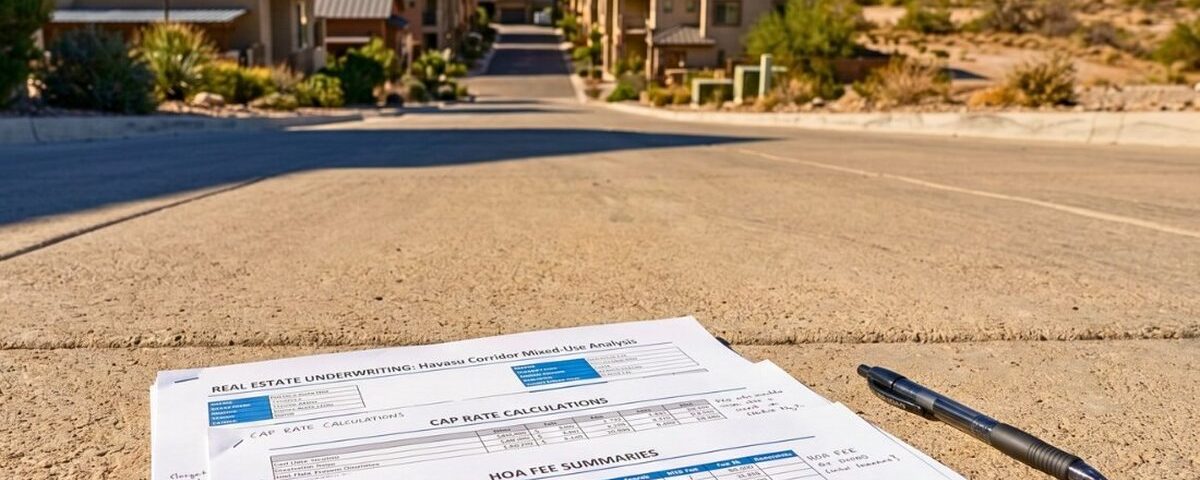
California investors keep showing up in Lake Havasu City with serious capital and a 1031 clock already running. Some have done their homework. Others arrive with a number in their head, a cap rate they heard somewhere, or a deal they spotted on LoopNet.
They want to know whether it pencils here the way it would back home. The honest answer is that it usually doesn’t.
Knowing why that gap exists is what separates a solid replacement property from an expensive mistake. This market runs on its own logic, and the investors who learn it early are the ones who close on something worth owning.
Lake Havasu City cap rates behave differently from California cap rates, and the gap catches out-of-state investors off guard. Lease structure, hidden HOA costs, and scarce inventory all mean you need local underwriting before the 1031 clock starts. Investors who pre-underwrite a short list before their 45-day window opens consistently outperform those who search cold.
Havasu Cap Rates Don’t Behave Like California Cap Rates
California investors accept lower cap rates because California assets carry meaningful appreciation potential baked into the price. A 4.5 or 5 cap in Los Angeles or San Diego reflects that growth expectation. The math works in that market because the upside story is real.
Lake Havasu City runs on a different logic. The income here is real, but appreciation follows scarcity and corridor demand rather than metro growth pressure. Stabilized commercial assets in Lake Havasu City generally trade at 6-8 percent. Long-term single-tenant NNN properties anchor the lower end, and multi-tenant or value-add plays push toward the higher end.
Interest rates change the calculation too. A six-cap now competes with T-bills paying 5 or 6 percent at zero vacancy risk. To earn that risk premium, a deal needs a real story behind it. That might be strong tenants, long lease terms, or a location argument that holds up under pressure. At least one of those has to be there. Investors who bought when rates were near zero accepted lower yields, and today, anything below a 6.5 cap needs a real case.
Lease Structure Decides More Deals Than the Cap Rate
The cap rate is only the starting point, and the lease structure is where deals are actually made or broken.
A stabilized multi-tenant medical building in Havasu can look clean on the income statement. Modified gross leases with 180-day termination clauses change that picture entirely. Those clauses allow a tenant to leave within six months under specific conditions, such as a doctor losing licensure or a practice restructuring. That creates vacancy risk, and a lender will price it into the deal.
I recently walked a 1031 client through this scenario on a medical building priced near $2.9 million. The tenants were long-standing, the location was strong, and the construction quality was high. However, the lease language gave each tenant a meaningful out.
That uncertainty complicated the financing conversation. The buyer was weighing a $1.6 million down payment. Getting a bank comfortable with that loan is hard when the leases carry soft termination rights. It is a very different challenge than financing a building with hard five-year terms and no carve-outs.
Medical is still a strong play. Tenants who move into medical space tend to stay because relocating a practice is costly and disruptive. The lease language just has to support that thesis, not undermine it.
Randy Shuffler holds the CCIM designation, which only about 6 percent of commercial practitioners nationally earn. It reflects advanced training in investment analysis and financial modeling. That background shapes how he approaches every 1031 replacement scenario: constraints first, then opportunity.
“Cap rates change all the time. It depends on the vacancy risk, where interest rates are, what people can get at the bank in T-bills. The normal range here has been around six to eight percent. If it’s a really good property with a long-term lease and a national tenant, then you start getting into the fives.” – Randy Shuffler, Founder and Commercial Real Estate Agent, Lake Havasu City Commercial
The Hidden Costs California Investors Miss in Arizona
Arizona commercial deals carry disclosure gaps that California investors rarely anticipate, and those gaps have real dollar consequences at the closing table.
I closed a deal on a commercial building in Anthem, where the purchase agreement omitted the standard HOA disclosures and addendum. The seller used their own attorney-drafted contract instead of the Arizona Department of Real Estate boilerplate.
The standard AIR commercial forms would have covered those items by default. The closing documents told a different story. Fees from the commercial complex HOA and the Anthem POA came to nearly $6,000, which no one had budgeted for. The money sat in escrow rather than being released at closing.
The seller ended up paying, and the buyer came out fine. The resolution came down to timing and leverage, not the contract doing its job.
California investors often come from markets where seller disclosures are extensive and standardized. Arizona is different, especially when the seller controls the contract and leaves gaps that surface only at closing. The fix is to bring your own team in early, including a CPA and legal counsel who are familiar with Arizona commercial deals.
“There were no disclosures, nothing that covered the HOA fees or the Anthem POA. The disclosure fee, the initiation fee, the POA fee: it came out to close to $6,000 that nobody knew about. The buyer said afterward, ‘I don’t want to buy another piece of property without them.'” – Randy Shuffler, Founder and Commercial Real Estate Agent, Lake Havasu City Commercial
A 1031 exchange starts the 45-day identification window the moment you sell. That single constraint changes everything about how you operate in an unfamiliar market.
A buyer ten days into the window does not have time to tour buildings at leisure. You need a pre-underwritten short list instead. That list covers true net income, lease structure, tenant strength, and what a 6.5-7 cap rate really looks like here. Without that information, you might overpay or fail to find a suitable replacement.
The Three Numbers to Nail Down Before You Identify a Property
Three numbers need to be clear before you identify a replacement property in Lake Havasu City. First is true net income after actual operating expenses, not gross scheduled rent. Second is the cap rate, calculated by dividing that income by a realistic acquisition price. Third is the debt service coverage ratio, if financing is part of the deal.
A deal that shows a 7-cap on gross scheduled rent can look very different once vacancy allowance, management costs, and deferred maintenance are factored in. Picture a building with a 20-year-old roof, original HVAC units, and modified gross leases. The owner there carries more operating burden than a true NNN would. That building needs a lower purchase price to hit the same net return.
The Census Bureau’s county business data and local absorption figures both indicate that Havasu is a real service hub with year-round demand. That demand still does not paper over weak lease structures or inflated asking prices. The numbers have to work closely, not six months from now.
Answers to Common Questions
What cap rate should a California investor expect in Lake Havasu City today?
Stabilized commercial assets in Lake Havasu City generally trade at 6-8 percent. Long-term single-tenant NNN properties anchor the lower end, and multi-tenant or value-add plays push toward the higher end. Assets with long leases and national tenants occasionally trade into the mid-fives, but those deals are uncommon and typically off-market.
Why don’t California cap rate assumptions transfer to the Havasu market?
California asset prices have significant metro appreciation potential, which justifies lower cap rates. Lake Havasu City’s appreciation is driven by different factors: land scarcity and corridor demand. The income yield here has to stand on its own. It cannot lean on the growth assumptions investors apply to Los Angeles or San Diego. Land scarcity in this corridor is permanent, and investors need to underwrite for it from the start.
How does lease structure affect underwriting for Havasu commercial property?
The lease structure determines how much of the advertised income is actually secured. Modified gross leases with early termination clauses may allow tenants to terminate within 6 months under specific conditions. That creates vacancy risk lenders will price into the deal, and buyers should price it in before making an offer. Hard five-year terms with no carve-outs support stronger financing and better valuations.
What disclosure gaps should out-of-state buyers watch for in Arizona commercial deals?
Arizona commercial deals sometimes omit HOA addendums and standard disclosure forms, especially when the seller controls the contract. The Arizona Department of Real Estate provides forms that cover these items, but a seller-drafted contract may skip them. Commercial HOA fees, POA initiation fees, and disclosure fees can add thousands of dollars to closing costs that neither party anticipated. Buyers should confirm which contract form governs the transaction and request HOA documentation early in the due diligence process.
How should a 1031 buyer prepare before the 45-day identification window opens?
Build a pre-underwritten short list before your exchange begins. That list should reflect true net income, lease structure, tenant credit quality, and a realistic local cap rate benchmark. Building a relationship with a local broker before the clock starts gives you access to off-market inventory that never appears on LoopNet or CoStar. The strongest position usually comes from pre-positioning well before you sell.
What makes Havasu a small-market investment rather than a secondary market?
Secondary markets have institutional transaction volume, multiple active buyers for any given asset, and a competitive brokerage environment that creates price discovery. Havasu is a small, supply-constrained market with a thin pool of buyers. That means fewer competing offers, but also slower lease-up after vacancy and limited exit options if the hold thesis breaks. Investors should underwrite based on the specific tenant pool and demand drivers in this corridor, not on generic secondary-market assumptions. The Havasu industrial rent correction means some landlords still haven't reset asking rents to match what tenants will pay.
Make Sure the Numbers Work
This market exposes weak underwriting and rewards disciplined preparation. Cap rates alone never tell the full story in Lake Havasu. Lease terms, fees, and structure define what you actually buy.
Shuffler Commercial Realty guides investors through those details before they commit to a property. We translate listings into meaningful numbers that shape intelligent decisions. Start the conversation early to ensure your next acquisition holds up after closing.
Randy Shuffler is the founder of Lake Havasu City Commercial and a commercial real estate agent at Realty ONE Group Mountain Desert. He holds the CCIM designation, which places him among roughly 6 percent of commercial practitioners nationally. He also holds a BS in Finance from San Diego State University. His practice focuses on 1031 exchange replacement properties, income-producing commercial assets, and investment underwriting across the Lake Havasu City corridor.
ABOUT THE AUTHOR
Randy Shuffler | Founder & Commercial Real Estate Agent, Lake Havasu City Commercial | CCIM | 20+ years in real estate & finance | $5M+ in verified sales | 52,000+ sq ft transacted | BS Finance, San Diego State University | Realty ONE Group Mountain Desert