

The Utility Gap Behind Kingman Corridor Land Values
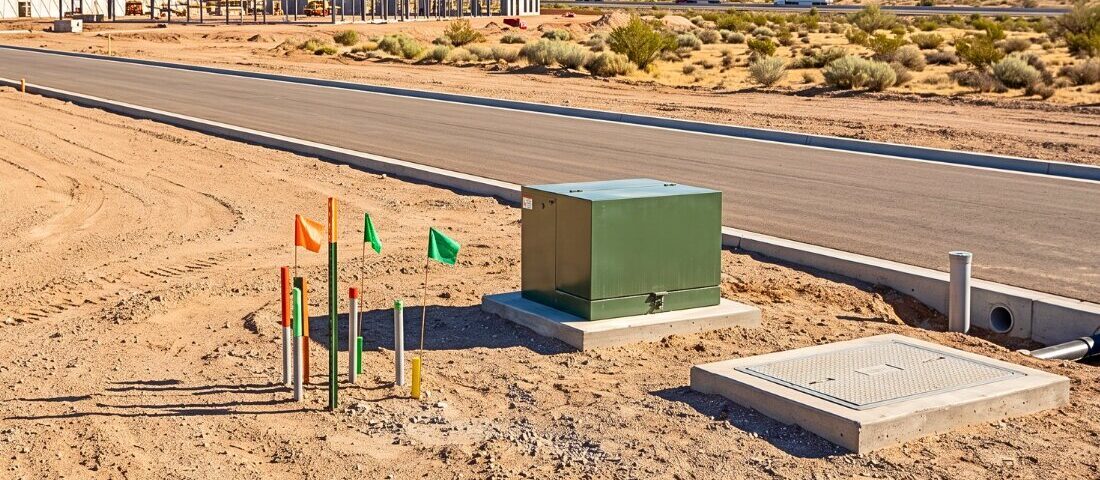
Land with confirmed utility service in the Kingman industrial corridor is priced between $15,000 and $30,000 per acre. That range reflects recent transactions on entitled parcels with infrastructure already in place. Parcels awaiting service can trade at a steep discount, sometimes approaching $1,000 per acre depending on location. The discount looks tempting, but it does not indicate when utility will reach the site.
That timing question is the one most corridor buyers skip. Proximity to existing infrastructure is not the same as having service available. The real underwriting question is not the price per acre. It is the realistic timeline before utilities reach the site, and whether the carry math justifies the wait.
Utility-ready Kingman industrial parcels trade between $15,000 and $30,000 per acre, while raw land costs significantly less. Proximity to infrastructure is not the same as having service available. The underwriting question is not the price per acre. It is the realistic timeline before the site is served and whether the carry math justifies the wait.
Utility-Ready Kingman Land Commands a Premium
Parcels with water, sewer, and power already extended to the site typically price between $15,000 and $30,000 per acre. That range reflects both recent transactions and current asking prices for entitled industrial land in the south Kingman corridor.
Buyers who acquired land before infrastructure reached the area often paid a fraction of today's prices. Some of those positions may become generational investments once utilities arrive. Others could remain idle for years with no clear timeline for development. The challenge is identifying which parcels are positioned for near-term service and which require a much longer investment horizon.
Proximity to Utilities Is Not the Same as Having Them
This is where many buyers misread the market. The mistake is subtle because it is hidden within an otherwise reasonable-looking price.
A parcel can sit a quarter-mile from an active utility line and still face a five-year wait or longer. Extension timelines depend on corridor growth, municipal infrastructure priorities, annexation activity, and where major tenants create demand for additional service. None of those factors follows a predictable or published schedule.
Randy Shuffler has tracked this corridor closely and sees that distinction firsthand.
"If a parcel actually has all utilities in place right now, it's going somewhere between $15,000 and $30,000 an acre. People buying before that were probably paying a thousand dollars. Some people are going to get lucky, and utilities will reach their area. But there's going to be a lot of land that's only a quarter-mile from infrastructure, and it just doesn't get there overnight. It could be another five years. It depends on how fast it grows and what happens."
— Randy Shuffler, Founder and Commercial Real Estate Agent, Lake Havasu City Commercial at Realty ONE Group Mountain Desert
That timeline matters enormously when underwriting a land acquisition. Buyers completing a 1031 exchange cannot afford capital tied up in parcels waiting years for utilities. A long-term land investor with a low basis may be comfortable holding through that timeline. Those are fundamentally different investment strategies requiring distinct underwriting assumptions from the start.
Infrastructure Drew the First Large Warehouses
The warehouse projects in the corridor, two in the 300,000-square-foot range with a third underway, did not land randomly. They clustered where highway access, rail service, and aviation infrastructure already converged. Those projects show that industrial investment is already moving into the corridor, not just being planned.
Kingman Airport and Industrial Park benefits from a World War II-era runway built for military-scale operations. That kind of infrastructure is difficult to replicate, making the park attractive to tenants requiring large-aircraft access or oversized freight handling. As the park approached buildout, attention naturally shifted to land south of Kingman.
The new $45 million I-40 interchange provides a direct freight connection to the airport industrial park. It also reduces reliance on truck routes through downtown Kingman. As a result, the corridor is well positioned for future industrial and commercial development.
The CANAMEX Corridor, including Interstate 11, further strengthens Kingman's role as a logistics hub linking Mexico, the U.S., and Canada. Infrastructure milestones often provide earlier signals than listing prices alone. They can help land buyers identify the next phase of industrial absorption before it is fully priced into the market.
Underwrite Kingman Corridor Land With Realistic Assumptions
The corridor thesis is real, and the upside is genuine. The underwriting discipline required to act on it responsibly is just as real.
A few questions determine the outcome before you commit capital to a corridor parcel. Does the site have utilities in place today, or is it still waiting on an extension? What is the realistic extension timeline based on current infrastructure planning and development activity rather than projections? How much does the carry cost during the wait, and does the expected appreciation justify it? What is the exit strategy if the timeline slips another three to five years?
Those answers rarely appear in listing data alone. Before underwriting a corridor parcel, request a one-page corridor brief from Randy Shuffler at Lake Havasu City Commercial. It shows which parcels have confirmed utility service today and which still depend on future infrastructure expansion.
A 40-acre parcel purchased at $15,000 per acre with utilities already extended represents one investment profile. Another purchased at $8,000 per acre with utilities a quarter-mile away and no committed extension date represents a very different one. Both might work, but they require different underwriting assumptions and holding-period expectations.
The conversation always starts with what the utilities actually show, not what the map suggests. The strongest investment decisions are based on confirmed infrastructure and realistic timelines, not assumptions about where growth will eventually occur.
Kingman Corridor Land Questions Answered
What is the difference between utility-ready and pre-utility Kingman corridor land?
Utility-ready land has water, sewer, and power extended to the site. Once all required entitlements and permits are in place, development can proceed without waiting for service extensions. Pre-utility land sits near existing infrastructure but has not yet been connected. The price gap between the two categories can be substantial, but the bigger difference is certainty about the development timeline.
How does the new I-40 interchange affect Kingman corridor land values?
The interchange replaces truck routing through downtown Kingman on Route 66 with a direct connection to the airport industrial park. That reduces friction for freight operators and positions the corridor between the interchange and the existing industrial park for future development. Land at or near the freeway corner will likely see commercial demand first.
Is Kingman corridor land suitable for a 1031 exchange replacement property?
It depends on the specific parcel and the buyer's investment strategy. A 1031 exchange buyer must identify replacement property within 45 days and close within 180 days. Those deadlines do not prevent buying corridor land, but they leave less room for extended due diligence. Pre-positioning before the exchange begins gives buyers more time to evaluate utility availability, holding costs, and realistic infrastructure timelines. That preparation can make it easier to identify a suitable parcel once the 45-day clock starts.
What drove the large warehouse tenants to the Kingman Airport and Industrial Park specifically?
The airport industrial park offered a combination of infrastructure that is difficult to replicate elsewhere in the region. It combines a World War II-era runway built for military-scale operations, active rail access, and direct highway connectivity. That supported industrial absorption until the park approached buildout, shifting investor attention toward land south of the airport.
What is the CANAMEX corridor and why does it matter for Kingman industrial land?
The CANAMEX Corridor is a North American trade route that includes Interstate 11 through Arizona, connecting Mexico, the United States, and Canada. Kingman's location along that corridor strengthens its position as a regional logistics hub for freight and distribution users. While the corridor supports long-term industrial demand, it does not accelerate utility extensions on individual parcels.
How should investors model carry costs on pre-utility Kingman land?
Begin with a realistic holding period for parcels without confirmed utility access. Then model the full annual carrying cost, including property taxes, debt service if applicable, and the opportunity cost of invested capital. Finally, determine the exit value needed to achieve your required return without relying on blue-sky underwriting. If the investment only works under optimistic assumptions about utility timing or appreciation, the projected return may not justify the risk.
What types of tenants are driving demand in the Kingman industrial corridor?
Demand comes from freight and logistics operators, warehouse and distribution users, and businesses needing access to highways, rail, and the airport. Kingman's location along the CANAMEX Corridor also appeals to companies serving cross-border supply chains. Aviation-related users and heavy freight operators benefit from the airport's unique infrastructure.
How can buyers verify whether utilities are available on a parcel?
Utility availability should be confirmed through the appropriate utility providers, local agencies, and project due diligence. Do not rely solely on listing descriptions or nearby infrastructure. A parcel near existing utility lines may still require future extensions. Confirming current utility availability is an important part of the underwriting process.
Know the Ground Before You Commit Capital
The investment case for the Kingman corridor is supported by market activity. Infrastructure projects continue to advance, and industrial absorption is underway. The land between the new I-40 interchange and the existing industrial park is positioned for future development. The remaining uncertainty is utility availability on individual parcels.
If you're evaluating corridor land, knowing which parcels have utility service today can significantly affect your underwriting. Contact Randy Shuffler at Lake Havasu City Commercial to request a one-page corridor brief. It identifies utility-ready parcels and those still awaiting infrastructure, helping you underwrite with greater confidence before you commit capital.
Randy Shuffler is the founder of Lake Havasu City Commercial and a commercial real estate agent at Realty ONE Group Mountain Desert. He holds the CCIM designation and a BS in Finance from San Diego State University. For more than two decades, he has served commercial investors across Lake Havasu City, Kingman, and the broader Mohave County region.
ABOUT THE AUTHOR
Randy Shuffler | Founder & Commercial Real Estate Agent, Lake Havasu City Commercial | CCIM | 20+ years in real estate & finance | $5M+ in verified sales | 52,000+ sq ft transacted | BS Finance, San Diego State University | Realty ONE Group Mountain Desert