California 1031 Exchange Investors Need to Know Havasu is a Thin Market

California investors looking to execute a 1031 exchange in Lake Havasu City face a constraint many overlook. Inventory is thin, and a suitable property may not be available when their 45-day clock starts.
The IRS identification window is fixed at 45 days from the relinquished property's closing date. That deadline does not flex for thin markets, and Lake Havasu City is a thin market.
Executing a 1031 exchange in Lake Havasu City requires pre-underwriting before your California sale closes. Stabilized commercial inventory is genuinely scarce, and the 45-day identification window closes faster than most out-of-state investors expect. Investors who build a short list of true-net qualified candidates before the clock starts give themselves the only real edge available in this market.
In a deep metro market with hundreds of qualifying listings, 45 days is tight but workable. In Lake Havasu City, stabilized multi-tenant and light industrial properties rarely trade in large numbers.
When options are thin, that 45-day window can close before a buyer gains traction. One California investor found this out in real time, and his exchange ended in Virginia.
Do the 1031 Exchange Math Before Touring Anything
Back into the value before you book a flight. The IRS Section 1031 framework under 26 U.S.C. § 1031 gives you 45 days to identify and 180 days to close. Neither deadline cares whether you have done your homework.
The math is simple: take the building's gross income and subtract real expenses, including taxes, insurance, maintenance, and a vacancy allowance. What remains is the true net income you can build your underwriting around.
Divide true net income by your target cap rate to determine the maximum price that pencils. In Havasu, a buyer targeting a 6.5% to 7% cap needs to know whether the asking price can produce that return before touring the property.
In a small market, the short list of qualifying properties shrinks quickly. Tenant quality, lease duration, building condition, and true net income each eliminate options. What looks like a workable search on day one can narrow to one or two realistic candidates by day fifteen.
What Happened When a Havasu 1031 Buyer Hit the Wall
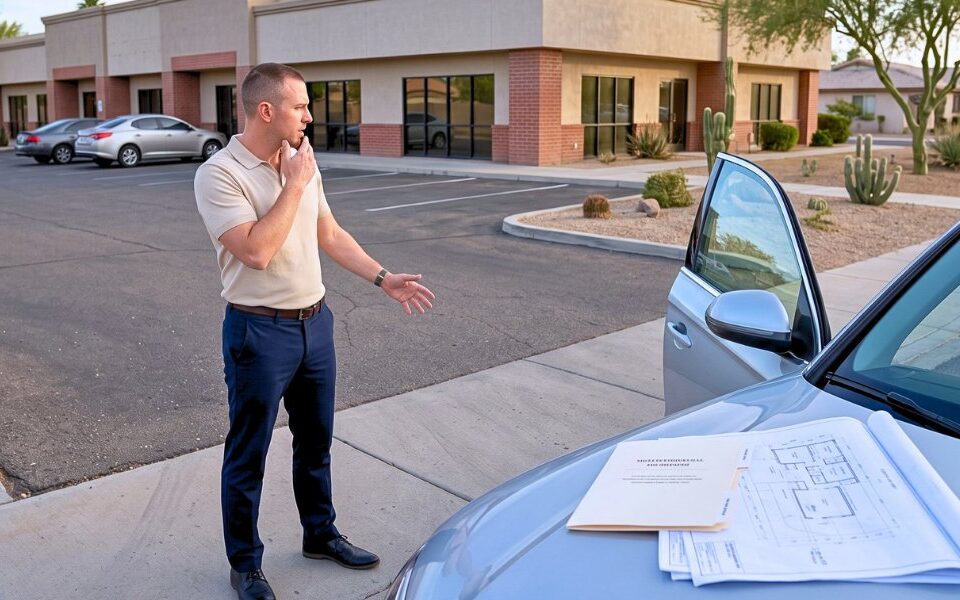
A California client recently contacted me with their 1031 clock already running. I ran true-net snapshots on every realistic Havasu candidate. One by one, the candidates fell short. Either the numbers didn't pencil out at a reasonable cap rate, or the inventory simply wasn't there.
Randy Shuffler earned the CCIM designation, held by roughly 6% of commercial practitioners nationwide. That designation reflects investment analysis discipline built around verified income figures.
"He wanted something here but he just didn't find anything where the numbers made too much sense. He ended up looking at other stuff. He bought something in Virginia." Randy Shuffler, Founder and Principal Broker, Lake Havasu City Commercial at Realty ONE Group Mountain Desert
This was not a buyer who simply quit searching. He had a hard deadline, an active search, and limited qualifying inventory. The deal he needed did not exist in Havasu at that moment.
Havasu Scarcity Cuts Both Ways for 1031 Buyers
Out-of-state investors researching Lake Havasu City find a growing market, but supply is constrained. What remote research doesn't make obvious is that the same scarcity driving rent stability and price appreciation means few buildings trade at any given time.
When stabilized light industrial or multi-tenant buildings hit the Havasu market at a price that pencils at a 6.5% to 7% cap, they rarely sit. If a 1031 buyer starts searching after closing on their asset, the best-positioned buildings may already be under contract.
Buildings offered at the right rate tend to move. When owners push rents beyond what the market absorbs, space sits. A 1031 buyer needing 10,000 square feet of industrial space within 45 days faces a narrow and unpredictable set of realistic options.
That supply constraint cuts both ways. Land limitations make new commercial development difficult, keeping pressure on existing inventory and supporting long-term value. The Arizona State Land Department controls significant acreage around the city, and that land doesn't quickly convert to commercial supply.
The same constraint also compresses the time between a qualifying property becoming available and going under contract. That window can close faster than a 45-day identification period can accommodate.
What Successful 1031 Buyers in Havasu Do Differently
The investors who execute successfully do not wait until their sale closes to start searching. These investors:
- Pre-underwrite before the California asset goes under contract.
- Build a short list based on true net income, tenant strength, remaining lease term, and their target cap rate.
- Know their target price before they know their closing date.
Pre-underwriting does not guarantee a completed exchange. Inventory can dry up, and a strong candidate can go under contract before the buyer needs it. However, pre-underwriting protects your timeline. It means you won't spend the first three weeks of a 45-day window learning a market that could have been studied months earlier.
We take a closer look at this in our post about pre-underwriting Lake Havasu properties for California investors. The ones who pre-underwrite consistently outperform those who treat the replacement search as a post-closing task.
FAQs About Handling a 1031 Exchange in a Thin Market
How many days does the IRS give you to identify a replacement property in a 1031 exchange?
The IRS requires a 45-day identification window from the relinquished property's closing date. No extensions apply under standard circumstances. Investors must identify potential replacement properties in writing to their qualified intermediary within that window, or the exchange fails, and the gain becomes taxable.
What does backing into value mean for a 1031 exchange replacement property?
Backing into value means starting with the property's income and subtracting verified operating expenses to determine true net income. Divide that figure by your target cap rate to establish the maximum price you should pay. This sets your offer ceiling before you tour a property and helps prevent overpaying for a building that cannot support your return requirement.
Why does thin commercial inventory make a 1031 exchange harder to complete in Lake Havasu City?
Thin inventory means fewer qualifying properties are available at any given time, and well-priced properties tend to go under contract quickly. A buyer entering the 45-day window without a pre-underwritten short list may find the best-positioned buildings are already spoken for. You can learn more in our recent post about the cost of waiting for the relinquished property to sell.
What is a qualified intermediary and why is one required in a 1031 exchange?
A qualified intermediary (QI) is an independent third party that holds proceeds from the sale of the relinquished property. The QI then transfers those funds toward the replacement property. IRS regulations prohibit the taxpayer from taking constructive receipt of the funds during the exchange. Without a QI in place before closing, the exchange fails regardless of what happens afterward.
What cap rates should 1031 buyers target for Lake Havasu City commercial properties?
Most buyers underwriting stabilized Havasu commercial assets target 6.5% to 7% as a baseline. An 8% deal exists but is uncommon. Cap rates vary by property type, tenant strength, lease duration, and condition. Stated listing income should always be verified against true net income before underwriting.
Can a 1031 buyer identify replacement properties in a different state if local inventory is too thin?
Yes. IRS rules allow buyers to identify replacement properties anywhere in the United States. Buyers under time pressure can expand their search when a primary market cannot produce qualifying inventory within the window.
What should a 1031 buyer do if they cannot find a replacement property within 45 days?
If the taxpayer does not identify a qualifying replacement property in writing within 45 days, the exchange fails. The qualified intermediary releases the proceeds, and the gain from the relinquished property sale becomes taxable in the year of the sale. There is no standard IRS extension mechanism. That is why pre-underwriting before the sale closes matters.
How does pre-underwriting a 1031 exchange work in practice?
Pre-underwriting means analyzing potential replacement properties before the relinquished property closes. The investor builds a short list using verified income, tenant quality, remaining lease terms, and a target cap rate. When the 45-day clock starts, the investor already knows which buildings pencil and can move into due diligence immediately.
Start the Math Before the Clock Starts
If a 1031 timeline is on your calendar and Havasu is on your target list, run the numbers before the window opens. Send me the details of your situation and the property type you need. Lake Havasu City Commercial can then pull a true-net snapshot of what actually exists in the market. That conversation costs nothing, while letting the 45-day window close on an unprepared search results in a failed exchange.