Private Money in Commercial Real Estate Works Until the Exit Doesn’t

A failing mall in Lake Havasu City sold for $1.5 million. It is now a functioning micro-hospital campus with 102 apartments approved on the same footprint.
A vacant mall in Lake Havasu City purchased for $1.5 million has been converted into a functioning micro-hospital campus with 102 approved residential apartments, demonstrating how distressed retail assets can be repositioned based on actual community needs rather than original use. Medical facilities represent a more stable asset class than retail in secondary markets because healthcare demand is tied to patient location and demographics rather than rental rates, creating longer leases and lower turnover. The project’s success relied on understanding that existing shell space represents optionality rather than dead inventory, with the medical anchor enabling subsequent mixed-use approvals that would not have been granted for retail or office alone.
If you are tracking adaptive reuse in supply-constrained secondary markets, this deal sequence is worth understanding before the next distressed asset surfaces.
How a $6 Million Asset Sold for $1.5 Million
The original owner sold the property back to the city for $6 million. The city resold it to a private buyer for $1.5 million. On paper, that gap reads as a distressed-asset write-off. In practice, it was the setup for one of the more instructive adaptive reuse plays I have seen in the Mohave County corridor.
That $4.5 million spread between the municipal acquisition price and the resale price is not a rounding error. It reflects how completely the market had repriced a retail asset against its retail future. The buyer who acquired it for $1.5 million understood that the building’s past as a retail space was irrelevant. What mattered was its structural capacity, its location, and what the surrounding population actually needed.
The developer is not a passive investor. His thesis is specific. Vacant big-box shell space is raw material for micro-hospital campuses, and secondary markets are chronically underserved by healthcare infrastructure. That combination creates a real opportunity where most buyers see a problem.
What the Medical Pivot Looks Like on the Ground
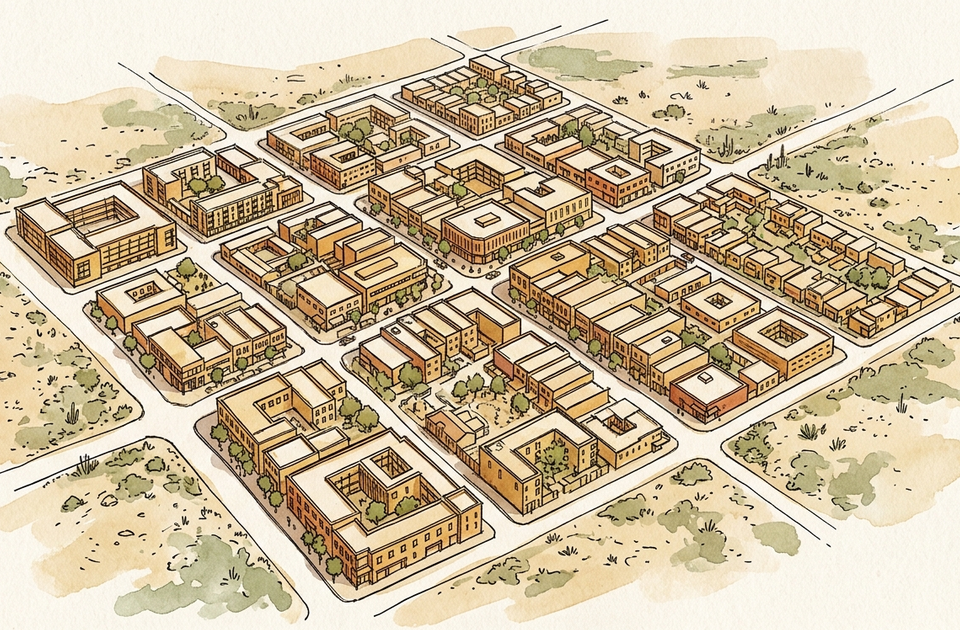
The developer converted empty shell space into medical facilities. A micro-hospital now operates on site. Physician practices and specialty groups occupy additional space. A restaurant opened on the same footprint. And the city approved 102 apartment units, the first large-scale residential approval Lake Havasu City has granted in roughly 20 years.
That sequence is not accidental. Medical anchor, then food and beverage, then residential density. Each phase built the conditions that made the next phase viable.
The city approved apartments not because it had suddenly decided multifamily was appealing. It approved them because a functioning healthcare campus with a restaurant gave the project the mixed-use credibility that planning boards require before approving density.
I tracked this development closely. Here is how I read it.
“The original owner sold that property back to the city for $6 million, and then the city resold it to another individual for $1.5 million. The guy that bought it, a very smart individual, he’s been turning that space into medical space. There’s a micro-hospital that he has out there. And now they just got approved for those apartments.” – Randy Shuffler, Founder and Principal Broker, Lake Havasu City Commercial at Realty ONE Group Mountain Desert
Shell Space Is Optionality, Not Dead Inventory
The default instinct in commercial real estate is to evaluate a property against its current use. A failing mall reads as a retail problem. The smarter frame evaluates the physical asset itself: square footage, infrastructure, location, and entitlement history.
Shell space in a built-out structure is not dead inventory. It is optionality. The developer who bought this mall did not search for retailers to backfill the vacancies. He asked a different question. What does this market actually need that this building can become?
In Havasu, the answer was healthcare. Specifically, outpatient and surgical capacity that a growing, aging, and medically underserved population cannot source locally.
Under HUD’s guidelines on healthcare facility needs, secondary markets with aging demographics and limited provider access are among the most underserved geographies in the country. Lake Havasu fits that profile exactly.
That reframe is the core lesson for investors evaluating distressed retail conversions. The question is not what the building was. It is what the building can become and whether the market will create genuine demand for that use.
Medical Office Space Performs Differently From Retail or Standard Office
Healthcare is a needs-based category. It does not migrate to wherever rents are lowest. It locates where patients are. Lake Havasu City has a growing permanent population, a large retiree base, a significant seasonal resident community, and limited in-market healthcare options. That combination makes medical tenants sticky, creditworthy, and actively seeking space.
Medical office and outpatient surgical spaces carry longer leases, higher tenant improvement investments, and lower turnover than comparable retail or office spaces. For investors focused on true-net income stability, those factors significantly change the underwriting calculus.
The $20 million conversion of this vacant retail space into a healthcare campus reflects a structural shift that investors often miss. In secondary markets, the gap between what exists and what is needed is wide. That gap is where value gets created.
The Appraisal Foundation sets valuation standards that recognize healthcare tenancy as a distinct asset class. That means different capitalization and income stability assumptions than for a general commercial office. If you are underwriting a medical conversion in a secondary market, work from those frameworks, not standard retail or office comps.
Havasu Is Different From Other Secondary Arizona Markets
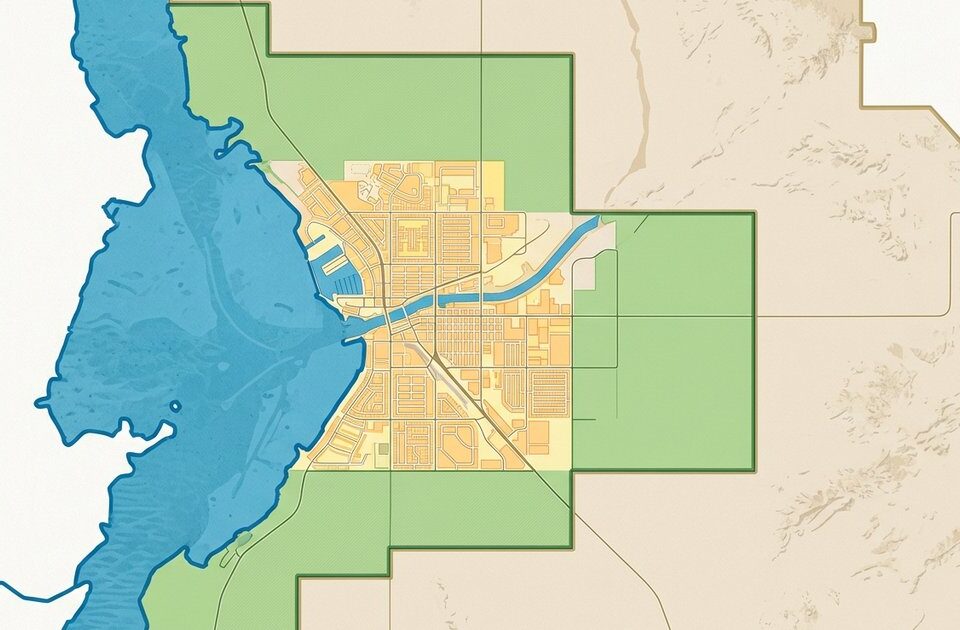
Land constraints define this market in a way that most secondary Arizona cities do not experience. Lake Havasu City sits surrounded by Bureau of Land Management federal land, state land, and the lake itself. That geography caps supply in a way that direct competitors cannot replicate. Any project that converts existing square footage into productive use benefits from genuine scarcity on the other side of the transaction.
I have spent more than two decades underwriting deals across asset classes in the Havasu and Kingman corridors. When I evaluate a distressed retail conversion candidate, I work from ground-level knowledge. I know which buildings have the structural capacity, location logic, and tenant demand to support a repositioning. That context does not surface in a LoopNet search.
“Havasu is running out of land, so people are kind of grabbing that stuff where they can. Building costs don’t go down; they’ve gone up, and it is what it is. So you want to try to get a good deal on the land for the deals to make sense, but it’s becoming tougher and tougher to do that.” – Randy Shuffler, Founder and Principal Broker, Lake Havasu City Commercial at Realty ONE Group Mountain Desert
The constraint is structural, not cyclical. BLM and state land designations do not change based on market conditions. New supply cannot appear to relieve pressure the way it does in Phoenix or Las Vegas.
Answers to Common Questions
What is adaptive reuse in commercial real estate?
Adaptive reuse means converting an existing building from its original purpose into a different productive use. A vacant retail mall becomes medical offices, residential units, or a mixed-use campus. The strategy captures value from existing infrastructure rather than requiring ground-up construction. In markets where land is constrained, that matters a lot.
Why are distressed retail conversions gaining traction in secondary Arizona markets?
Secondary markets like Lake Havasu City often have significant gaps between existing commercial infrastructure and the needs of residents. Healthcare, housing, and food and beverage are frequently underserved relative to population size and demographics. When investors identify those gaps early and hold assets with conversion potential, they can capture significant value.
What makes a medical office a stable investment in smaller markets?
Medical tenants locate where patients live, not where rents are lowest. In markets with aging populations and growing permanent-resident bases, demand remains consistent regardless of broader economic cycles. Medical tenants sign longer leases, invest heavily in tenant improvements, and turn over far less frequently than retail or service office occupants.
How does land scarcity affect commercial property values in Lake Havasu City?
Lake Havasu City is surrounded by federal BLM land, state land, and the lake itself. That geography limits new development in ways most Arizona cities do not. When supply cannot expand to meet demand, existing properties that convert to productive use benefit from scarcity. That scarcity supports values and rents in ways that open-land markets cannot replicate.
How did the apartment approval at this Lake Havasu mall change the investment thesis?
The 102-unit approval is the first large-scale residential approval the city has granted in approximately 20 years. That approval followed the establishment of a functioning micro-hospital campus and food-and-beverage amenities on the same site. Mixed-use credibility, built through prior conversion phases, created the conditions for residential density to be viable. Phased adaptive reuse unlocked an entitlement that a raw land play would not have achieved.
Who should consider adaptive reuse investments in the Havasu corridor?
Investors seeking income-producing assets in supply-constrained markets. It can also work for 1031 exchange buyers seeking replacement property and for value-add operators comfortable with phased repositioning strategies. The Havasu corridor rewards investors who understand local demand at the neighborhood level.
Demand Reshapes Distressed Assets
The lesson is not about one mall. It is about recognizing when a property no longer serves its original purpose. Value comes from matching the asset to real demand in a market where supply cannot easily expand.
Shuffler Commercial Realty helps investors connect the asset, the demand, and the execution plan. Contact our team to evaluate your next deal with a clear underwriting perspective.
Randy Shuffler is the founder of Lake Havasu City Commercial at Realty ONE Group Mountain Desert. He holds the CCIM designation and brings more than 20 years of direct market experience in the Lake Havasu City and Kingman corridors, with a BS in Finance from San Diego State University.
ABOUT THE EXPERT
Randy Shuffler | Founder & Principal Broker, Lake Havasu City Commercial | CCIM | 20+ years in real estate & finance | $5M+ in verified sales | 52,000+ sq ft transacted | BS Finance, San Diego State University | Realty ONE Group Mountain Desert