Lake Havasu 1031 Investors Fear the Wrong Risk in a Constrained Market
The 45-day identification window in a 1031 exchange is one of the most expensive deadlines in commercial real estate. Miss it, and you owe the taxes. Rush it, and you might wish you had just paid them.
A 1031 exchange’s 45-day identification window creates pressure that often leads investors into underperforming properties rather than allowing time for proper evaluation. The strongest replacement properties in constrained markets like Lake Havasu City typically move through off-market broker relationships before reaching public listings, making pre-sale underwriting of target properties essential. Sometimes paying capital gains taxes is the better financial decision than forcing capital into a mediocre deal under deadline pressure.
That tension defines nearly every conversation with California investors bringing capital into Lake Havasu City and the surrounding corridor right now. Most investors think the 1031 exchange risk is running out of time. The greater risk is running into a bad deal to avoid running out of time.
Why the 1031 Exchange Tax Deferral Math Is So Compelling
Let’s start with why investors push so hard to complete these transactions, because the numbers make the case clearly.
A building purchased for $1 million, sold for $1.85 million, and depreciated over the hold period can incur a tax burden of $200,000 or more. That is federal capital gains at rates that currently top out at 20%, plus applicable state taxes. That is real capital walking out the door if the exchange fails.
Now put that $200,000 to work in a replacement property at a 6.5 to 7 percent cap rate. That is $13,000 to $14,000 in annual income. Over five to ten years, the case for completing the exchange is clear. Push the tax burden forward, deploy the full proceeds, and let compounding do the work.
But here is the part that gets glossed over. That math only holds if the replacement property actually performs.
What the Inventory Reality Does to Your 45-Day Window
Here is what most investors miss until they are already inside the window. Good replacement property is genuinely hard to find, even in markets that appear active on the surface.
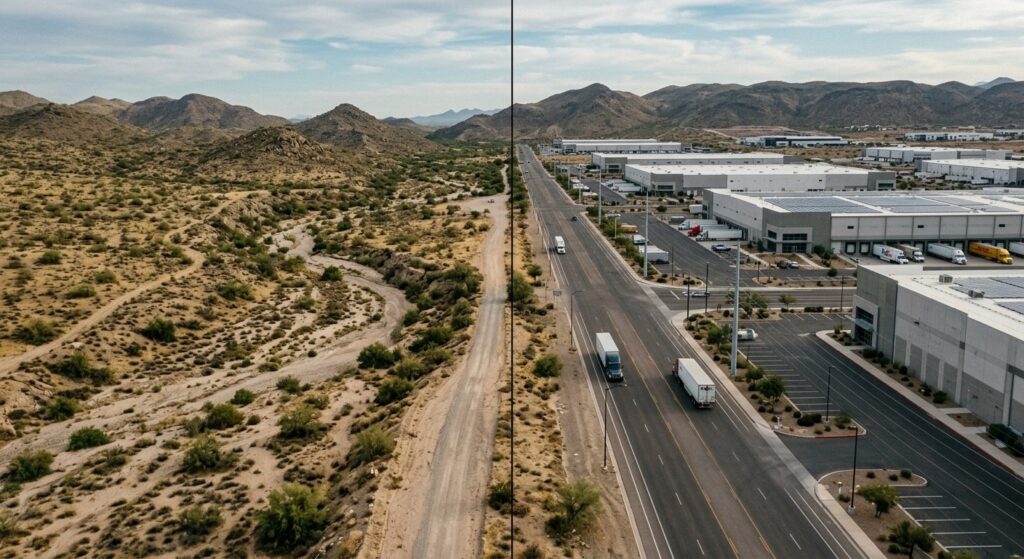
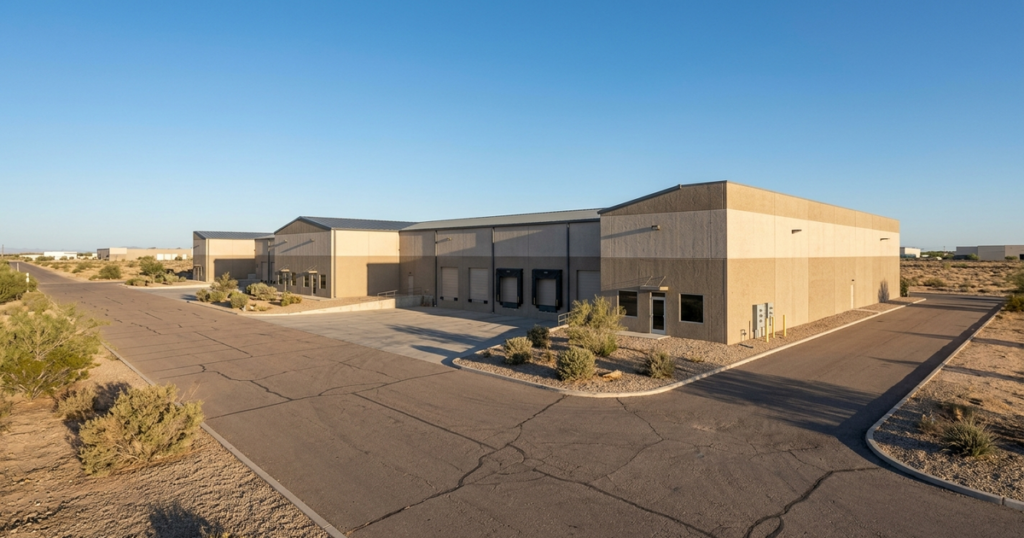
Lake Havasu City is a constrained market. The city is surrounded by the lake, state land, and federal Bureau of Land Management territory. Residential lots have tightened to roughly 1,800 available. Commercial inventory reflects the same pressure.
When a well-tenanted income property comes to market here, it moves fast. Out-of-state investors searching online in the weeks before their identification deadline often find a short list of mediocre options and one or two strong candidates already under contract.
The Phoenix and Scottsdale markets, where many Havasu investors also search, carry the same dynamic. A recent Scottsdale triple-net Pep Boys came to market at a 6.8 cap with a five-year lease and two-year options, priced at $2.2 million. Buyers who arrived two days into the listing were already negotiating $200,000 over the asking price just to get into the conversation.
That is the real market. Online research does not show you how fast the strong ones disappear.
The short answer is that new commercial inventory cannot fill that gap. The land constraints are structural, not cyclical.
Sometimes Paying the Taxes Is the Right Call
This is the question most investors hesitate to ask. I bring it up directly.
I hold the CCIM designation, which fewer than 6% of commercial practitioners earn. The training focuses heavily on investment and financial analysis, and I apply that to every 1031 conversation.
“Sometimes I think it’s better that they pay the taxes than just get into a bad investment. I get really nervous if a building is priced high, or it’s some kind of building where the tenant leaves, and I’m not going to be able to fill it back up. If we get into a building on a private loan, and we can’t fill it up and the client can’t make his payments, it gets bad quick. So I just try to talk to them like it’s my money.” – Randy Shuffler, Founder and Commercial Real Estate Agent, Lake Havasu City Commercial at Realty ONE Group Mountain Desert
That posture is not common in a transaction-driven business. It is, however, the posture that protects clients from exchanges that win on paper and lose in the real world.
This is what I call the blue-sky underwriting risk, the pattern where a deal only pencils when everything goes right. Under 1031 time pressure, that pattern shows up constantly.
The Properties That Actually Pencil as a 1031 Replacement Today
True-net income is what a property actually generates after all operating expenses. Not gross rent or proforma projections. You need properties that actually land after expenses, with the tenant mix and lease structure in place today.
In the current Lake Havasu City and Scottsdale corridor markets, you have to be realistic. A triple-net deal with a creditworthy tenant at 6.5-7 percent pencils out as a 1031 replacement property. A partially vacant property requiring significant tenant-improvement dollars to stabilize does not pencil out as a 1031 target.
Tenant improvement costs have risen sharply. Lease-up timelines in secondary markets have stretched over the past year.
The investors who close clean exchanges are not the ones who found the best property in 44 days. They are the ones who pre-underwrote a short list before their clock ever started.
The 45-Day Window Is a Commitment Deadline, Not a Shopping Period
This is the reframe that matters most. The 45-day window is a legal identification deadline, not a discovery period. Investors who treat it as a shopping timeline routinely run out of runway before finding a replacement property.
The approach that holds up is straightforward. Before your sale closes, build a short list of target properties. Know your ceiling on price, your floor on income, and which asset classes you will and will not accept. When the clock starts, you are confirming and committing, not searching from scratch.
Off-market relationships matter here, too. Strong replacement properties in constrained markets often never reach LoopNet or Crexi. They move through broker-to-broker conversations before the public ever sees them. That matters most when every day on the clock counts.
The pressure this creates is real. It is also one of the most reliable ways investors end up in the wrong deal under deadline pressure.
Common Questions About Lake Havasu 1031 Exchange Timing
How long does a 1031 exchange identification window last?
45 days from the close of your relinquished property. You must identify potential replacement properties in writing within that window. The full exchange must close within 180 days.
What happens if I miss the 45-day 1031 identification deadline?
The exchange fails. You owe capital gains taxes on the full recognized gain from the sale. There is no extension, no cure period, and no partial credit. Once the window closes, it closes. The IRS does not grant exceptions for market conditions or limited inventory.
Can I identify more than one replacement property in a 1031 exchange?
Yes. IRS rules allow you to identify up to three properties of any value under the three-property rule. You can identify more properties under the 200% rule or 95% rule, each with specific valuation requirements. Identifying multiple candidates protects you if your first choice falls through before closing.
Do I have to buy a 1031 replacement property worth more than what I sold?
The replacement property must be of equal or greater value. If you buy for less, you pay taxes on the difference. Your equity must also be fully reinvested to defer all gains. Pulling cash out triggers a taxable “boot.”
What is true-net income, and why does it matter in a 1031 exchange?
True-net income is what a property actually generates after all operating expenses, not the pro forma the seller presents at listing. In a 1031 exchange, you often move quickly and rely on listing materials. Underwriting to true-net rather than gross rents protects you from buying a cap rate that exists on paper but not in practice.
Is Lake Havasu City a realistic 1031 replacement property target?
It can be, but inventory is genuinely constrained. The market sits surrounded by state and federal land, which limits new commercial supply. Well-tenanted income properties move quickly. Investors who pre-underwrite before their clock starts are far better positioned than those who begin searching after the sale closes.
Are there situations where paying capital gains tax is better than completing the exchange?
Yes. If the replacement property available within your window does not meet your underwriting criteria, forcing the exchange often costs more than the tax bill. A $200,000 tax liability is painful. A vacancy problem on a private loan in a slow leasing market can be worse.
Start Underwriting Before the Clock Starts
The investors who close clean exchanges do not find the best property in 44 days. They walk into the 45-day window already knowing what they are looking for, what it needs to return, and which candidates are live.
If you are selling a California building and a 1031 exchange is part of your plan, the time to underwrite replacement options is before your sale closes. Send us the details on what you are selling and what you need on the other side. We will run a true-net snapshot on what actually fits before your clock ever starts.
Randy Shuffler is the founder of Lake Havasu City Commercial at Realty ONE Group Mountain Desert. He holds the CCIM designation, earned by fewer than 6 percent of commercial practitioners nationally, and brings over two decades of underwriting experience across Arizona and California investment markets.
ABOUT THE AUTHOR
Randy Shuffler | Founder & Commercial Real Estate Agent, Lake Havasu City Commercial | CCIM | 20+ years in real estate & finance | $5M+ in verified sales | 52,000+ sq ft transacted | BS Finance, San Diego State University | Realty ONE Group Mountain Desert