A Billionaire Paid $24 Million for Havasu Island Land and the Market Has Not Caught Up

AI tools have made out-of-state investors sharper than they used to be. They arrive knowing cap rate ranges and having scanned LoopNet. These investors know Arizona’s growth story, and many have run searches through platforms that summarize commercial activity across the state. That foundation is genuinely useful. It gets them part of the way there.
AI tools and databases provide a useful starting point for Lake Havasu City commercial real estate research but cannot identify ground-level market realities like which corridors maintain tenants, which buildings face near-term lease expirations, or why quality properties sell before most buyers discover them. The gap between database cap rates and actual property returns, driven by Lake Havasu’s structural land constraints and tight inventory, determines whether deals pencil or become problems. Investors relying solely on remote research and AI summaries typically arrive after high-quality income properties have already sold to buyers with established market knowledge.
But Lake Havasu City commercial real estate isn’t that simple. The gap between what a database shows and what a property actually returns can determine whether a deal pencils or becomes a problem.
Inventory is tight, and land is structurally constrained. The difference between a productive building and a problem property can come down to a single street. That gap matters more than most buyers realize before they commit.
The Zillow Problem Exists in Commercial Real Estate Too
Most people recognize this failure more on the residential side. Zillow estimates draw on real data, look reasonable at a glance, and consistently get things wrong. The mistakes only become visible when someone stands inside the property and understands the context of that specific block.
Commercial real estate carries the same problem at higher stakes. Platforms pull from LoopNet, CoStar, public records, and aggregated market reports. AI tools synthesize that data quickly and present it with confidence.
What they cannot do is identify which street in Lake Havasu City has cycled through three failed tenants in as many years. They cannot flag a building listed at a 6.5 cap that looks clean on paper but carries two leases expiring within 18 months.
That is not a criticism of the tools. It is an accurate description of what they are built to do and where they stop.
The U.S. Census Bureau’s American Community Survey tracks population and income data for the region. The City of Lake Havasu City’s economic development resources document growth patterns and infrastructure investment. Both are valuable. Neither tells you which corridor holds tenants and which one does not.
What Ground-Level Lake Havasu Market Intelligence Actually Looks Like
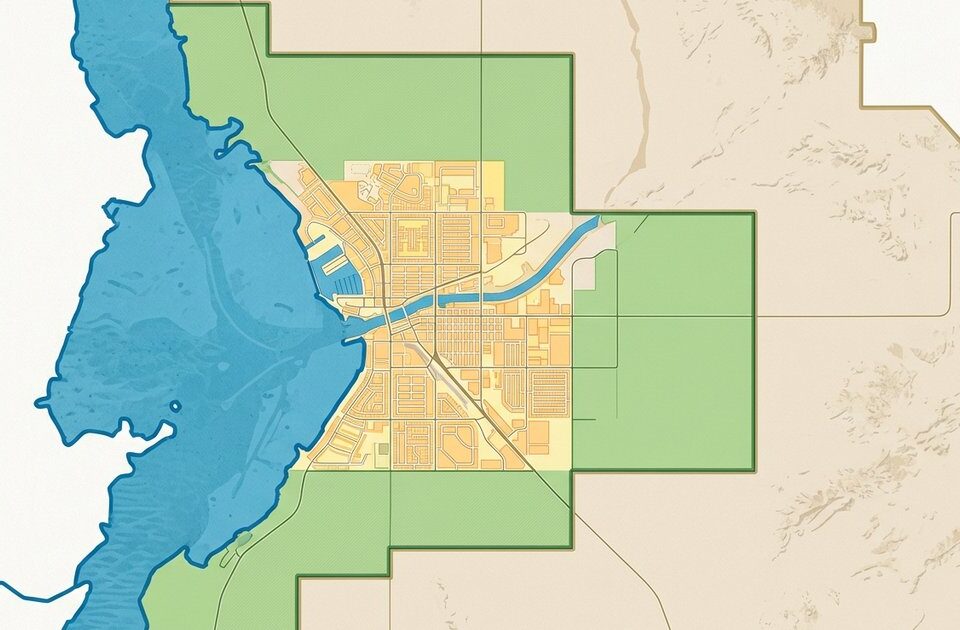
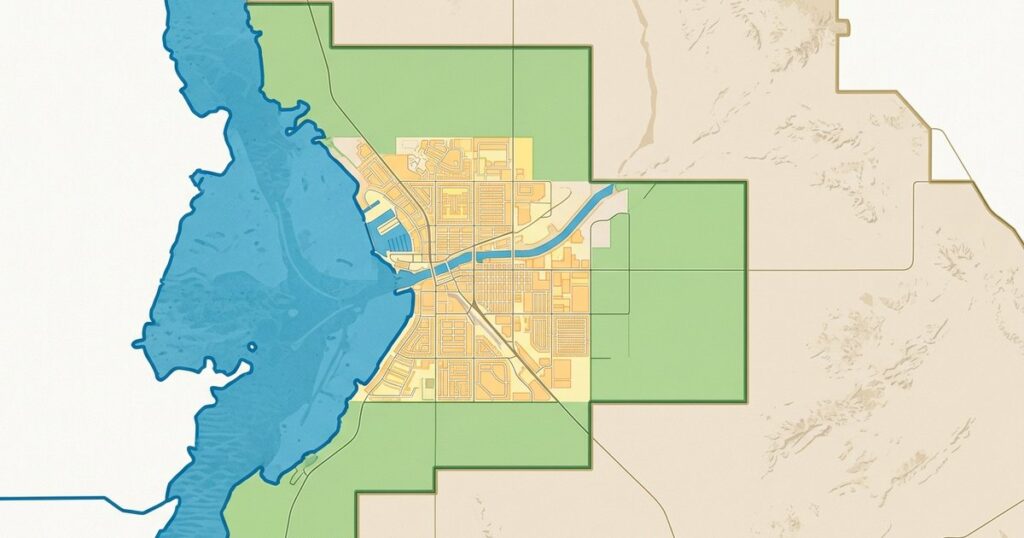
Lake Havasu City rewards specificity. The city sits effectively landlocked by state land, BLM holdings, and the lake itself. Available residential lots have dropped to roughly 1,800 citywide. Commercial inventory faces the same structural constraint.
That scarcity does real work in the market. It puts a floor under well-positioned income properties and creates conditions where a quality building with solid tenants moves fast. A mediocre property at an inflated price sits without serious interest. Both things are true at the same time.
That nuance does not surface in a search. A straightforward inventory query returns listings. It does not return the context explaining why the best properties disappear before most buyers find them, or why certain pockets underperform relative to their asking prices.
Take the medical conversion underway at the old mall site. I have watched a developer systematically convert vacant big-box space into healthcare facilities over time. They recently received approval for more than 100 apartment units on the same footprint. That kind of project reshapes surrounding commercial values.
I have spent more than two decades building that ground-level knowledge across Lake Havasu City and the broader Mohave County corridor. As one of a small number of CCIM-designated brokers in the county, I approach every assignment through investment underwriting logic.
“I would compare it to Zillow. They have no idea what the neighbors look like. They have no idea. It’s just general. They’re not inside the building. They have some information on how the market is and statistics, whether they get that from LoopNet, or CoStar, or wherever it’s getting it from. Which is all great. But yeah, they’re not inside the building. So it’s impossible.” – Randy Shuffler, Founder and Principal Broker, Lake Havasu City Commercial
1031 Buyers Feel This Gap Most Acutely
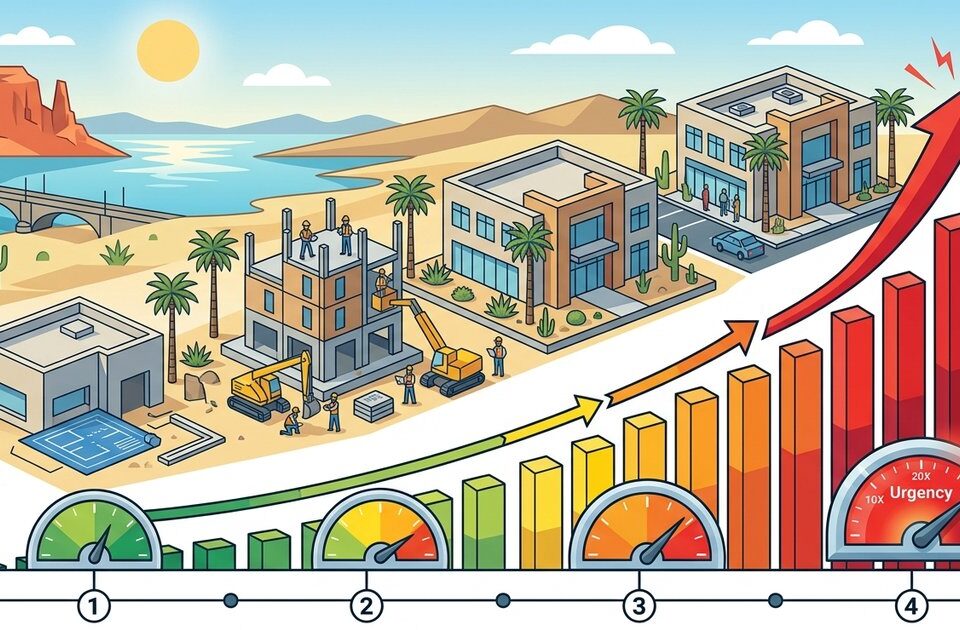
If you are running a deadline, the limits of remote research quickly become a real problem.
A California seller with 45 days to identify a replacement property cannot afford to learn the market from scratch. You need a short list of properties already underwritten against true net income, tenant strength, and realistic cap rate expectations. Not the listed cap rate. The actual return after accounting for vacancy risk, deferred maintenance, and the lease terms currently in place.
Right now, Lake Havasu City faces meaningful inventory constraints at the high-end of the market. When a well-tenanted income property lists at a realistic 6.5 to 7 cap, it moves. The buyers who reach it first already have a ground-level relationship and a clear acquisition target defined before the clock starts. Buyers relying on LoopNet alerts and AI summaries tend to arrive after the conversation has already closed.
That is not a reason to avoid the market. It is a reason to approach it differently. Land constraints shape pricing and timing here in ways that catch out-of-state buyers off guard. I wrote about the mechanics of that in the Lake Havasu land scarcity piece if you want to go deeper on it.
Not sure what a property’s true-net picture looks like before your identification window opens?
Connect with us at Lake Havasu City Commercial and get the actual income analysis before the clock starts.
Sound Underwriting Means Thinking About Downside First
The investors who navigate 1031 exchanges well in this market share one habit. They think about the downside first.
They are not asking whether a building looks attractive on a listing sheet. They are asking what happens if the anchor tenant leaves. How long does that space realistically sit vacant in this specific corridor? Does the acquisition price still make sense under that scenario?
The clock creates pressure to act. But buying into a building with structural problems, weak tenant covenants, or a location that cannot support re-leasing is a worse outcome than writing a tax check.
I apply that logic to every deal I work. It cuts directly against the typical urgency of a 1031 situation.
“I try to talk to them like it’s my money. Some people get into these 1031 situations where they have 45 days to identify something. Sometimes I think it’s better they pay the taxes than just get into a bad investment.” – Randy Shuffler, Founder and Principal Broker, Lake Havasu City Commercial
A ground-level read on the market helps you know which properties actually pencil and which ones just look like they do from a distance. My 1031 deadline pressure piece covers exactly how that pressure leads buyers into deals that do not hold up.
Answers to Common Questions
How accurate are AI tools for Lake Havasu City commercial real estate research?
It is a solid starting point. The platforms pull data from LoopNet, CoStar, and public records, giving you a reasonable picture of general market activity. What they cannot provide is corridor-level context. They can’t tell you which streets hold tenants or which buildings carry near-term lease expiration risk. Platforms can’t connect you with off-market opportunities.
What is a true net snapshot, and why does it matter for investment decisions?
It goes beyond the cap rate on a listing sheet. True net accounts for actual vacancy risk, lease expiration schedules, tenant quality, deferred maintenance, and realistic re-leasing assumptions. The listed cap rate reflects the income picture under ideal conditions. The true-net read shows what the building actually returns under realistic operating assumptions. That is the number that drives sound underwriting.
Does the medical conversion at the old mall site affect the surrounding commercial values?
Yes, meaningfully. Converting former big-box retail into healthcare facilities increases foot traffic and demand for adjacent retail and service-oriented commercial space. Properties near the development stand to benefit as the project matures. Understanding which corridors sit in the influence zone of that project requires someone who has tracked it in real time.
Is Lake Havasu City too small a market for serious commercial investment?
No. It functions as a year-round service hub with constrained inventory, stable occupancy in well-positioned properties, and consistent demand from service-oriented tenants. For investors targeting 6.5 to 7 cap returns with tenant stability, the market compares favorably to larger Arizona metros. The constraint is not market size. It is knowing which properties actually pencil.
What is the difference between the listed cap rate and the real one?
The listed cap rate typically reflects current in-place rents under full occupancy. It rarely accounts for near-term lease expirations, deferred maintenance hitting operating costs, or the realistic vacancy period if a tenant exits. The gap between the listed cap rate and the real one is where most underwriting mistakes happen.
The Data Gap Matters
Good data helps, but it does not tell the full story. In Lake Havasu, outcomes depend on details that never show up in a search. That is where disciplined investors focus their attention.
The team from Shuffler Commercial Realty brings those details into every underwriting decision. We focus on what properties can realistically return, not what listings suggest. Reach out to evaluate your deal with real numbers.
Randy Shuffler is the founder of Lake Havasu City Commercial at Realty ONE Group Mountain Desert. He holds the CCIM designation and a BS in Finance from San Diego State University, bringing more than 20 years of investment-focused commercial real estate practice to Lake Havasu City and the broader Mohave County corridor.
ABOUT THE EXPERT
Randy Shuffler | Founder & Principal Broker, Lake Havasu City Commercial | CCIM | 20+ years in real estate & finance | $5M+ in verified sales | 52,000+ sq ft transacted | BS Finance, San Diego State University | Realty ONE Group Mountain Desert